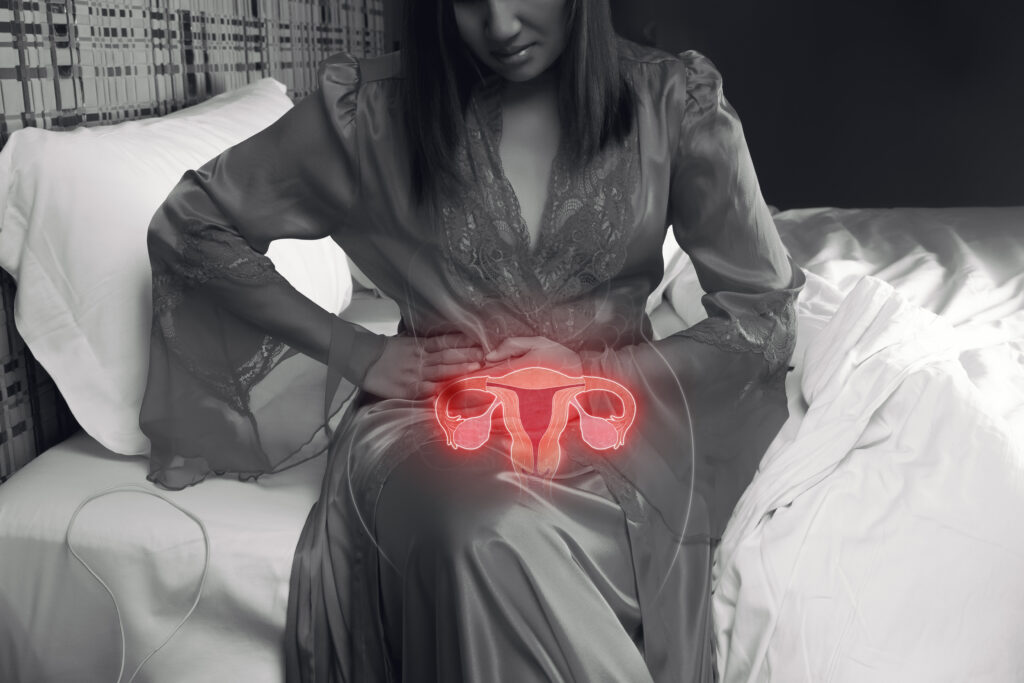
If you’re experiencing heavy menstrual flow or intense abdominal pain, you might be dealing with one of the many types of fibroids that can develop in the uterus. These abnormal, noncancerous growths—also called myomas, uterine myomas, fibroid myomas, or fibromas—can vary in size and location. Some types of fibroids can grow large and cause severe symptoms, including pain and heavy periods. While many women may not show symptoms, up to 80% will develop fibroids by the age of 50.
Fibroids are abnormal, noncancerous growths that develop in your uterus. These tumors can become quite large and cause severe abdominal pain and heavy periods. Fibroids are also known as myomas, uterine myomas, fibroid myomas, or fibromas. There are different types of fibroids, depending on their size, location, and symptoms—such as intramural, subserosal, submucosal, and pedunculated fibroids.
Although most women don’t have any symptoms and may never know they have fibroids, about 80% of women will have them by the age of 50.
For more information about uterine fibroids, please visit Doral Health and Wellness – Women’s Health Center.
There are different types of fibroids and knowing the location of your fibroids will determine which type of fibroids you have. To understand these types of fibroids, you first need to know the different layers of your uterus, which are:
- Perimetrium – this is the outer layer of your uterus
- Myometrium – the middle and the thickest layer of your uterus
- Endometrium – this is the inner layer that lines your uterus
There are four main types of fibroids:
- Intramural fibroids
Intramural fibroids are located within the uterine muscle or the myometrium. These are also the most common type of fibroids. Because of their location, they may grow larger and can even stretch up to your womb.
The usual symptoms for intramural fibroids can include heavy bleeding or extended menstrual period, bleeding in between menstrual cycles, and infertility.
- Subserosal fibroids
Subserosal fibroids are the fibroids that grow outside of your uterine wall. Because of their location, subserosal fibroids do not usually cause significant symptoms and are less likely in need of treatment.
Typical symptom for subserosal fibroids includes heavy menstrual bleeding due to the larger size of your uterus.
- Pedunculated fibroids
Pedunculated fibroids are the type of fibroids that grow on the stalks or stems that are attached to your uterine wall. They can grow either on the inside or outside of your uterus.
Pedunculated fibroids that grow on the outside of your uterus usually have very mild symptoms unless your fibroids become exceptionally large. While pedunculated fibroids that grow on the inside of the uterus can have significant symptoms and cause infertility.
- Submucosal fibroids
Submucosal fibroids are the fibroids that grow in the internal layer of your uterus. This type tends to be asymptomatic when your fibroids are small but the main symptom for submucosal fibroid is heavy and irregular bleeding.
With submucosal fibroids, you can become infertile, making it hard for you to get pregnant, or cause you miscarriages.
If you are looking for a gynecologist that you can trust, you can book your appointment at Doral Health and Wellness – Women’s Health Center. At Doral Health and Wellness – Women’s Health Center, we provide women with quality healthcare services. To book an appointment, you can visit us at 1797 Pitkin Avenue, Brooklyn, NY, or call us on 1-347-384–5690 or 1-347-955-3465. You can also visit our website to book an appointment online at Women’s Health – Doral Health & Wellness Brooklyn NY