A lumbar puncture, commonly known as a spinal tap, is a diagnostic test that can provide crucial information about the central nervous system. If your doctor has recommended this test, you likely have questions about the process. Understanding what happens during the lumbar puncture procedure can help ease any anxiety you may have. This guide provides a clear, step-by-step overview of the test, from preparation to what comes after. Knowing the details can help you feel more comfortable and confident as you prepare for this important diagnostic tool. Visit the best Pain Management Clinic in Brooklyn at Doral Health & Wellness, or log on to www.doralhw.org to schedule an appointment with us.
What Happens During the Lumbar Puncture Procedure: A Step-by-Step Guide
The primary goal of a lumbar puncture test is to collect a small sample of cerebrospinal fluid (CSF), the clear liquid that cushions your brain and spinal cord. This entire process is typically performed by a doctor or a specially trained nurse and usually takes about 30 minutes.
Step 1: Preparation and Positioning
Before the procedure begins, the medical professional will explain the steps and answer any questions you have. You will then be asked to get into a specific position to make the procedure safer and easier. This involves either:
- Lying on your side and curling into a fetal position, pulling your knees toward your chest.
- Sitting on the edge of the exam table and leaning forward over a pillow or table.
Both positions curve your back, which helps to widen the spaces between the vertebrae in your lower back (lumbar region), providing better access to the spinal canal.
Step 2: Numbing the Area
Once you are in the correct position, the provider will clean your lower back with an antiseptic solution to prevent infection. After that, they will inject a local anesthetic into the skin. You will likely feel a brief sting or burning sensation as the numbing medication is administered, but this quickly fades as the area becomes numb.
Step 3: Inserting the Needle
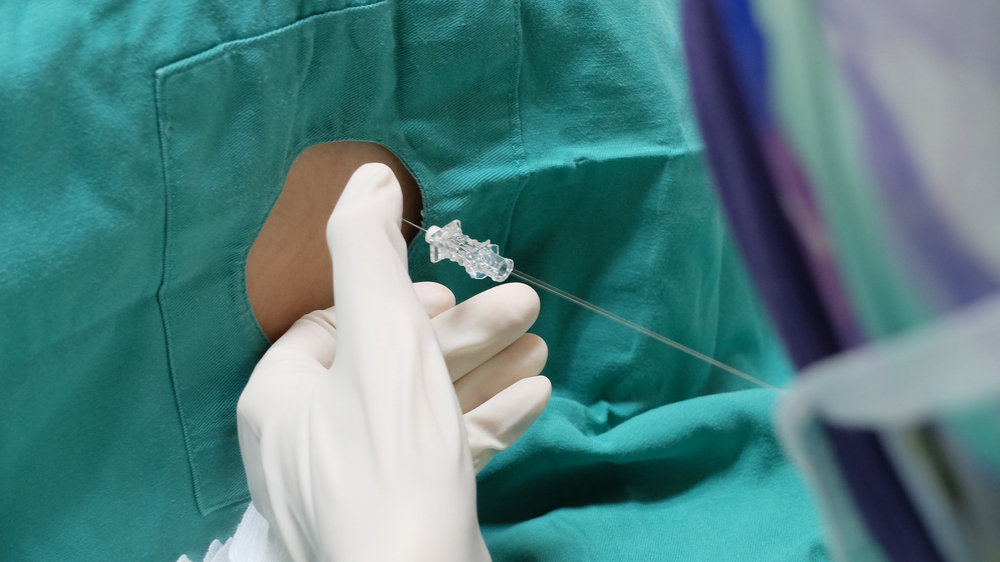
After the anesthetic takes effect, a thin, hollow needle is carefully inserted into the numbed area. The needle passes between two vertebrae and into the spinal canal, which is the space containing the cerebrospinal fluid. It is important to know that the spinal cord itself ends higher up in the back, so the needle is inserted well below that level, eliminating the risk of injury to the spinal cord.
You may feel a sensation of pressure as the needle goes in, but you should not feel sharp pain. If you do feel a sharp pain or a sensation shooting down your leg, let your provider know immediately.
Step 4: Collecting the Fluid and Measuring Pressure
Once the needle is in place, the provider may measure the opening pressure of your cerebrospinal fluid using a special device called a manometer. Then, a small amount of CSF is allowed to drip into several sterile collection vials. You will need to remain very still during this part of the procedure, which usually only takes a few minutes.
Interpreting Lumbar Puncture Results
After the sample is collected, it is sent to a laboratory for analysis. The lumbar puncture results can provide a wealth of information. The lab will check the CSF for:
- Appearance: Normal CSF is clear and colorless. A cloudy, yellow, or pink appearance can indicate an infection or bleeding.
- Cells: The number and type of white blood cells can point to an infection or inflammation. Red blood cells may indicate bleeding.
- Proteins and Glucose: Abnormal levels of protein or glucose can be signs of various conditions, including multiple sclerosis, Guillain-Barré syndrome, or bacterial meningitis.
- Microorganisms: The fluid can be cultured to check for the growth of bacteria or fungi.
Your doctor will discuss the results with you once they are available, which can take anywhere from a few hours to a few days, depending on the tests ordered.
Recovery and Aftercare
After the needle is removed, a small bandage is placed over the puncture site. You will be asked to lie flat for about an hour to reduce the risk of a post-procedure headache. The most common side effect is a spinal headache, caused by fluid leaking from the puncture site. If you develop a persistent headache that is worse when you are upright, contact your doctor. A pain management specialist can treat severe spinal headaches with a procedure called an epidural blood patch.
Knowing what happens during the lumbar puncture procedure can make the experience much less intimidating. It is a routine and generally safe test that provides vital diagnostic information. While the idea of a spinal tap may cause some apprehension, the process is quick and performed with care to minimize discomfort. If you have concerns about the procedure or potential side effects, a discussion with your doctor or a specialist at a pain management clinic in Brooklyn can provide reassurance. For those who experience post-puncture headaches, a pain management clinic in Brooklyn can offer effective treatments to get you back on your feet quickly. Visit the Doral Health & Wellness Pain Relief Department in Brooklyn to get professional help and guidance on how to manage your problem. Call us on + 1-718-367-2555 to get a consultation. If you need help learning coping methods, register your information and make direct contact with our doctors at https://yuz88hfiyh7.typeform.com/Doralintake. Log on to www.doralhw.org. Or visit us at 1797 Pitkin Avenue, Brooklyn, NY 11212.