Renal artery stenosis (RAS) is a narrowing of the arteries that supply blood to the kidneys. It is the leading vascular cause of high blood pressure and often goes undetected for years. Treatment ranges from medication and lifestyle changes to minimally invasive procedures, depending on the severity.
High blood pressure is common. But when it resists three or more medications, or appears suddenly without an obvious cause, something deeper may be at work. One possibility that is often overlooked is renal artery stenosis — a condition where narrowed arteries reduce blood flow to the kidneys, triggering a cycle of rising blood pressure and gradual kidney damage.
Understanding this connection can change the path of your care.
What Is Renal Artery Stenosis and How Does It Cause High Blood Pressure?
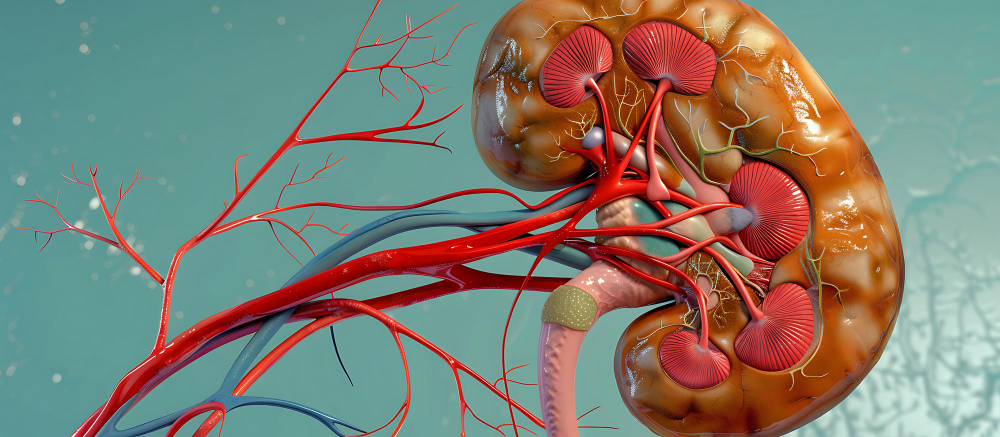
Renal artery stenosis is the narrowing of one or both arteries that carry blood to the kidneys. According to the National Institute of Diabetes and Digestive and Kidney Diseases (NIDDK), the American Heart Association defines critical RAS as a reduction of more than 60% in artery diameter.
When blood flow drops, the kidneys respond by releasing a hormone called renin. Renin raises blood pressure throughout the body. That elevated pressure then further damages the arterial walls — and the cycle continues.
What causes renal artery stenosis, and who is most at risk?
About 90% of RAS cases stem from atherosclerosis — the buildup of fatty plaque inside artery walls (NIDDK). Most remaining cases are caused by fibromuscular dysplasia (FMD), a condition where abnormal cell growth narrows the artery walls. FMD is more common in younger women.
Risk factors for RAS caused by atherosclerosis include:
- High blood pressure or high cholesterol
- Smoking or tobacco use
- Diabetes or insulin resistance
- Obesity or lack of physical activity
- Being a man over 45 or a woman over 55
- A family history of early heart disease
What Are the Warning Signs of Renal Artery Stenosis?
Renal artery stenosis often causes no symptoms in its early stages. That is what makes it easy to miss.
Signs that RAS may be contributing to your high blood pressure include:
- Blood pressure that rises suddenly or worsens without explanation
- High blood pressure that develops before age 30 or after age 55
- Blood pressure that does not respond to three or more medications
- A whooshing sound (called a bruit) heard through a stethoscope placed over the kidneys
As the condition advances, reduced kidney function can cause swelling in the legs, fatigue, headaches, and changes in urination. These symptoms deserve prompt evaluation.
How Is Renal Artery Stenosis Diagnosed?
A vascular specialist typically begins with a physical exam and a review of your medical history. Blood and urine tests check how well your kidneys are filtering waste.
Imaging tests are used to confirm the diagnosis:
- Duplex ultrasound — noninvasive, low cost, and widely used as a first step
- CT angiography (CTA) — detailed cross-sectional images of the renal arteries
- Magnetic resonance angiography (MRA) — no radiation, useful for assessing blood flow
- Catheter angiogram — considered the gold standard for accuracy; also allows treatment during the same procedure
What Are the Treatment Options for Renal Artery Stenosis?
Treatment depends on the severity of the narrowing and how it is affecting your blood pressure and kidney function. If the artery is not significantly blocked, close monitoring may be all that is needed.
Medical management
Lifestyle changes are the first step. Reducing salt intake, maintaining a healthy weight, staying active, and quitting smoking all help protect the renal arteries.
Medications commonly prescribed include ACE inhibitors, angiotensin receptor blockers (ARBs), diuretics, calcium channel blockers, and beta blockers. Cholesterol-lowering medications and aspirin may also be added if atherosclerosis is the underlying cause.
Minimally invasive procedures
Renal angioplasty with stenting widens the narrowed artery and holds it open with a small mesh tube. For patients with FMD, angioplasty alone — without a stent — often produces strong results.
Surgical options
Renal artery bypass surgery creates a new route for blood to reach the kidneys. This approach is generally reserved for cases where angioplasty has not been effective or where other surgical needs are present.
Take the Next Step Toward Answers
Blood pressure that will not budge is not something to wait out. It is a signal worth investigating — and the sooner a cause is identified, the more treatment options are available to you.
Our Vascular Health team is here to help you get those answers. If you are looking for a vascular clinic in Brooklyn, our team offers thorough evaluation and compassionate, individualized care. Reach out today by calling 1-347-384-5690 or visiting us at 1797 Pitkin Avenue, Brooklyn, New York 11212 to help you understand what is driving your blood pressure and what can be done about it.