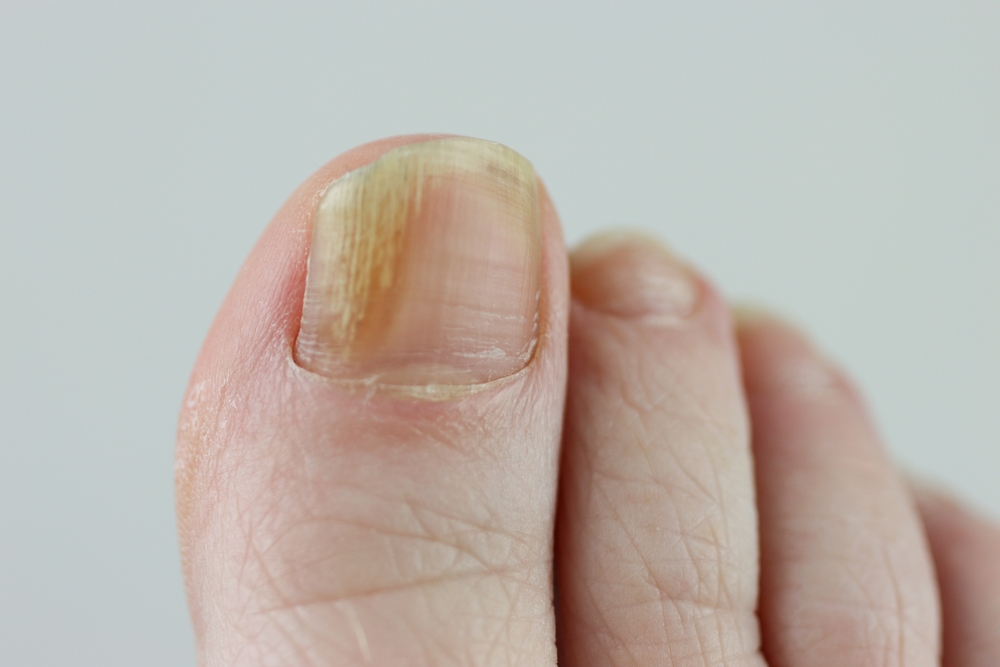
Thick, yellow toenails are most often caused by a fungal infection, but psoriasis can produce similar symptoms. Fungal nails tend to show yellow-brown discoloration and a crumbly texture, while psoriatic nails often have pitting, ridges, and separation from the nail bed. A podiatrist can confirm the cause with a simple exam or lab test.
Noticing thick, yellow toenails can be alarming, especially when you’re not sure what’s causing the change. Two of the most common culprits are toenail fungus and nail psoriasis, and they can look surprisingly similar at first glance. Because the right treatment depends on the right diagnosis, understanding the differences matters.
This guide breaks down the signs of each condition, highlights the key differences to look for, and explains when it’s time to bring in a professional for expert care.
Thick, Yellow Toenails: Fungus or Psoriasis?
Both fungal infections and psoriasis can cause your toenails to thicken and change color, which is why so many people ask, “Is it fungus or psoriasis?” Looking closely at the pattern of symptoms can help you narrow down the cause.
Signs It May Be Fungal
Toenail fungus, also called onychomycosis, usually develops slowly and affects one or more nails. Common signs include:
- Yellow, brown, or white discoloration
- Thickened, crumbly, or brittle nails
- A foul odor coming from the nail
- Nails that separate from the nail bed
- Distorted nail shape over time
Fungal infections thrive in warm, moist environments, so they’re common among people who wear tight shoes, sweat heavily, or spend time in public showers or pools.
Signs It May Be Psoriasis
Psoriasis is an autoimmune condition that can affect the skin and nails, even without visible skin plaques. Nail psoriasis often includes:
- Small pits or dents across the nail surface
- Yellow-red discoloration described as an “oil drop” spot
- Thickened nails that may crumble
- Separation of the nail from the nail bed
- Ridges or grooves running across the nail
If you already have psoriasis on your skin or a family history of the condition, your toenail changes are more likely related to psoriasis than fungus.
Key Differences at a Glance
Feature | Toenail Fungus | Nail Psoriasis |
Onset | Gradual, often after exposure to moisture | Can appear with or without skin symptoms |
Discoloration | Yellow, brown, or white | Yellow-red “oil drop” spots |
Texture | Crumbly, brittle | Pitted, ridged |
Odor | Often present | Typically absent |
Associated conditions | Athlete’s foot, weakened immunity | Psoriasis, psoriatic arthritis |
While this table offers a helpful starting point, some cases overlap, and only a professional exam can confirm the diagnosis with certainty.
When to See a Podiatrist
If your toenails are thick, discolored, or painful, a podiatrist can help identify the exact cause and recommend the right treatment plan. You should consider scheduling a visit if you notice:
- Nail changes that don’t improve after a few weeks
- Pain, swelling, or bleeding around the nail
- Nails that are pulling away from the skin
- A history of psoriasis or diabetes, which can complicate healing
- Uncertainty about whether your symptoms point to fungus or psoriasis
A podiatrist can perform a nail clipping test or biopsy to determine the exact cause, so you’re not left guessing.
Get Expert Care for Your Toenail Concerns
Thick, yellow toenails deserve more than a guess. Our podiatry team is equipped to diagnose the difference between fungal infections and nail psoriasis, offering personalized treatment plans built around your specific needs. If you’re local, our podiatry clinic in Brooklyn provides thorough nail exams and compassionate, expert care every step of the way. Reach out to us today by calling +1-718-367-2555 or visiting us at 1797 Pitkin Avenue, Brooklyn, NY 1121 to schedule a visit and get answers you can trust.