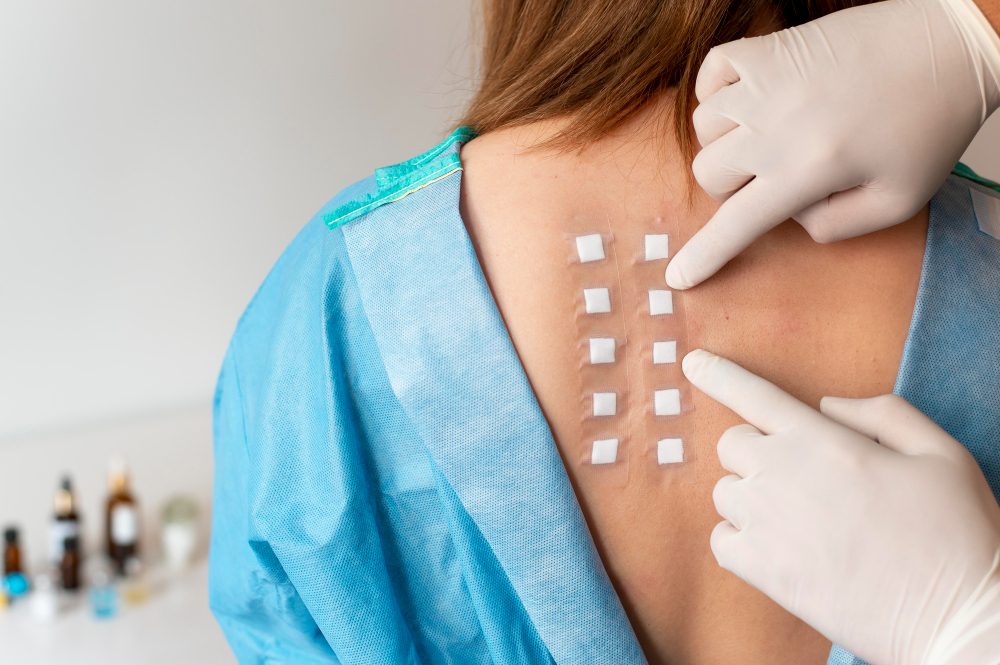
T.R.U.E. patch testing is a method used to locate delayed contact allergens on the back by applying small adhesive patches containing common allergens to the skin. Worn for about 48 hours, the patches are then reviewed days later for delayed reactions. It is one of the most reliable ways to identify what is triggering a stubborn, unexplained rash.
A rash that will not go away is frustrating. You have tried new lotions, switched detergents, and still the irritation returns. When the cause is not obvious, T.R.U.E patch testing offers a clear path toward real answers instead of more guesswork.
This guide walks through what T.R.U.E patch testing involves, why the back is used for placement, and what you can expect from the process.
What Is T.R.U.E Patch Testing?
T.R.U.E stands for Thin-layer Rapid Use Epicutaneous, a ready-to-use patch system approved for identifying delayed contact allergens. Unlike a standard scratch test, which checks for immediate reactions, this method looks for allergic responses that build slowly over several days.
This matters because many common allergens, such as fragrances, metals, and preservatives, cause delayed reactions that would not show up on a quick scratch test. If your skin reacts hours or days after exposure, T.R.U.E patch testing is often the better tool for finding the cause.
Why the Back Is Used for Patch Placement
The back offers a large, flat surface that can hold multiple allergen patches at once without interference between them. This allows your allergist to test for dozens of potential triggers in a single visit.
A few reasons the back works well for this type of testing:
- Surface area. The back can comfortably hold many patches in neat rows, each spaced apart to avoid overlap.
- Skin consistency. The skin on the back reacts in a predictable way, making results easier to read and compare.
- Minimal disruption. Patches placed here stay secure during normal daily movement, which keeps results accurate.
What Happens During the Appointment
Your allergist will apply a series of small patches to your upper back, each containing a diluted allergen. You will wear these for approximately 48 hours without getting them wet or disturbing the area.
After the first 48 hours, the patches are removed, and your skin is checked for a reaction. A follow-up reading typically happens a few days later, since some allergic responses take longer to appear. Choose T.R.U.E patch testing over a shorter screening if your symptoms have lingered for weeks without a clear trigger, since delayed reactions need that extra time to surface.
What You Might Feel
Mild itching or redness under the patches is common and expected. A positive reaction usually looks like a small, raised, red area similar to a mosquito bite. This discomfort is temporary and fades once the trigger is identified and avoided.
Why Seeing an Allergist Makes a Difference
Reading patch test results takes training. An allergist can tell the difference between a true allergic reaction and simple skin irritation, which prevents you from avoiding substances unnecessarily.
Working with a board-certified allergist also means your results get placed in the context of your full medical history, so the treatment plan that follows actually fits your life.
Finding the Right Immunology Clinic in Brooklyn
If you are researching an immunology clinic in Brooklyn, look for a practice with specific experience reading T.R.U.E patch test results. Not every provider reads results the same way, and small differences in interpretation can lead to very different conclusions.
A trusted immunology clinic in Brooklyn will walk you through every step, answer your questions in plain language, and help you build a plan to avoid your specific triggers going forward.
You Do Not Have to Live With an Unexplained Rash
Chronic skin irritation wears on you, both physically and emotionally. T.R.U.E patch testing offers a clear, evidence-based way to finally understand what is happening beneath the surface.
Our Allergy team is ready to guide you through the process from your first consultation to your final results. Reach out to us today by calling +1-718-367-2555 or visiting us at 1797 Pitkin Avenue, Brooklyn, NY 1121 to schedule your patch testing evaluation.