Waiting for test results is one of the hardest parts of any illness. Your loved one has a fever or a cough that won’t go away, and every day without answers feels long. Treatment often has to wait until the cause is clear.
Molecular NAAT diagnostics help shorten that wait. These tests are speeding up targeted pathogen identification by finding the genetic fingerprint of a germ, even when only a tiny amount is present. That means doctors can often confirm what is causing an infection faster and choose the right treatment sooner.
This guide explains how NAAT testing works, why it often outperforms older methods, and when it makes sense to involve an infectious disease specialist.
How Molecular NAAT Diagnostics Work
NAAT stands for nucleic acid amplification test. Every virus and bacterium carries genetic material, either DNA or RNA. A NAAT looks for that material in a sample, such as a swab, urine, or sputum.
Making Many Copies of a Tiny Signal
The test first amplifies, or copies, the germ’s genetic material many times over. According to the CDC, this copying step allows NAATs to detect very small amounts of a pathogen. That is why these tests are considered highly sensitive.
Common NAAT Methods
Labs use several techniques to amplify genetic material:
- RT-PCR (reverse transcription polymerase chain reaction): A widely used method that converts RNA into DNA and then copies it.
- LAMP (loop-mediated isothermal amplification): Copies genetic material at a single, steady temperature.
- TMA (transcription-mediated amplification): Another constant-temperature method often used in lab testing.
Some NAATs run in a full laboratory, while others are designed for point-of-care settings. Rapid tests may return results within minutes. Lab-based tests can take less than an hour to more than a day, but they are generally more sensitive.
Speeding Up Targeted Pathogen Identification: NAAT vs Culture
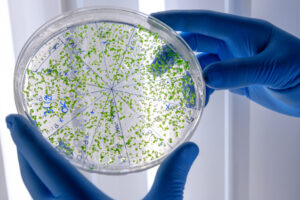
Traditional culture testing grows germs in a lab until there are enough to identify. This approach is still valuable, but it can take days. Some slow-growing bacteria can take even longer.
Comparing the Two Approaches
Feature | Culture-Based Testing | Molecular NAAT Testing |
Speed | Often days or longer | Minutes to about a day |
Sensitivity | May miss small amounts | Detects very small amounts |
Specificity | Good, with added steps | Targets a specific genetic sequence |
Resistance clues | Requires extra testing | Some tests detect resistance markers |
By identifying the exact pathogen sooner, your care team can avoid guesswork and begin targeted treatment earlier.
Clinical Applications of NAAT Testing
NAATs are now part of everyday care for many common and serious infections.
- Sexually transmitted infections: Research published by the American Society for Microbiology describes NAATs as highly sensitive and specific for chlamydia and gonorrhea.
- Tuberculosis: The World Health Organization notes that NAATs offer rapid, accurate detection of TB and resistance to selected anti-TB drugs.
- Respiratory infections: Multi-target panels can check for several viruses and bacteria from a single swab.
- COVID-19: The CDC considers lab-based NAATs the most sensitive tests for detecting the virus.
When to Involve an Infectious Disease Specialist
A positive result can bring up new questions. Your loved one may have more than one condition, a weakened immune system, or an infection that is not improving.
An infectious disease specialist can interpret complex or conflicting results, order follow-up testing, and build a treatment plan that fits your loved one’s overall health. This guidance matters most after a hospital discharge, during recovery from surgery, or when a chronic illness makes infections harder to manage.
Families often prefer care that comes to them. Infectious disease doctors in Brooklyn can coordinate testing, explain each result in plain language, and stay connected with your family as care moves forward.
Get Faster Answers and Peace of Mind
Molecular NAAT diagnostics are changing how quickly infections are found and treated. By speeding up targeted pathogen identification, these tests help your loved one start the right treatment with less waiting and less worry.
You do not have to face uncertain results alone. An infectious disease specialist can guide you through every step with patience and care. Our infectious disease specialists are ready to support you and your family. Reach out to us today by calling +1-718-367-2555 or visiting us at 1797 Pitkin Avenue, Brooklyn, NY 1121 to schedule an evaluation.