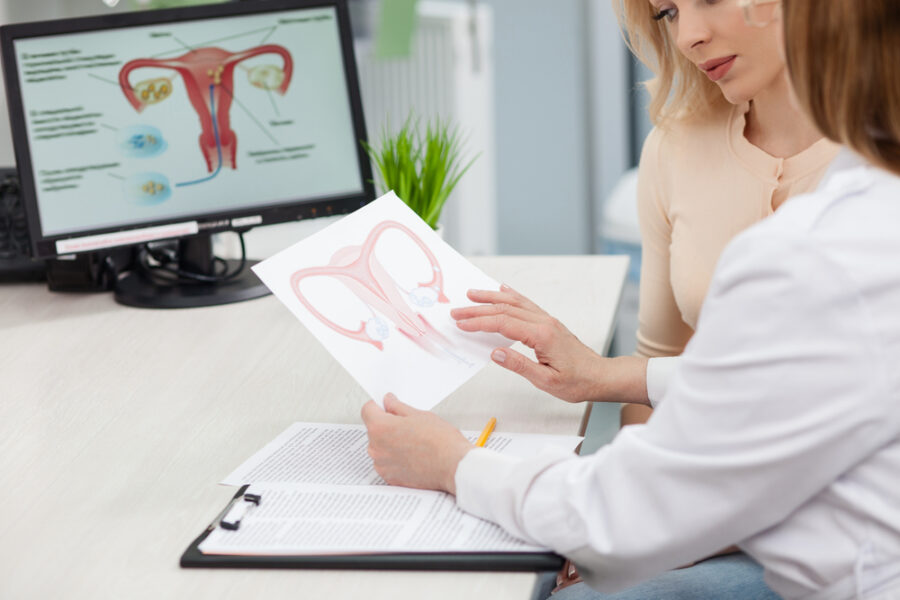
Endometrial or uterine polyps are not only a common cause of abnormal bleeding and pelvic discomfort but can also significantly reduce your chances of becoming pregnant. Studies have shown a strong connection between the presence of polyps and reduced fertility, particularly in women trying to conceive naturally or through assisted reproductive techniques. These polyps can interfere with embryo implantation or alter the uterine environment, making conception more difficult.
Fortunately, endometrial polyp removal has proven to be an effective solution for both symptom relief and fertility improvement. Procedures such as hysteroscopy allow for a minimally invasive, precise approach to polyp removal, often performed on an outpatient basis with little recovery time. In many cases, women who undergo endometrial polyp removal see a noticeable improvement in their menstrual regularity and reproductive outcomes.
Understanding your options is key. In this article, you’ll learn about various endometrial polyp removal procedures, including hysteroscopic polypectomy and other surgical methods, their benefits, and what to expect before, during, and after treatment.
If you’re experiencing abnormal bleeding or struggling to conceive, don’t wait. Schedule an appointment at Doral Health and Wellness – Women’s Health Center..
Endometrial Polyp Removal Procedures
Endometrial removal procedures are required when endometrial polyps are causing symptoms like irregular bleeding and other symptoms. Removal is also important if you are planning a baby. For endometrial polyp removal, several surgical procedures are used, including:
- Hysteroscopy:
This surgical procedure is used to remove polyps from the entire uterus. In this procedure, the doctor uses instruments that are inserted inside the uterus through a device to see inside the uterus which is called a hysteroscope to find the polyps and remove them. During this procedure, the doctor doesn’t need to make any incisions on the abdominal area. They use a hysteroscope in the vagina through the cervix into the uterus. Then it releases gas or saline through the scope to inflate the uterus, for better visualization. Now, surgeons can use special scissors, a laser, or other devices that use electricity to remove polyps. Removed polyps will be sent to the lab to check them for any carcinogenic cells.
- Polypscopy:
This surgical procedure also uses a hysteroscope to insert instruments like surgical scissors, forceps (special tweezers), a laser, or an electrical device to remove the polyps. If there is any bleeding, the surgeon will use a chemical called silver nitrate to stop bleeding. Removed polyps are sent to the lab to check the presence of cancer cells.
- Endometrial scratching:
In this procedure, a hysteroscope is inserted inside the vagina through the cervix to the uterus to get a clear visual of the inside structure. The doctor uses pipeline equipment to remove polyps from the uterus. This procedure helps new tissue to grow.
- Dilation and curettage (D&C):
This surgical procedure also uses a hysteroscope to remove the polyps along with a long metal instrument with a loop on the end to scrape the inside walls of the uterus. This process is called scraping. After polyps are removed, they are sent to a lab for testing for precancerous changes.
Recovery time for Endometrial Polyps Removal
Recovery time can vary from person to person depending on their health and surgical procedure. Usually, most women start feeling better within the 1st week after surgery, however, some women may experience some watery discharge with some blood for a few weeks, which gets better over time.
For better recovery, you need to avoid lifting, pushing, or pulling any heavy objects for a couple of weeks. You also need to avoid sexual intercourse until your doctor examines you and confirms that you can. Full recovery may take 2 weeks for internal healing.
Endometrial polyps’ removal is necessary when your symptoms become unbearable, or you want to improve your fertility chances. All endometrial polyp’s removal procedures use hysteroscopy to visualize inside the structural wall of the uterus to remove polyps, although different instruments are used to remove the polyps and it’s mandatory to send them to the lab for cancer testing. Recovery time also depends on the methods/instruments used to remove polyps; however, usual recovery takes 2 weeks for internal healing.
If you need help with endometrial polyps’ surgical procedures, then visit our gynecology clinic in Brooklyn for professional medical support. It is important that you get a proper and correct diagnosis for your condition. At Doral Health and Wellness – Women’s Health Center, we have the best GYN doctor in Brooklyn, and we provide women with quality health care services. To schedule an appointment, you can visit us at 1797 Pitkin Avenue, Brooklyn, New York 11212 or call us on 1-347-384-5690. You can also visit our website at Gynecology – Doral Health & Wellness Brooklyn NY