If your ankle pain and swelling don’t get better with home treatments and medication, your doctor may recommend ankle arthroscopy, which is a surgical procedure used to treat a variety of ankle issues. In this procedure, the doctor inserts a small camera (arthroscope) inside the skin around the ankle joint to see the damaged muscle or bone tissues and repair them. However, to prevent complications and get the most out of this procedure, you should know how to prepare for this procedure and what to expect during and after the procedure. Learn about the ankle arthroscopy procedure, recovery & prognosis in this article. Get a consultation with the best Podiatrists in Brooklyn.
What is the rationale behind ankle arthroscopy?
Ankle arthroscopy is primarily used to see inside the ankle joint and make a diagnosis when it was first introduced. Now, it is used to perform many different surgical procedures such as confirming a diagnosis, removing loose bodies and bone spurs, debriding excess inflamed synovial tissues, and fixing fractures on the joint surface.
The main goal of the surgeon is to fix and improve the patient’s condition in the right way by performing an appropriate surgical procedure. This helps the surgeon to see clearly through a magnified image and perform surgery by making small incisions. As a result, the damage to normal tissue is much less, and the healing process is greatly shortened. However, it is important to know that arthroscopy is only a tool, and results can vary depending on the condition of the ankle and other efforts to improve the problem.
Procedure
If you and your doctor decide to perform an ankle arthroscopy, make sure you discuss all the details of the procedure and clarify your doubts with your surgeon. Before the procedure, you might need to make changes in your lifestyle to prepare yourself for the surgery. These changes start 2 weeks before the surgery. It can include:
- Stop taking blood thinners: Your surgeon may ask you to stop taking blood thinners such as aspirin, ibuprofen, naproxen, and other medicines because these medicines are prescribed to prevent blood clots, which can be harmful during and after surgery.
- Quit smoking: If you smoke or use other tobacco products, you should quit them for at least 4 weeks before the surgery because it reduces wound and bone healing. In addition to that, it increases the risk of other health conditions.
- Quit drinking alcohol: Drinking alcohol can thin your blood, which is dangerous during and after surgery.
- Changes in diet: Your surgeon will guide you on what you should avoid eating and drinking before your surgery. Generally, you may not need to quit eating or drinking anything other than alcohol, but on the day of the surgery, you need to abstain from eating or drinking anything other than water up to 12 hours before surgery.
- Talk about medical conditions or infections: Your doctor should know about your medical conditions, such as diabetes, heart disease, etc., so your treatment can be planned accordingly. In case you develop a cold, flu, fever, or other illness before the surgery, you should tell the surgeon to postpone the procedure.
On the day of surgery, you can discuss what medicines, supplements, or herbs you should take before arriving at the hospital.
During the procedure, you need to change into a hospital gown and lie down on the examination table, where the surgeon gives you either general anesthesia or regional anesthesia near your ankle, which makes your ankle numb or makes you fall asleep, so you don’t feel pain.
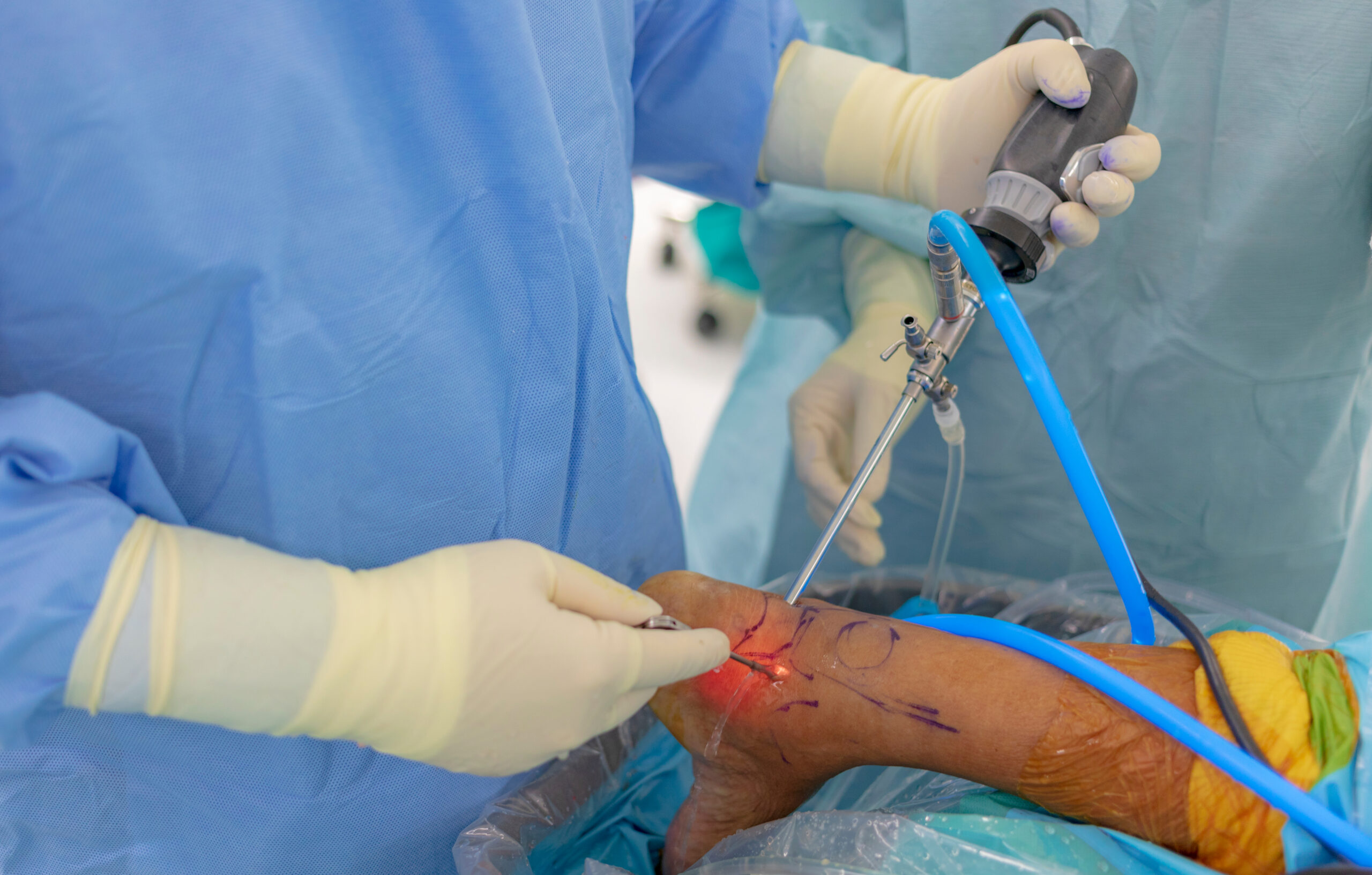
Now the surgeon makes a few small cuts (around half an inch across) in the skin around the ankle where the arthroscope and surgical instruments are inserted into your ankle. Then, the surgeon inserts a small metal or plastic tube in one of the incisions to inflate the ankle with sterile saline. The arthroscope helps the surgeon to see inside the joint and operate on the joint. The arthroscope is a small fiber-optic tube that has a bright light and a TV camera that is connected to an outside TV screen to see inside the ankle joint. The surgeon watches the TV screen while moving the arthroscope to use the joint properly. After inspecting the ankle, the surgeon uses the incisions or makes some new ones to insert surgical equipment to repair the damage to the bones or connective tissues. After the surgery is completed, the incisions will be closed with stitches and covered with a dressing. Then, a large compression bandage or splint from the knee to the toes is used to immobilize the foot for ankle protection. Otherwise, the patient may be asked to put on compression stockings (to prevent a bulky bandage or splint). This is done to reduce swelling and prevent blood clots from forming in the leg. After that, the patient is sent to the recovery room, where the surgeon might show you what they found and repaired during surgery.
After the procedure, you can go home on the same day. Ask someone to take you home. However, you need to take prescribed medications and follow the instructions carefully to boost healing and prevent complications.
Recovery & Prognosis
When you get home after the procedure, you need to follow the surgeon’s instructions to boost your healing.
- You need to use crutches or a wheelchair to prevent putting weight on the ankle for at least 6 weeks (about 1 and a half months), to immobilize your foot. However, this duration can vary depending on the type of repair your ankle gets.
- Make sure you keep your ankle elevated above the heart position most of the time for 2 to 3 days to lower the swelling and pain.
- Use cold therapy to lower pain and swelling.
- Take pain medications as prescribed to relieve the pain.
- Keep your bandage clean and dry. If you’re about to take a bath, cover the area. Follow the instructions properly to change the dressing.
- If you had ankle surgery, then a cast is put in to prevent you from moving it and to promote healing. If arthroscopy is done for a diagnostic purpose, the surgeon may put a simple splint or air splint on your ankle. These need to be worn for a few weeks until your ankle gets stabilized or heals.
Arthroscopy uses small cuts on the skin, which lower the risk of complications, faster recovery, and less pain compared to open surgery. The small cuts heal quickly, and you can resume your normal activities in a few days. But if your ankle has a lot of tissue to be repaired, then it may take several weeks to heal. How quickly they heal depends on the complicated surgical procedure. Your surgeon may guide you on some gentle exercises to perform as you heal or recommend seeing a physical therapist to regain the full functionality of your ankle.
An ankle arthroscopy is a minimally invasive procedure to make repairs to muscle tissue to manage pain and swelling. It is widely used for diagnosis and treatment of many ankle issues. It is safer than other surgical procedures, even in more complicated cases. Make sure you discuss its pros and cons with your doctor before this procedure is complete.
Need help with ankle problems? Visit our podiatry clinic in Brooklyn to get professional medical help. Call us to schedule an appointment. At Doral Health & Wellness, we have Podiatrists with extensive education and expertise. If you’re ready to take the next step in managing your pain, we recommend consulting with our healthcare provider to explore the right treatments or therapies for you. Always listen to your body and adjust your daily routine to prioritize your well-being. Trauma to the tendons, muscles, and bones of the foot is quite common. It’s not a good idea to put off seeing Foot Doctor Brooklyn until you are in a lot of pain. Our address is 1797 Pitkin Avenue, New York, NY 11212. To make an appointment, please call + 1 718 367 2555 or send an email toinfo@doralhw.org.