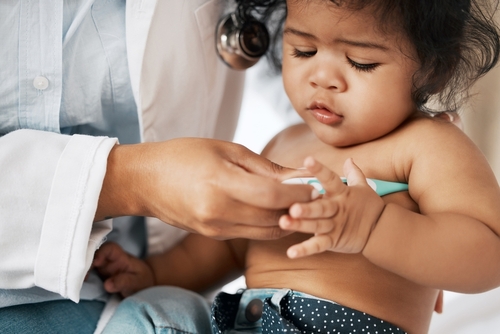
A rising thermometer can quickly cause panic for any parent. A child’s fever is one of the most common reasons for a visit to the pediatrician, yet it often causes significant anxiety. Understanding the nuances of a child fever when to worry versus when to simply monitor the situation is a critical skill for caregivers. While a fever is a normal sign that the body is fighting an infection, certain circumstances require prompt medical attention. This guide will provide clear, reliable information to help you navigate your child’s fever with confidence and know when to call a professional.
At Doral Health & Wellness, we are committed to providing comprehensive and supportive care for our youngest patients. Our team of specialists offers clear, reliable guidance to help you make confident decisions regarding your child’s health. We are your dedicated partners in achieving and maintaining your family’s wellness.
What Is Considered a Fever in Children
A fever itself is not an illness but a symptom. It is the body’s natural defense mechanism against infection, as a higher body temperature makes it more difficult for bacteria and viruses to survive. A rectal temperature of 100.4°F (38°C) or higher is generally considered a fever in children. While the number on the thermometer is important, a child’s overall behavior and other accompanying symptoms are often more telling than the specific temperature.
It is essential to use a digital thermometer for an accurate reading. For infants and toddlers under 3, a rectal temperature is the most accurate. For older children, an oral or temporal (forehead) temperature is reliable.
Child Fever When to Worry: Age-Specific Guidelines
The guidelines for when to seek medical advice for a fever vary significantly based on a child’s age. A fever that might be mild in a toddler can be a serious concern in a newborn.
Infants Under 3 Months
This is the most critical age group, and any fever requires immediate medical evaluation.
- Call your pediatrician or seek immediate care if – Your baby has a rectal temperature of 100.4°F (38°C) or higher. Newborns have immature immune systems, and a fever can be a sign of a serious bacterial infection, like meningitis. Do not give any fever-reducing medication without a doctor’s instruction.
Infants and Toddlers (3 Months to 3 Years)
In this age group, the temperature reading and the child’s behavior are both important factors.
- Call your pediatrician if:
- Your child has a fever of 102°F (38.9°C) or higher.
- The fever lasts for more than three days.
- Your child seems unusually irritable, lethargic, or difficult to console.
- The child is not drinking fluids well or is showing signs of dehydration (e.g., dry diapers, no tears when crying).
Older Children (Over 3 Years)
For older children, behavior is often the best indicator. A child with a high fever who is still playful and drinking fluids may be less concerning than a child with a lower fever who is listless.
- Call your pediatrician if:
- The fever is repeatedly above 104°F (40°C).
- The fever persists for more than three days.
- Your child complains of a stiff neck, severe headache, severe sore throat, or unexplained rash.
- Your child has a known immune system problem or other chronic health condition.
When to Seek Immediate Medical Attention
Regardless of age, some symptoms accompanying a fever are red flags that require emergency care. Go to the emergency room or call 911 if your child has a fever along with any of the following:
- Difficulty breathing or rapid breathing
- A seizure (febrile seizure)
- A non-blanching rash (one that doesn’t fade when you press a glass on it)
- Inconsolable crying or extreme irritability
- Signs of dehydration, such as a sunken soft spot on the head, dry mouth, or no urination for more than eight hours
- Lethargy or difficulty waking up
Consulting with a Pediatrician
When in doubt, calling your kid’s doctor is always the right choice. A trusted professional can provide reassurance and guidance tailored to your child’s specific situation. Searching for a “pediatrician near me” or a “children’s doctor near me” can connect you with local experts who can help.
A pedia doctor Brooklyn can provide a thorough evaluation, diagnose the cause of the fever, and recommend the appropriate treatment. The best pediatrician in New York will not only treat the illness but also partner with you to ensure your child’s long-term health. For those seeking specialized pediatric care, a search for “pedia in NY” can lead to dedicated children’s clinics. Whether it’s a routine check-up or a concern about a fever, having a trusted kid’s doctor is essential.
Knowing about a child fever when to worry is a vital part of parenting. While most fevers are a sign of a common, self-limiting viral illness, it is crucial to recognize the warning signs that indicate a more serious condition. By paying close attention to your child’s age, temperature, and overall behavior, you can make informed decisions. Never hesitate to contact your pediatrician; they are your best resource for navigating childhood illnesses and ensuring your child receives the right care at the right time.
For expert pediatric care and to receive a comprehensive evaluation for your child, contact Doral Health & Wellness today at 1-718-365-2555 or visit us at 1797 Pitkin Avenue, Brooklyn, New York 11212. Our team of dedicated professionals is here to provide the supportive, personalized care your family deserves. For general information about Doral Health & Wellness services, you can contact or email info@doralhw.org.