The minimalist footwear movement has taken the fitness and wellness world by storm. Stroll down any busy street in Brooklyn, and you are bound to see people wearing thin-soled, wide-toed, “zero-drop” shoes. Proponents claim that stripping away modern cushioning allows the foot to function exactly as nature intended, strengthening muscles and correcting posture.
But is going barefoot inside a thin layer of rubber actually safe for everyone?
While minimalist shoes can offer benefits for certain individuals under specific conditions, they also present distinct structural risks. For city dwellers walking miles on unyielding pavement, transitioning too quickly to zero-drop footwear can be a recipe for debilitating arch pain, tendon strain, and overuse injuries.
What Does “Zero-Drop” Actually Mean?
To understand the risks, it helps to understand how standard footwear alters your anatomy. Most conventional sneakers, dress shoes, and boots feature a “heel drop”—meaning the heel sits higher than the ball of the foot, usually by 8 to 12 millimetres.
A zero-drop shoe eliminates this slope entirely. The heel and the forefoot rest at the exact same height off the ground.
When you remove that artificial lift, your entire lower extremity has to adjust. Your calf muscles and Achilles tendon are suddenly forced to stretch further down than they are used to. While this sounds like a great way to stretch, doing it continuously throughout the day places a massive, unexpected workload on the bottom of your feet.
Why Brooklyn Concrete Is Unforgiving to Zero-Drop Soles
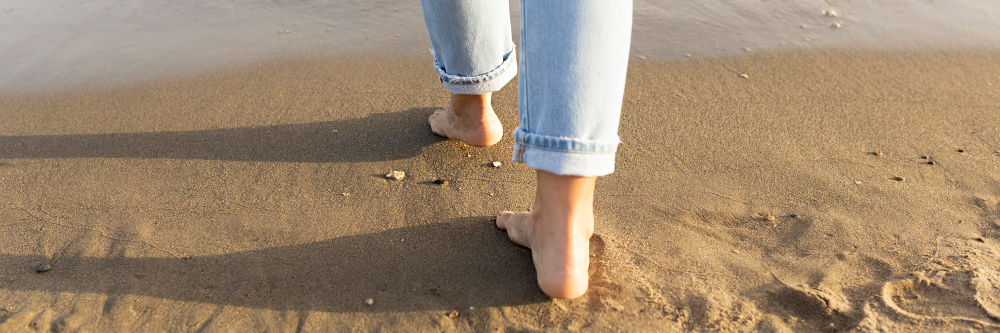
In a natural environment, humans walked barefoot on soft, shifting surfaces like soil, sand, and grass. These surfaces naturally absorb shock and contour to the shape of the foot.
New York City is not a natural environment. Walking miles on rigid, flat concrete surfaces generates a tremendous amount of ground reaction force. Every time your heel strikes the pavement, that impact travels straight up your skeletal system.
Traditional supportive shoes utilize thick foam midsoles and structural arch supports to disperse this impact. Barefoot shoes strip that protection away. Without built-in shock absorption, your muscles, ligaments, and bones must absorb 100% of the force from the hard ground. Over time, this repetitive pounding can overwhelm the foot’s natural structural integrity.
The Primary Risks: Plantar Fasciitis and Fallen Arches
The most common casualty of the barefoot shoe trend is the plantar fascia—the thick band of tissue running along the bottom of your foot that supports your arch.
When you switch to zero-drop shoes without a gradual transition period, the plantar fascia is stretched to its absolute baseline limit. Lacking an arch cookie or supportive midsole to lean on, the arch stretches and sags under your body weight with every step. This structural strain causes microscopic tears in the tissue, leading to chronic inflammation, severe morning heel pain, and a condition known as plantar fasciitis.
Furthermore, if your foot muscles are not already incredibly strong, forcing them to support your body weight on flat concrete can accelerate structural collapse. For individuals who already have flexible flat feet or low arches, zero-drop shoes can worsen overpronation (the foot rolling inward), leading to secondary pain in the ankles, knees, and lower back.
Who Should Avoid Minimalist Footwear?
While healthy individuals with strong intrinsic foot mechanics may transition safely over several months, certain populations should steer clear of zero-drop shoes altogether:
- Individuals with severe flat feet: Lacking structural support can quickly lead to posterior tibial tendon dysfunction.
- Diabetic patients: Thin soles increase the risk of puncture wounds or friction-induced blisters, which can evolve into dangerous, slow-healing ulcers.
- Those with chronic Achilles tendonitis: The lowered heel puts excessive, constant tension on the Achilles tendon, worsening existing inflammation.
Hurting From Hard Brooklyn Sidewalks?
Our experienced podiatrists can perform a full digital gait analysis to treat arch pain and design custom orthotics tailored precisely to your feet.
How to Safely Transition (If You Choose To)
If you still want to try the barefoot shoe trend, you must avoid the “too much, too soon” trap. Treat minimalist footwear like a workout tool rather than an everyday shoe:
- Start slow: Wear them for just 20 to 30 minutes a day while walking around your apartment.
- Focus on foot exercises: Strengthen your arches by performing towel curls with your toes and calf raises.
- Listen to your body: If you feel a dull ache in your heels or tightness in your calves, switch back to your supportive footwear immediately.
Your feet have spent decades adapting to supportive shoes. Forcing them to change overnight on hard city streets is a major health risk. If you are experiencing foot fatigue or arch pain, consulting a podiatrist is the safest way to evaluate your gait and protect your mobility.
Book your Podiatry appointment today with us by calling +1 718 367 2555 or visit us at 1797 Pitkin Avenue, New York, NY 11212 to get a proper consultation for your foot health.