Lateral foot pain in Central Park runners usually stems from peroneal tendonitis, a stress fracture, or cuboid syndrome. These injuries often develop from Central Park’s mix of hard concrete loops and uneven bridle paths, combined with worn shoes or a sudden increase in mileage. Rest, proper footwear, and gradual training changes typically help. Persistent or sharp pain calls for a podiatrist’s evaluation.
Central Park offers one of the most scenic runs in the country. The reservoir loop, the rolling hills near Harlem, the shaded stretches of the bridle path. It is easy to see why thousands of runners lace up here every day.
But that beauty comes with a cost for some. A nagging ache on the outside of the foot can turn a favorite morning route into a source of dread. If you have felt this pain, you are not imagining it, and you are not alone.
Why Do Central Park Runners Get Pain on the Outside of the Foot?
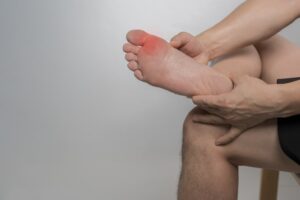
Lateral foot pain, the kind you feel along the outer edge of your foot, often points to one of a few common overuse injuries. Understanding the cause is the first step toward finding relief.
What Causes Lateral Foot Pain in Runners?
Several conditions tend to show up in runners who log regular miles on hard surfaces.
- Peroneal tendonitis. The peroneal tendons run along the outside of your ankle and foot. Repetitive strain, especially on uneven ground, can inflame them and cause pain that worsens with activity.
- Stress fractures. Small cracks in the bones of the foot, often the fifth metatarsal, develop when repeated impact outpaces your bone’s ability to heal. This pain tends to build gradually and worsen over time.
- Cuboid syndrome. The cuboid bone sits on the outer midfoot. When it shifts slightly out of alignment, often from a rolled ankle or repetitive lateral stress, it can cause a deep, persistent ache.
Each of these conditions shares a common thread. They develop when your foot absorbs more stress than it can handle, whether from mileage, terrain, or worn-out shoes.
How Does Central Park’s Terrain Affect Foot Pain?
Where you run matters as much as how far you run.
The main loop is paved with unforgiving concrete. Every stride sends impact straight up through your foot and ankle, with little to soften the blow. Over weeks and months, that repeated pounding adds up.
The bridle path tells a different story. Its packed dirt surface is gentler on your joints, but its uneven footing and occasional roots and rocks create a different risk: rolled ankles and sudden lateral stress on the foot. Switching between these surfaces without adjusting your stride or footwear can leave your foot working overtime to adapt.
How Can You Treat and Prevent Lateral Foot Pain at Home?
Mild lateral foot pain often responds well to a few simple changes.
- Rest and ice. Give your foot a break from high-impact activity and apply ice for 15 to 20 minutes a few times a day to reduce inflammation.
- Supportive footwear. Worn-out shoes lose their cushioning and stability. Replace running shoes every 300 to 500 miles, and consider a pair built for your foot type and gait.
- Gradual mileage increases. Sudden jumps in distance or intensity are a leading cause of overuse injuries. Increase your weekly mileage slowly to give your bones and tendons time to adapt.
- Cross-training on softer surfaces. Alternating pavement runs with time on the bridle path, or adding low-impact cross-training, gives your feet a break from repetitive stress.
These steps help many runners recover fully. But your body will tell you when home care is not enough.
When Should You See a Foot Specialist for Lateral Foot Pain?
Some symptoms should not wait. If your pain is sharp, does not improve with rest, or worsens with each run, it is time to have your foot evaluated. Swelling, bruising, or difficulty putting weight on your foot are also signs that something more serious may be happening, like a stress fracture.
A podiatrist can pinpoint the exact cause of your pain through a physical exam and, if needed, imaging. From there, they can recommend a treatment plan built around your foot, your running goals, and your favorite Central Park routes.
Get Back to Running Pain-Free in Central Park
Foot pain does not have to sideline your running routine for good. With the right care, most runners return to the paths they love feeling stronger and more confident in their stride.
If lateral foot pain has become a regular part of your runs, our podiatry team can help you find out what is really going on and build a plan to fix it. Reach out today by calling us at +1-718-367-2555 or walking into our clinic at 1797 Pitkin Avenue, Brooklyn, NY 11212 to schedule an evaluation and get back to the miles you enjoy.