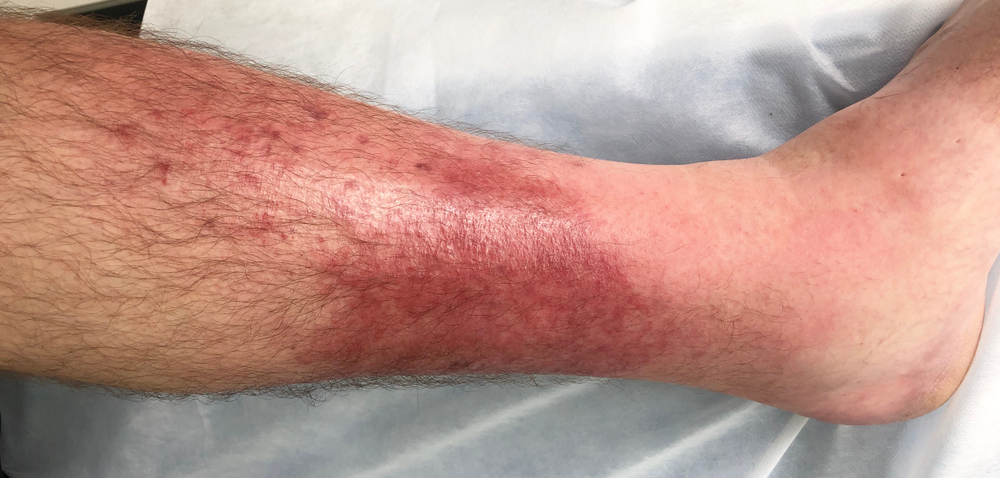
The difference between cellulitis and stasis dermatitis comes down to cause and urgency. Cellulitis is a bacterial infection that spreads quickly and often comes with fever, while stasis dermatitis is a chronic skin condition linked to poor circulation. Knowing how to identify spreading skin redness, including its speed, warmth, and pain level, helps you decide when to seek care.
Noticing redness on your leg can feel unsettling, especially when you are not sure what caused it. You may wonder if it is something minor or a sign that you need medical attention right away. Understanding the difference between cellulitis and stasis dermatitis can help you make that call with more confidence. Both conditions cause red, irritated skin, but they come from very different sources and require very different responses. Below, we walk through how to tell them apart and how to identify spreading skin redness before it becomes a bigger problem.
What Is the Difference Between Cellulitis and Stasis Dermatitis?
Cellulitis and stasis dermatitis can look similar at first glance, but their causes set them apart. Cellulitis is a bacterial skin infection that develops when bacteria enter through a cut, crack, or wound. It tends to appear suddenly and worsen quickly. Stasis dermatitis, on the other hand, develops slowly over time due to poor blood flow, usually in the lower legs. It is not an infection, though it can sometimes lead to skin breakdown that makes infection more likely.
Signs and Symptoms of Cellulitis
- Rapid onset: Redness and swelling that appear within hours and spread noticeably day by day.
- Warmth and tenderness: The affected area often feels hot to the touch and painful when pressed.
- Systemic symptoms: Fever, chills, or fatigue can accompany the skin changes.
- Defined border: The red area often has a distinct edge that expands outward.
Signs and Symptoms of Stasis Dermatitis
- Gradual development: Discoloration builds slowly, often starting as a brownish or reddish tint near the ankles.
- Dry, itchy skin: The area may flake, itch, or feel tight rather than acutely painful.
- Swelling that fluctuates: Swelling often improves overnight and returns after standing for long periods.
- No fever: Since it is not an infection, stasis dermatitis does not typically cause systemic symptoms.
How to Identify Spreading Skin Redness
Knowing how to identify spreading skin redness starts with tracking how quickly it changes. Redness that grows visibly within a day, feels warm, and comes with pain or fever points toward an infection like cellulitis. Redness that develops over weeks, feels itchy rather than painful, and improves with rest or elevation is more consistent with stasis dermatitis.
Marking the edge of the redness with a pen and checking it every few hours can help you see how fast it is moving. If the border expands noticeably or new symptoms appear, treat it as urgent rather than waiting to see if it resolves on its own.
When to See an Infectious Disease Specialist
You do not have to guess whether your symptoms are serious. An infectious disease specialist can evaluate spreading redness, order the right tests, and start treatment before an infection has a chance to worsen. This is especially important if you notice fever, rapidly spreading redness, or red streaks moving away from the original area.
Reaching out to an infectious disease specialist early can also prevent complications like abscesses or the infection entering the bloodstream. If you have underlying conditions like diabetes or poor circulation, your risk for complications is higher, and specialized care matters even more.
Finding Infectious Disease Doctors in Brooklyn
If you live locally, infectious disease doctors in Brooklyn can offer prompt evaluation and coordinated follow-up care. Working with infectious disease doctors in Brooklyn also means easier access to local labs, imaging, and specialists who understand the needs of your community. This kind of coordinated care can make a real difference when time matters.
You Do Not Have to Figure This Out Alone
Spotting the difference between cellulitis and stasis dermatitis is not always easy, especially when the redness is new. Trust what your body is telling you. If symptoms are worsening quickly or you notice fever, do not wait for the situation to improve on its own. Reach out to our infectious disease specialists today by calling +1-718-367-2555 or visiting us at 1797 Pitkin Avenue, Brooklyn, NY 1121 to schedule an evaluation and get a clear answer about what your skin is telling you.