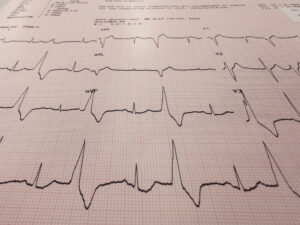
Mitral valve regurgitation requires surgical repair when backflow becomes severe, symptoms worsen, or the heart begins showing signs of strain, such as an enlarged left ventricle or declining pumping function. A cardiologist tracks these changes through regular echocardiograms and symptom review, since the timing of surgery has a direct impact on long-term heart health.
Learning that a loved one has mitral valve regurgitation can feel unsettling, especially when the next steps are not clear. You may be wondering how serious this condition really is, or whether surgery is coming sooner than anyone expected. Those questions are normal, and you are not alone in asking them.
Mitral valve regurgitation means blood is leaking backward through the heart’s mitral valve instead of moving forward the way it should. In many cases, this backflow stays mild for years and simply needs monitoring. In other cases, it progresses and reaches a point where surgical repair becomes the safest path forward. Understanding where that line falls can help you and your family make informed decisions with your cardiologist.
What Happens When the Mitral Valve Leaks?
The mitral valve sits between the heart’s left upper and lower chambers. When it works properly, it closes tightly so blood flows in one direction only. When it leaks, some blood flows backward into the upper chamber instead of moving out to the rest of the body.
Over time, this backflow forces the heart to work harder. The heart muscle can enlarge, and its pumping ability can start to decline. This is why regular monitoring matters, even when symptoms feel manageable.
Symptoms That Signal Backflow Is Getting Worse
Symptoms do not always match the severity of the leak, which is part of what makes this condition tricky to gauge on your own. Watch for:
- Shortness of breath: Especially during light activity or while lying flat.
- Fatigue: Feeling unusually tired even after rest.
- Irregular heartbeat: A fluttering or racing sensation in the chest.
- Swelling: In the ankles, feet, or abdomen.
If any of these symptoms appear or intensify, it is time to schedule an evaluation rather than wait for the next routine visit.
When Does Backflow Require Surgical Repair?
This is the question most families want answered clearly. A cardiologist typically recommends surgical repair for mitral valve regurgitation when one or more of the following occur:
- The regurgitation is classified as severe on echocardiogram.
- Symptoms like breathlessness or fatigue interfere with daily life.
- The left ventricle begins to enlarge or its pumping function drops.
- Atrial fibrillation or elevated pressure in the lungs develops.
Even without symptoms, a cardiologist may recommend surgery once imaging shows the heart is starting to change shape or function. Catching these changes early often leads to better outcomes than waiting until symptoms become severe.
Repair Versus Replacement
Whenever possible, cardiologists favor repairing the valve over replacing it. Repair preserves the patient’s own tissue and tends to offer better long-term durability. Replacement, using a mechanical or biological valve, becomes the better option when the valve tissue is too damaged to repair safely. Your cardiology team will walk you through which approach fits your specific case.
Reach Out to Our Cardiology Team Today
Living with uncertainty about a heart condition is difficult, especially when you are trying to protect someone you love. You do not have to sort through these decisions alone. Our Cardiology team is here to review your test results, explain what they mean in plain language, and guide you toward the right timing for treatment. If you or a family member has been diagnosed with mitral valve regurgitation, reach out to us today by calling +1-718-367-2555 or visiting us at 1797 Pitkin Avenue, Brooklyn, NY 1121 to schedule an evaluation with a cardiologist who can help you plan the next step with confidence.