During a Bruce protocol treadmill test, most adults aim to reach 85% of their predicted maximum heart rate, calculated as 220 minus your age. Hitting this target allows your cardiologist to see how your heart responds under increasing physical demand. Falling short is not automatically a problem. It simply gives your care team more information to work with.
Stepping onto a treadmill for a stress test can feel intimidating, especially when you are not sure what the machine is measuring or what number you are supposed to reach. That uncertainty is normal. The Bruce protocol treadmill test is one of the most widely used tools for evaluating heart health, and understanding what target heart rate you need to hit can turn a nerve-wracking appointment into a straightforward one. Below, we break down how the test works, what your target heart rate means, and what happens next.
What Is the Bruce Protocol Treadmill Test?
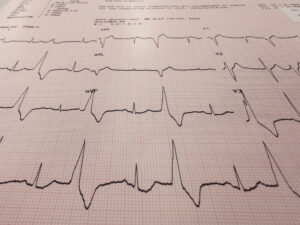
The Bruce protocol treadmill test is a structured exercise stress test. Every three minutes, the treadmill’s speed and incline increase, gradually pushing your heart to work harder. Your cardiologist monitors your heart rhythm, blood pressure, and symptoms throughout, watching for signs that your heart is not getting enough blood flow under stress.
This step-by-step increase is what makes the Bruce protocol treadmill test so useful. It reveals problems that might stay hidden while you are resting comfortably in an exam room.
What Target Heart Rate Do You Need to Hit During the Test?
The most common goal is 85% of your age-predicted maximum heart rate. Your cardiologist calculates this using a simple formula: subtract your age from 220, then multiply that number by 0.85.
For example, a 50-year-old patient has a predicted maximum heart rate of 170 beats per minute. Eighty-five percent of that is roughly 144 beats per minute, the target for a diagnostic-quality result.
How Is Target Heart Rate Calculated?
- Predicted maximum: 220 minus your age.
- Target zone: 85% of that predicted maximum, sometimes adjusted for medication or health history.
- Individual factors: Beta blockers, fitness level, and existing heart conditions can all shift what a realistic target looks like for you.
What Happens If You Don’t Reach Target Heart Rate?
Not reaching your target heart rate does not mean the test failed. It happens often, particularly in patients on heart rate-lowering medications. Your cardiologist can still gather valuable information from the portion of the test you completed, and may recommend a different type of stress test if more detail is needed.
Why Might a Cardiologist Recommend This Test?
A cardiologist typically orders a Bruce protocol treadmill test to investigate chest pain, shortness of breath, or unexplained fatigue during activity. It also helps confirm whether treatment for a known heart condition is working as intended.
Because the test reflects how your heart performs under real physical stress, it often uncovers issues that rest alone cannot show. Your cardiologist uses those results to guide next steps, whether that means adjusting medication, ordering imaging, or simply confirming that your heart is functioning well.
What to Expect During Your Test at a Cardiology Clinic in Brooklyn
At our cardiology clinic in Brooklyn, patients are guided through every stage of the Bruce protocol treadmill test, from electrode placement to cool-down. You will be monitored closely, and the pace only increases as your body is ready for it. Nothing about the process should feel rushed or confusing.
If you have questions about what target heart rate is realistic for your age or health history, our team at the cardiology clinic in Brooklyn will walk through the numbers with you before you ever step on the treadmill.
Get Clarity About Your Heart Health
You do not need to guess what your numbers mean or worry alone about what a stress test might reveal. If you have been told you need a Bruce protocol treadmill test, our Cardiology team is ready to walk you through every step, from preparation to results. Reach out today by calling +1-718-367-2555 or visiting us at 1797 Pitkin Avenue, Brooklyn, NY 1121 to schedule your evaluation and get real answers about your heart health.