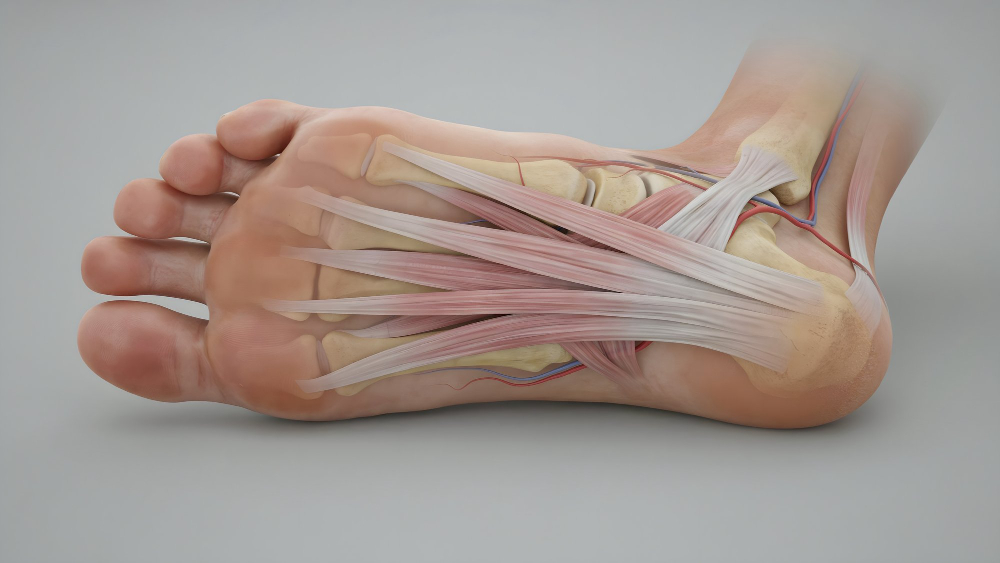
You have stretched, iced, and rested your foot for weeks. You followed every instruction for plantar fasciitis. Yet the burning in your heel has not let up. If this sounds familiar, you may be dealing with medial calcaneal nerve entrapment, not plantar fasciitis at all.
This condition is often missed because its symptoms overlap so closely with common heel pain. Understanding the difference can save you months of frustration and point you toward treatment that actually works.
Why Medial Calcaneal Nerve Entrapment Is Mistaken for Plantar Fasciitis
The medial calcaneal nerve runs along the inside of the heel, close to the same area affected by plantar fasciitis. When this nerve becomes compressed by swelling, tight tissue, or repeated strain, it produces pain that feels strikingly similar to fascia-related heel pain.
This overlap means many people spend weeks on standard fasciitis care, stretching, night splints, and anti-inflammatory medication, without improvement. If your pain has not responded after several weeks of consistent treatment, nerve involvement is worth considering.
Signs and Symptoms of Medial Calcaneal Nerve Entrapment
Plantar fasciitis typically causes stabbing pain with the first steps in the morning. Medial calcaneal nerve entrapment feels different. It often presents as burning, tingling, or electric sensations along the inner heel.
Key Warning Signs
- Burning rather than stabbing pain: The sensation feels hot or electric instead of sharp and stabbing.
- Numbness or tingling: You may notice pins-and-needles sensations spreading across the heel or arch.
- Pain unrelated to your first steps: Unlike fasciitis, symptoms may persist throughout the day, not just after rest.
- Tenderness along the inner ankle: Pressing near the ankle bone can reproduce the burning feeling.
How Burning Heel Pain That Doesn’t Respond to Fasciitis Care Is Treated
Once nerve entrapment is identified, treatment shifts away from standard fasciitis protocols and toward relieving pressure on the nerve itself.
Conservative vs. Advanced Treatment Options
Choose conservative treatment first if your symptoms are recent or mild. This usually includes custom orthotics, activity modification, and physical therapy focused on nerve mobility.
Choose advanced treatment if conservative care has not brought relief after several weeks. This may involve corticosteroid injections to calm inflammation around the nerve, or in persistent cases, a minor surgical procedure to release the entrapped nerve.
When to See a Podiatrist
You should not have to guess why your heel pain will not go away. If burning heel pain continues despite weeks of fasciitis treatment, it is time to see a podiatrist. A podiatrist can distinguish nerve entrapment from fasciitis and other causes of heel pain through a physical exam and, if needed, nerve studies or imaging.
Finding Relief Starts With the Right Diagnosis
Living with unresolved heel pain affects more than your feet. It can limit your ability to work, exercise, and move through daily life comfortably. You do not have to keep guessing what is wrong. Reach out to our podiatry team today by calling +1-718-367-2555 or visiting us at 1797 Pitkin Avenue, Brooklyn, NY 1121 to schedule a visit that fits your schedule. Relief starts with a clear diagnosis, and that is closer than it feels.