
• Trouble breathing
• Swelling of the lips, tongue, or throat
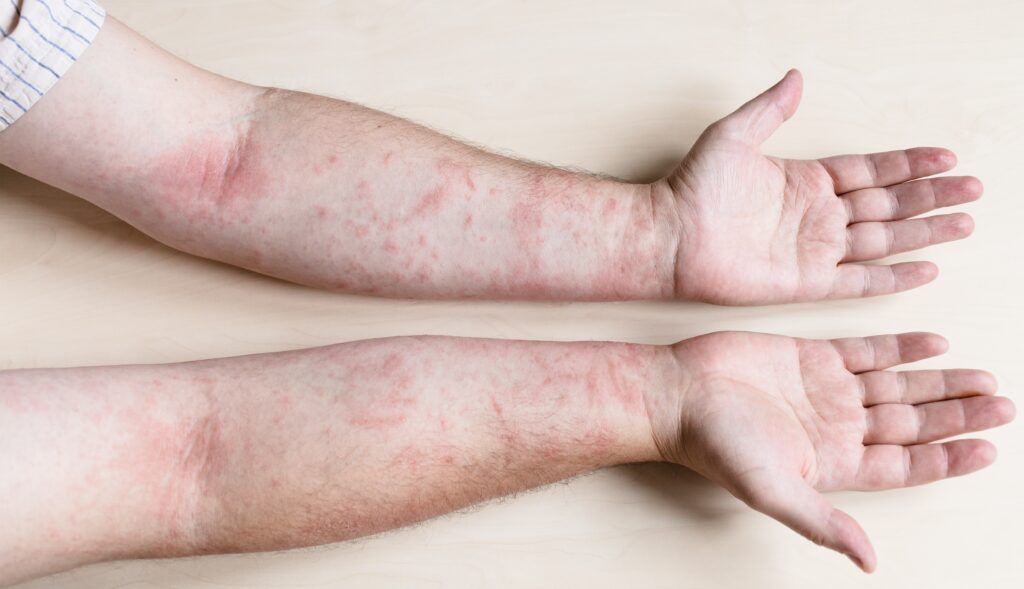
• Hives or widespread rash
• Dizziness or fainting
• Vomiting or abdominal cramps
• Rapid onset of severe symptoms
Emergency care is needed right away if anaphylaxis is suspected. After emergency treatment, follow-up with an allergy specialist is important to identify triggers and prevent future reactions.
Schedule a consultation today.
Common triggers include foods, insect stings, medications, latex, and other severe allergens.
Evaluation may include a detailed allergy history, review of emergency events, and targeted allergy testing after recovery.
Emergency treatment includes epinephrine. Long-term care may include allergen avoidance, an emergency action plan, education, and carrying epinephrine auto-injectors.
At our advanced allergy testing center, we use cutting-edge skin and blood tests to diagnose allergies with precision. From pollen and pet dander to food and medication sensitivities, we uncover the root causes of your symptoms—so you can breathe easier, feel better, and live allergy-free.
Just write what you want and you will find it.
