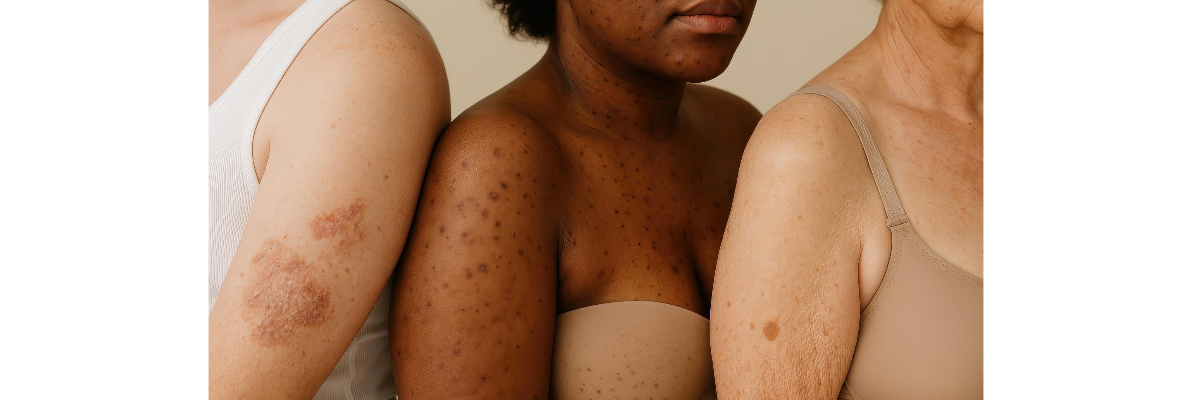
The itch keeps you up at night. You scratch, and the skin darkens instead of turning red. You have tried creams from the pharmacy, but the flare-ups keep coming back. If this sounds like your experience, you are not alone. Eczema on black skin often looks and behaves differently than the textbook descriptions most people see online. That difference matters, because it can delay diagnosis and lead to the wrong care. The good news is that once you understand how eczema shows up on deeper skin tones, you can find eczema treatment near me that actually fits your needs. This guide walks you through what to look for, why treatment changes, and how the right care team can help you feel comfortable in your skin again.
At Doral Health & Wellness Dermatology, our dermatology team understands how eczema presents across all skin tones, not just lighter ones. We take your symptoms seriously and build a care plan around your skin, your triggers, and your daily life. If flare-ups keep interrupting your sleep and your confidence, reach out today and let us help you find lasting relief.
Why Eczema on Black Skin Looks Different
Most eczema images show red, inflamed patches. But on deeper skin tones, that redness can be hard to see. Instead of looking pink or red, eczema on black skin often appears darker, purplish, grayish, or ashy. This single difference causes real problems.
Here is why it matters. When redness is not obvious, eczema gets missed or dismissed. You may hear that your skin “looks fine” when it feels anything but. That delay can let inflammation deepen and spread.
Several features set eczema apart on brown and black skin:
- Color changes – Patches may look dark brown, gray, or violet rather than bright red.
- Papular texture – Eczema often shows up as small bumps around hair follicles, a pattern more common in darker skin.
- Pigment shifts – After a flare heals, skin can turn lighter (hypopigmentation) or darker (hyperpigmentation) than the surrounding area.
- Prurigo nodules – Long-term scratching can create firm, itchy bumps that linger for months.
Black children are more likely to have severe eczema and are also more likely to go undiagnosed. Knowing what to look for helps you advocate for the care you deserve.
How Treatment Changes for Deeper Skin Tones
Treating eczema is not one-size-fits-all. On black and brown skin, the goal is not only to calm the itch. It is also to protect against the pigment changes that eczema leaves behind. Those dark or light marks can last far longer than the flare itself.
That is why the right approach matters so much. A provider who understands skin of color will treat both the inflammation and the aftermath.
Managing Flare-Ups
The first job is to stop the itch-scratch cycle. When you calm inflammation quickly, you limit lasting damage.
- Topical steroids – Prescription creams reduce inflammation during active flares, used carefully to avoid thinning the skin.
- Non-steroid options – Calcineurin inhibitors and newer creams help sensitive areas and long-term control.
- Moisture barrier repair – Rich, fragrance-free moisturizers lock in hydration and protect the skin barrier.
- Trigger management – Identifying and avoiding your personal triggers keeps flares from starting.
Treating Pigment Changes
Here is where skin of color needs special attention. Once a flare heals, the marks it leaves can feel just as frustrating as the eczema itself.
- Sun protection – Daily broad-spectrum SPF helps dark spots fade faster and prevents them from deepening.
- Gentle brightening agents – Under expert guidance, certain ingredients can even out lingering discoloration.
- Patience and consistency – Pigment changes fade slowly, so a steady routine matters more than a quick fix.
A skilled provider in Brooklyn dermatology will match your plan to your skin type, lowering the risk of new marks. This is why seeing an experienced dermatologist in NY makes such a difference for deeper skin tones.
Finding the Right Eczema Treatment Near Me
Not every clinic has deep experience with skin of color. The wrong approach can leave you cycling through treatments that never quite work. Choosing the right care team protects both your comfort and your skin.
When you search for eczema treatment near me, look for these qualities:
- Experience with skin of color – A provider who recognizes how eczema presents on black and brown skin will diagnose you accurately.
- Personalized plans – Your triggers and skin are unique, so your treatment should be too.
- Clear communication – A good provider explains each step and listens to your concerns.
- Ongoing support – Eczema is a long-term condition, so follow-up care keeps your progress steady.
When you find a skin clinic near me that offers all four, you gain a real partner. Early, consistent care greatly improves quality of life. Searching for dermatology near me is a strong first step, but the right expertise is what truly matters.
Everyday Habits That Keep Eczema Calm
Treatment works best when your daily routine supports it. Small, steady habits can keep flares away and protect your skin between visits.
- Moisturize twice daily – Apply cream right after bathing to trap moisture.
- Choose gentle products – Skip fragrances and harsh soaps that irritate sensitive skin.
- Manage stress – Stress is a common trigger, so rest and calm help your skin too.
- Track your flares – Note what worsens your skin so you can adjust with your provider.
You do not have to manage this alone. With the right support, calm and comfortable skin is within reach.
Take Control of Your Eczema Today
Eczema on black and brown skin often looks different, which means it needs care that truly understands your skin. When you pair the right treatment with daily protection and expert guidance, you can calm the itch and protect against lasting marks. You deserve a plan built for your skin, not a generic fix that ignores how eczema shows up on deeper tones. Whether you are newly noticing symptoms or you have struggled for years, our experienced team is here to guide you every step of the way.
To start your journey toward calmer, healthier skin, contact Doral Health & Wellness today at 1-718-365-2555 or visit us at 1797 Pitkin Avenue, Brooklyn, New York 11212. For general information about Doral Health & Wellness services, you can contact or email info@doralhw.org.