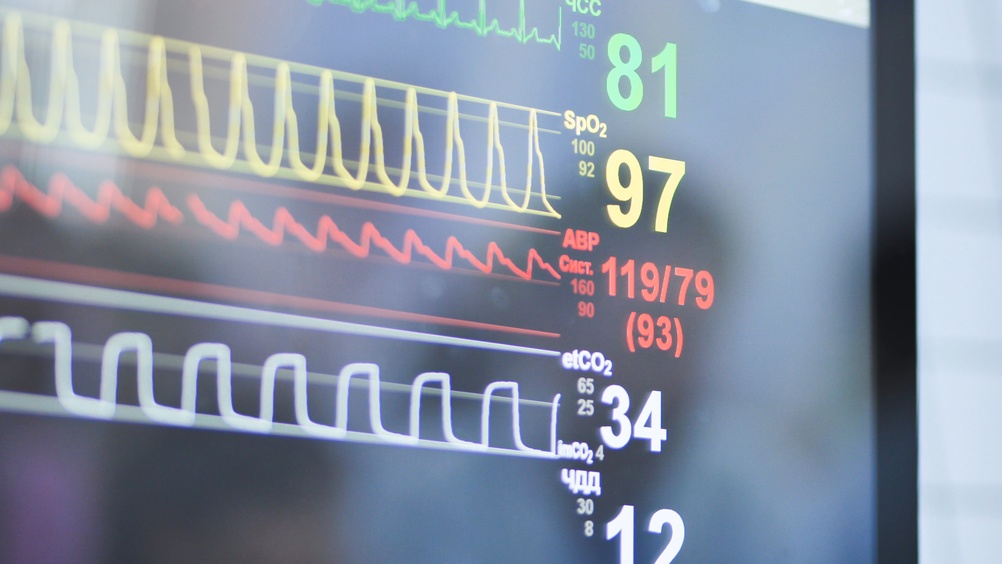
EKG/ECG waveforms record the heart’s electrical signals as a series of peaks and dips. Each wave, labeled P, QRS, and T, corresponds to a specific stage of the heartbeat. When these waves appear irregular, stretched, or out of order, it can point to underlying rhythm damage. A cardiologist reviews these patterns to catch problems early and guide the right treatment for your loved one.
Watching a loved one go through heart testing can bring up a lot of worry, especially when the results come back full of unfamiliar terms and squiggly lines. EKG/ECG waveforms are one of the first tools a cardiologist uses to understand what is happening inside the heart. Learning how to read these waveforms, even in a general sense, can help you feel more prepared and less anxious walking into your next appointment. This guide explains what each part of the waveform means and how it helps in detecting underlying rhythm damage.
What Are EKG/ECG Waveforms?
An EKG, also called an ECG, measures the heart’s electrical activity through small sensors placed on the skin. Each heartbeat creates a wave pattern made up of distinct sections: the P wave, the QRS complex, and the T wave. Together, these sections show how electrical signals move through the heart’s chambers with every beat.
How Do EKG/ECG Waveforms Help Detect Underlying Rhythm Damage?
Every part of the waveform tells a story about a different stage of the heartbeat. When one section looks different than expected, it can signal a problem in that specific area of the heart’s electrical system.
What the P Wave Shows
The P wave represents the electrical signal that causes the heart’s upper chambers to contract. A missing, flattened, or unusually shaped P wave may point to issues with the heart’s natural pacemaker or the upper chambers themselves.
What the QRS Complex Shows
The QRS complex reflects the contraction of the heart’s lower chambers, which do most of the work pumping blood. A widened or irregular QRS complex can be a sign of damage to the heart’s electrical pathways, sometimes from a past heart attack or another underlying condition.
What the T Wave Shows
The T wave shows the heart resetting after each contraction. Changes in the shape or height of the T wave can suggest strain on the heart muscle or an imbalance in the body’s electrolytes, both of which a cardiologist will want to investigate further.
What Happens During an EKG/ECG Test?
An EKG is quick, painless, and does not require any needles. Here is what your loved one can expect:
- No discomfort: Small sensors are placed on the chest, arms, and legs, and the test itself takes only a few minutes.
- No preparation needed: There is no fasting or special instructions required beforehand.
- Fast results: A cardiologist can often review the waveform pattern the same day.
- Repeatable and safe: Since there is no radiation involved, the test can be repeated as often as needed to track changes over time.
When Should You See a Cardiologist About EKG/ECG Results?
If your loved one experiences chest discomfort, dizziness, an irregular heartbeat, or unexplained fatigue, it may be time to schedule an EKG. A cardiologist can walk you through what the waveforms show and explain whether further testing is needed. Detecting underlying rhythm damage early often makes treatment simpler and more effective.
Finding a Cardiology Clinic in Brooklyn for EKG/ECG Care
Choosing a cardiology clinic in Brooklyn close to home makes it easier to stay on top of ongoing heart care. A nearby cardiology clinic in Brooklyn can coordinate EKG results with your loved one’s primary doctor, track changes over time, and offer a familiar, consistent care team your family can rely on.
You Are Not Alone in This
Learning to understand EKG/ECG waveforms can take away some of the mystery around heart testing, but it is normal to still have questions. You deserve clear explanations and steady support at every step. Our Cardiology team is here to review your loved one’s EKG results, explain what they mean in plain language, and guide your family through next steps. Reach out today by calling +1-718-367-2555 or visiting us at 1797 Pitkin Avenue, Brooklyn, NY 1121 to schedule an EKG and get the answers you deserve.