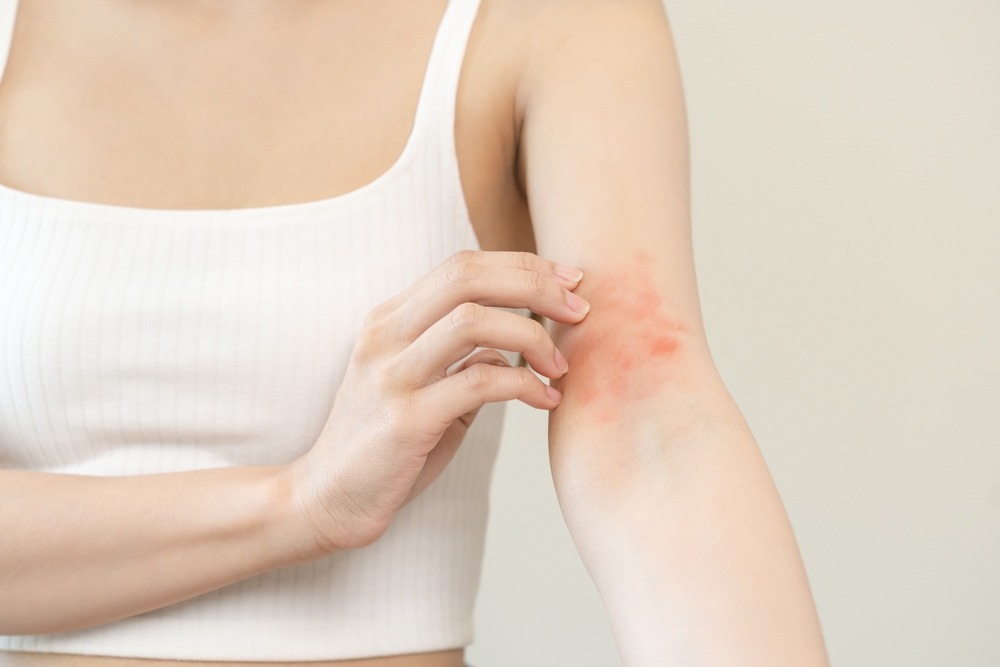
From a barely noticeable red dot to a large, swollen area, the appearance of insect bites and stings can vary dramatically. Knowing what insect bites and sting symptoms look like is essential for determining the best course of action, whether it’s simple home care or seeking professional medical help. While most reactions are minor inconveniences, some can trigger severe allergic responses or lead to complications. This guide will help you identify common bites and stings, manage the symptoms, and understand when it’s time to see a doctor. At Doral Health & Wellness, we have all the answers you need.
How Insect Bite and Sting Symptoms Look Like: A Visual Guide
The way your skin reacts to an insect depends on the type of insect and your body’s individual immune response. Some people may hardly notice a bite, while others can experience significant swelling, redness, and discomfort.
Common Biting Insects
Mosquitoes
Mosquito bites are among the most familiar types of insect bites. They typically present as:
- A puffy, white, or reddish bump that appears shortly after the bite.
- An itchy, reddish-brown, hard bump, or multiple bumps, showing up a day or so after the bite.
- Small blisters, particularly common in individuals with higher sensitivity.
- Dark spots that resemble bruises occur in cases of a more intense reaction.
Fleas
Flea bites often appear in clusters, commonly on the lower legs and ankles.
- They look like small, red bumps, each surrounded by a red halo.
- Intense itching is the primary symptom.
- The bites are frequently arranged in a straight line or a small group.
Bed Bugs
Often mistaken for other bites, bed bug bites usually occur on skin that is exposed during sleep.
- Symptoms include raised, red welts.
- They are characteristically arranged in a zigzag pattern or a line.
- Itching and a mild burning sensation are common.
Common Stinging Insects
Stinging insects inject venom, leading to more immediate and painful reactions compared to bites.
Bees and Wasps
Stings from bees, wasps, and hornets typically cause instant pain.
- A red welt often has a small white spot in the center where the stinger enters the skin.
- Swelling and redness around the sting site can increase over the next 24 to 48 hours.
- A sharp, burning pain is felt at the moment of the sting.
Fire Ants
Fire ants are known for their aggressive nature, often biting and stinging repeatedly.
- They create clusters of swollen red spots that develop blisters on top within a day.
- The stings are painful and itchy, often described as a burning sensation.
- The blisters may fill with pus and can lead to scarring if they break.
When to Seek Medical Attention
Most bites and stings are manageable at home with basic first aid, such as cleaning the area, applying a cold compress, and using over-the-counter creams or antihistamines. However, certain symptoms warrant professional medical evaluation.
Signs of a Severe Allergic Reaction (Anaphylaxis)
Anaphylaxis is a severe, life-threatening allergic reaction that requires immediate emergency care. If you or someone else shows the following signs after a bite or sting, call 911 right away:
- Difficulty breathing, wheezing, or tightness in the chest
- Swelling of the lips, face, tongue, or throat
- A rapid and weak pulse
- Dizziness, fainting, or sudden confusion
- Hives or a rash that spreads quickly across the body
For those with known severe allergies, an allergist can provide life-saving tools like an epinephrine auto-injector and develop a plan to manage future reactions.
When to Consult an Allergist
If you experience large local reactions, such as extreme swelling that covers a large area, or systemic symptoms like hives and mild nausea, it’s wise to see a specialist. An allergist can perform tests to identify the specific insect venom you are allergic to. Based on the results, they may recommend venom immunotherapy, a highly effective treatment that can prevent future severe reactions. Visiting an immunology clinic in Brooklyn can provide access to these specialized diagnostic and treatment options.
Signs of Infection
Scratching an itchy bite can break the skin and allow bacteria to enter, causing a secondary infection. Watch for these signs:
- Increased redness, warmth, or swelling spreading from the bite
- Pus or fluid draining from the site
- Fever and chills
- Swollen lymph nodes near the affected area
If you suspect an infection, contact a doctor. You might need antibiotics to treat it. A specialist at an immunology clinic in Brooklyn can also help manage complex cases where the immune system overreacts.
Understanding how insect bites and stings look helps you respond correctly. Most are temporary irritations, but recognizing the signs of a severe allergy or infection is critical. For minor issues, home treatment is usually enough. However, if you have a history of significant reactions or are concerned about allergies, consulting a specialist is the safest choice. Taking proactive steps can help you stay safe and prepared during insect season. Call us on + 1-718-367-2555 to book your appointment now to receive the best-in-class treatment that helps manage your allergies for a better life. Take action now, before it’s too late! If you need help, register your information at https://yuz88hfiyh7.typeform.com/Doralintake. Or visit us at 1797 Pitkin Avenue, Brooklyn, NY 11212.