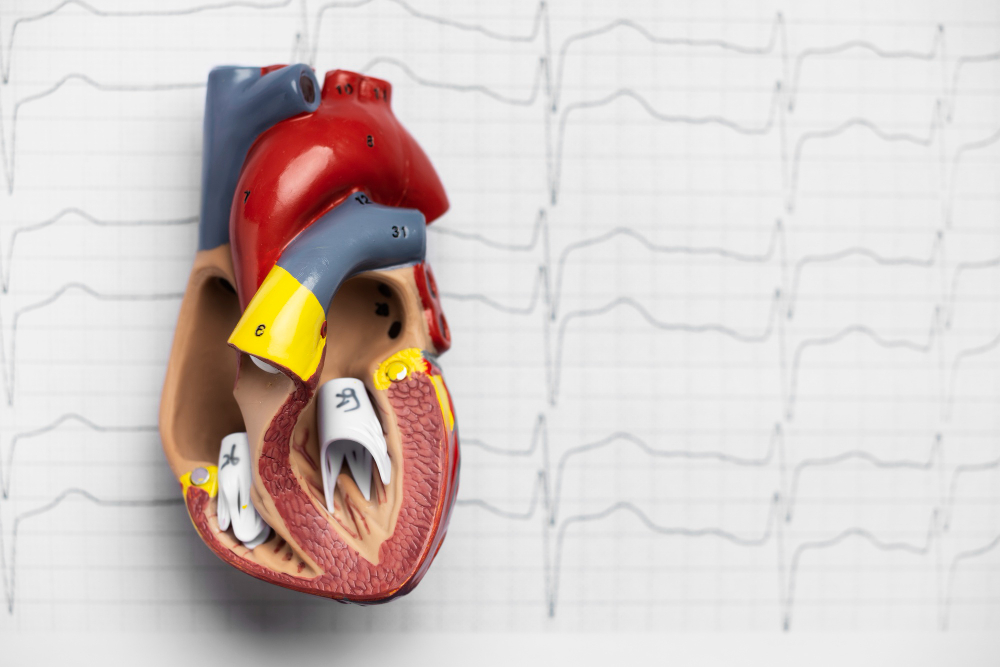
Left ventricular non-compaction is a rare heart muscle condition where part of the heart wall develops a spongy, textured pattern instead of becoming smooth and compact before birth. It can weaken the heart’s pumping ability over time. A cardiologist uses imaging tests to confirm the diagnosis and build a care plan suited to your loved one’s needs.
Hearing an unfamiliar diagnosis about your loved one’s heart can feel overwhelming. Left ventricular non-compaction, sometimes called spongy heart muscle architecture, is one of those conditions that rarely gets explained in plain language. You deserve to understand what it means, how it is found, and what comes next.
This condition develops when the heart muscle does not finish forming the way it should before birth. Instead of smoothing out into a solid wall, part of the left ventricle keeps its early, sponge-like texture. For some families, this is discovered during childhood. For others, it surfaces later in life, sometimes after symptoms prompt a visit to a cardiologist.
What Is Left Ventricular Non-Compaction?
Left ventricular non-compaction, or LVNC, affects the structure of the heart’s main pumping chamber. During normal fetal development, the heart muscle compacts into a dense, organized layer. With LVNC, part of that layer remains loosely woven, leaving deep grooves called trabeculations.
This spongy architecture can reduce the heart’s efficiency. The left ventricle may struggle to contract and relax the way a healthy heart does, which can lead to fatigue, irregular heartbeats, or signs of heart failure.
Who Is Affected by This Condition?
LVNC can appear at any age. Some people live symptom-free for years, while others experience noticeable issues in infancy. A family history of heart muscle disease raises the likelihood of diagnosis, so sharing your family’s health history with a cardiologist matters.
Diagnosing Spongy Heart Muscle Architecture
Diagnosing spongy heart muscle architecture starts with listening to your concerns and your loved one’s symptoms. A cardiologist typically relies on imaging to see what is happening inside the heart.
- Echocardiogram: This ultrasound is often the first step. It allows a cardiologist to view the heart’s walls and measure how thick or textured the muscle appears.
- Cardiac MRI: This provides a more detailed picture, helping confirm the pattern and extent of non-compaction.
- Electrocardiogram (EKG): This test checks for irregular heart rhythms that sometimes accompany LVNC.
- Genetic testing: Because LVNC can run in families, testing may be recommended for close relatives.
What Symptoms Should Prompt a Visit?
Watch for shortness of breath, unusual fatigue, swelling in the legs, fainting spells, or a racing or irregular heartbeat. These signs do not always mean LVNC, but they deserve evaluation by a cardiologist rather than being brushed aside.
How Is Left Ventricular Non-Compaction Treated?
There is no single treatment path, because every heart and every family’s needs are different. Care often includes:
- Medication: Drugs that support heart function or manage irregular rhythms.
- Lifestyle guidance: Adjustments around activity level and monitoring, tailored to your loved one’s condition.
- Ongoing monitoring: Regular visits with a cardiologist to track how the heart is performing over time.
- Device therapy: In more advanced cases, a pacemaker or defibrillator may be recommended.
Whether your loved one is newly diagnosed or has been managing LVNC for years, consistent follow-up care makes a real difference in long-term outcomes.
You Are Not Alone in This Diagnosis
A diagnosis like this can shake your sense of security, especially when it involves someone you love. You do not have to sort through the medical details by yourself. Our Cardiology team works alongside families to explain each step clearly and build a personalized care plan around your loved one’s heart health. Reach out to us today by calling +1-718-367-2555 or visiting us at 1797 Pitkin Avenue, Brooklyn, NY 1121 to schedule an evaluation and take the next step toward answers and steady support.