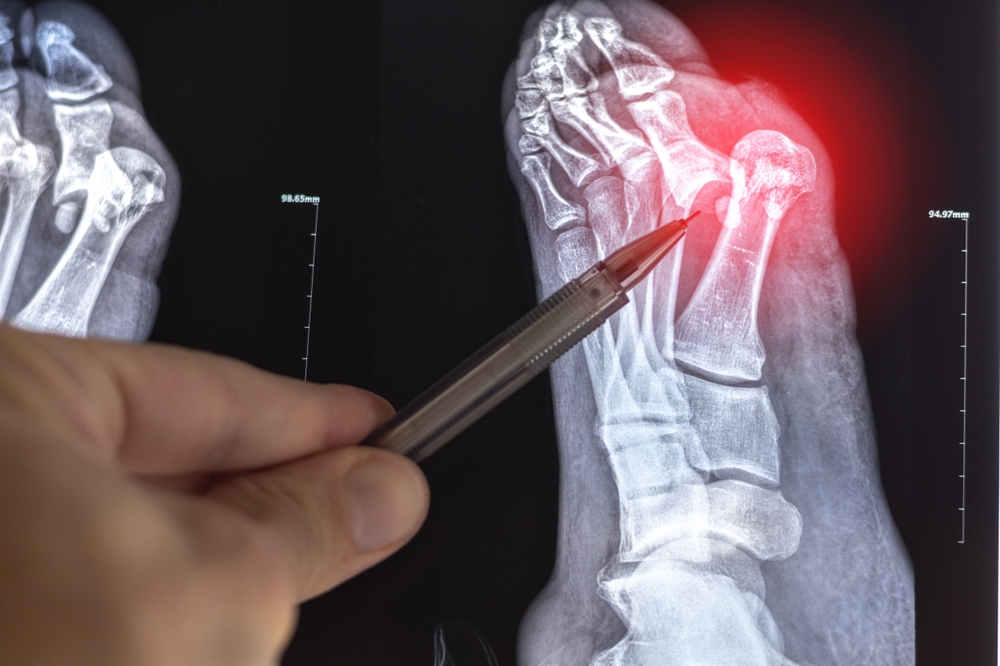
A Lisfranc fracture is an injury to the midfoot, the area that forms the arch of your foot. It occurs when bones or ligaments that connect your forefoot (toes) to your hindfoot (heel and ankle) get damaged. This injury can range from a simple sprain, where ligaments are stretched, to a severe Lisfranc fracture dislocation, where bones are broken and shifted out of place. Often mistaken for a simple sprain, a Lisfranc injury can be much more serious and requires proper diagnosis and care. Understanding the Lisfranc fracture symptoms and seeking timely treatment is crucial for successful recovery and preventing long-term complications. Get a consultation with the best Podiatrists in Brooklyn.
Understanding the Lisfranc Joint and Injury
The Lisfranc joint complex is a cluster of small bones and ligaments in the middle of your foot. These structures play a crucial role in stabilizing your arch and transferring force from your calves to the front of your foot when you walk or run. An injury occurs when these bones are fractured, or the ligaments are torn.
How Do Lisfranc Injuries Happen?
These injuries can result from both low-energy and high-energy incidents.
- Low-Energy Injuries: A common cause is a simple twist and fall. This can happen when the foot is pointed downward and you fall. This can frequently occur in sports like soccer or football. For example, a right or left Lisfranc fracture can happen if another player lands on your foot while it’s flexed.
- High-Energy Injuries: Direct trauma, such as from a car accident or a fall from a height, can cause more severe damage. These events often lead to multiple fractures and a Lisfranc fracture dislocation, significantly complicating the injury.
Key Lisfranc Fracture Symptoms to Watch For
Recognizing the signs of a Lisfranc injury is the first step toward getting the right help. The symptoms can vary depending on the severity of the damage.
Common Signs and Symptoms:
- Pain and Swelling: The most noticeable symptom is pain in the middle of the foot, which worsens when standing or walking. Significant swelling on the top of the foot is also common.
- Bruising: It is another common sign of a Lisfranc injury; bruising occurs both on the top and bottom of the midfoot. Bruising on the sole of the foot is a strong indicator of this specific injury.
- Inability to Bear Weight: For many, it’s painful or impossible to put any weight on the affected foot. This is a clear signal that you need immediate medical attention.
- Visible Deformity: In cases of a Lisfranc fracture dislocation, the foot may appear visibly out of shape.
Diagnosis
A prompt and accurate diagnosis is critical. These injuries are often misdiagnosed as simple sprains, which can lead to poor outcomes. That’s why you should consider a foot specialist, such as a podiatrist, who will perform a thorough evaluation.
Your doctor will start by discussing your symptoms and how the injury occurred. They will then conduct a physical examination of your foot, checking for symptoms like pain, swelling, and bruising. In the diagnostic test, they will hold your heel and move your forefoot to check for instability and pain, which can indicate a Lisfranc injury. To confirm the diagnosis, your doctor will recommend some imaging tests, including:
- X-rays: Your doctor will order X-rays to find broken or displaced bones. They may take “weight-bearing” X-rays, where you stand on your foot, to see if the bones separate, which indicates ligament damage.
- CT or MRI Scans: If X-rays are inconclusive, a CT scan can provide a more detailed view of the bones, while an MRI can reveal damage to the ligaments and other soft tissues.
Lisfranc Fracture Treatment Options
The approach to Lisfranc fracture treatment depends on the severity of your injury. The goal is to restore the normal alignment of the bones and joints to allow proper healing.
Nonsurgical Treatment
If you have a stable injury with no fractures or dislocations, and the ligaments are only sprained, nonsurgical treatment may be sufficient. This typically involves:
- Immobilization: Wearing a non-weight-bearing cast or boot for approximately six weeks to allow the ligaments to heal.
- Limited Weight-Bearing: After the initial period, you may transition to a weight-bearing cast or a special shoe insert.
- Monitoring: Your podiatry specialist will use follow-up X-rays to monitor the healing process.
Surgical Treatment
For more severe injuries, such as an unstable Lisfranc fracture or a dislocation, surgery is usually necessary.
- Open Reduction and Internal Fixation (ORIF): This is the most common procedure. A surgeon realigns the bones and secures them in place with plates and screws. These plates and screws may be removed later, typically 3 to 6 months after the initial surgery.
- Fusion (Arthrodesis): In cases of severe cartilage damage that cannot be repaired, the surgeon may fuse some of the midfoot bones together into a single, solid piece. This procedure permanently stabilizes the joint but eliminates its motion.
Recovery from surgery requires a period of non-weight-bearing in a cast or splint for several weeks, followed by physical therapy to regain strength and mobility.
Your Path to Recovery
A Lisfranc fracture is a serious injury that requires expert care. Ignoring the symptoms or settling for an incorrect diagnosis can lead to chronic pain, arthritis, and problems with foot function. If you suspect you have a midfoot injury, it is essential to see a healthcare professional specializing in foot and ankle problems.
At Doral Health & Wellness, our experienced podiatry team is equipped with modern technology equipment to diagnose and treat complex foot injuries like a Lisfranc fracture. We provide personalized care plans to ensure you get back on your feet safely. At Doral Health & Wellness, we have Podiatrists with extensive education and expertise. If you’re ready to take the next step in managing your pain, we recommend consulting with our healthcare provider to explore the right treatments or therapies for you. Always listen to your body and adjust your daily routine to prioritize your well-being. Trauma to the tendons, muscles, and bones of the foot is quite common. It’s not a good idea to put off seeing Foot Doctor Brooklyn until you are in a lot of pain. Our address is 1797 Pitkin Avenue, New York, NY 11212. To make an appointment, please call + 1 718 367 2555 or send an email to info@doralhw.org.