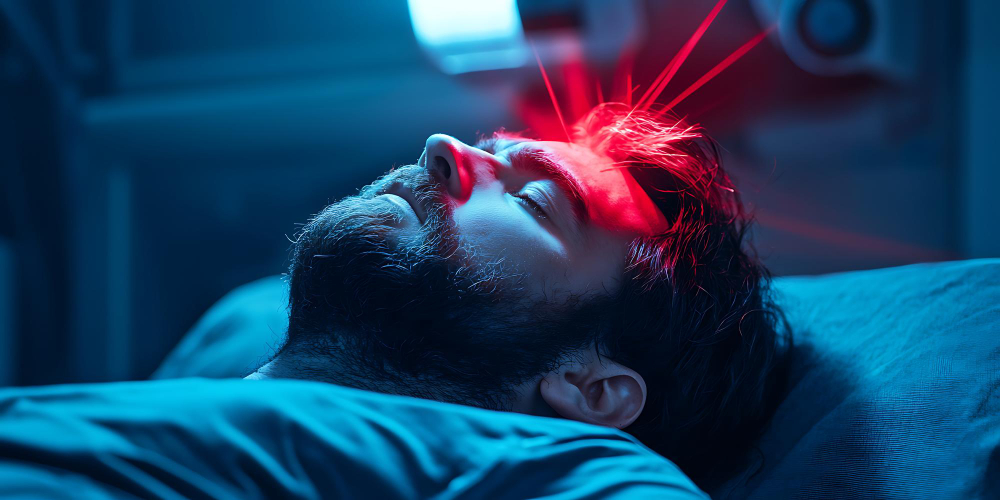
You go to bed hoping for rest. Instead, you wake in the early hours with your head pounding, unable to fall back asleep. It is exhausting, and it is more common than you might think.
Migraines and headaches often share a deep, two-way connection with sleep. Poor sleep can bring on an attack, and an attack can shatter your sleep, creating a loop that feels impossible to break. The good news is that effective pain management for migraines can interrupt this cycle. In this guide, you will learn why migraines strike at night, what triggers them, and how the right care can help you rest again.
Why Migraines Strike at Night
Nighttime migraines are not random. Your brain follows a natural 24-hour clock, and when that circadian rhythm gets disrupted, you become more vulnerable to attacks. The American Migraine Foundation notes that nearly half of all migraine attacks occur between 4:00 a.m. and 9:00 a.m.
REM sleep also plays a role. When this restorative stage is fragmented, your brain becomes more sensitive to pain signals.
Sleep apnea adds another layer. This condition interrupts breathing and lowers oxygen levels overnight, which the Mayo Clinic and American Migraine Foundation both link to morning headaches. If you often wake with head pain, treating an underlying sleep disorder may be an important first step.
Common Nighttime Migraine Triggers
Once you know your triggers, you can start to take back control. Many people find that a few simple habits are quietly fueling their attacks.
Watch for these common culprits:
- Irregular sleep schedules — Going to bed and waking at different times each day can throw off your rhythm and invite attacks.
- Stress — Daily tension is a trigger for nearly 70% of people living with migraine.
- Caffeine and alcohol — Both can disrupt sleep and set off head pain, especially late in the day.
- Dehydration— Even mild dehydration can be the fast track to a pounding head by morning.
If you would like a deeper look at what sets off attacks, our guide to common migraine triggers breaks each one down with practical tips.
Pain Management for Migraines That Disrupt Sleep
Living with nighttime migraines is draining, but relief is possible. The right plan usually blends immediate relief with long-term prevention.
There are two main approaches:
- Acute treatment eases pain during an active attack.
- Preventive treatment reduces how often and how severely attacks strike.
Lifestyle changes matter too. The Mayo Clinic recommends the SEEDS method: steady Sleep, regular Exercise, healthy Eating, a symptom Diary, and Stress management. Small, consistent steps often make a real difference.
When home strategies are not enough, a pain management specialist can build a plan tailored to your body and your schedule. Our pain management services connect you with expert care in the comfort of your home.
When to Visit a Pain Medical Clinic
Some symptoms deserve professional attention right away. Reach out to a pain medical clinic if you notice any of these warning signs:
- Headaches that grow more frequent or severe
- A sudden, thunderclap headache
- Head pain with fever, confusion, or vision changes
- Attacks on more than 15 days a month, a pattern known as chronic migraine
A pain management specialist at a trusted pain medical clinic can help you find answers and a path forward.
Take Back Your Nights
You do not have to face restless, painful nights alone. Effective pain management for migraines can break the sleep-headache loop and help you feel like yourself again.
Reach out to our pain management specialists today by calling us at +1-718-367-2555 or walking into our clinic at 1797 Pitkin Avenue, Brooklyn, NY 11212 to schedule a home visit. Compassionate, expert care is closer than you think.