Your heart works hard every day, but how does it perform when it’s pushed to its limits? A cardiac stress test is designed to answer that very question. While your heart may function perfectly fine during rest, underlying problems can often emerge only when it’s forced to work harder, like during exercise. This is precisely why a stress test is important for heart disease diagnosis. By monitoring your heart’s activity under physical strain, doctors can uncover issues that might otherwise go undetected. Understanding the stress test procedure can demystify the process and highlight its value in creating a clear picture of your cardiovascular health. Get a consultation with the best cardiologists in Brooklyn.
Why Is a Stress Test Important for Diagnosing Heart Disease?
A stress test, also known as an exercise stress test, provides critical insights into how your heart responds to physical exertion. When you exercise, your heart needs more oxygen-rich blood. If your coronary arteries are narrowed or blocked due to plaque buildup (atherosclerosis), blood flow may be insufficient to meet this increased demand, causing symptoms and changes in your heart’s electrical activity.
Key Diagnostic Capabilities
- Identifies Coronary Artery Disease (CAD): The test can reveal if your heart muscle is receiving enough blood and oxygen during activity, which is a primary indicator of blocked arteries.
- Determines Safe Exercise Levels: For patients already diagnosed with heart disease, a stress test helps cardiologists determine a safe and effective exercise regimen.
- Evaluates Treatment Effectiveness: It can show whether treatments like angioplasty or medications are working as intended.
- Assesses Heart Rhythm: The test can provoke or identify irregular heart rhythms (arrhythmias) that only occur during physical activity.
Understanding the Stress Test Procedure
Knowing what to expect can make the experience much smoother. A standard stress test is a straightforward and non-invasive procedure typically performed at a hospital or a specialized cardiology clinic in Brooklyn.
What Happens During the Test?
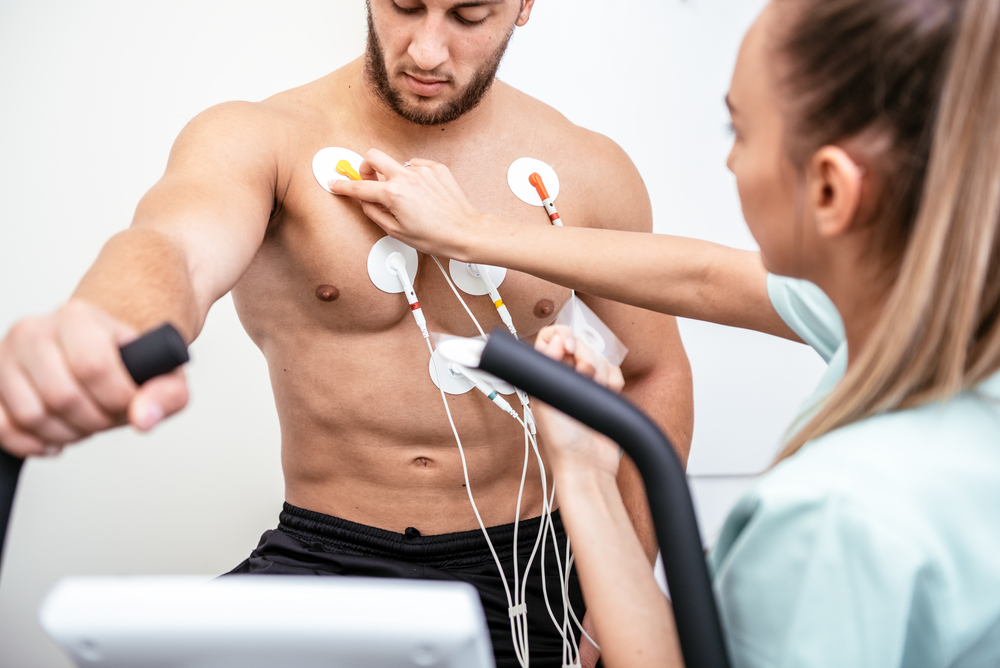
- Preparation: A technician will place several small adhesive electrodes on your chest. These are connected to an electrocardiogram (ECG or EKG) machine that will record your heart’s electrical signals throughout the test. A blood pressure cuff will be placed on your arm.
- Baseline Readings: Before you begin exercising, the team will record your resting heart rate and blood pressure.
- The Exercise Portion: You will be asked to walk on a treadmill or pedal a stationary bike. The intensity will gradually increase by raising the speed and incline of the treadmill or the resistance on the bike.
- Monitoring: Throughout the exercise, the technician will monitor your ECG, heart rate, blood pressure, and any symptoms you experience, such as chest pain or shortness of breath.
- Cool-Down: After the exercise portion, you will be monitored for a few minutes as your heart rate and blood pressure return to normal.
For individuals unable to exercise, a chemical stress test can be performed. In this version, a medication is given intravenously to simulate the effects of exercise on the heart.
Who Should Have a Stress Test?
Your doctor or one of our cardiologists may recommend a stress test if you are experiencing symptoms suggestive of heart disease, such as chest pain (angina), shortness of breath, or dizziness. It may also be ordered to assess your risk before starting a new, vigorous exercise program or before certain types of surgery.
While the stress test procedure is generally very safe, it is always performed in a controlled medical setting where professionals can respond immediately to any issues. The information gained from this simple test is invaluable for making informed decisions about your cardiovascular care.
If you have concerns about your heart health or have been experiencing symptoms, don’t wait. A stress test could provide the answers you and your doctor need. Our expert cardiology team is ready to provide a comprehensive evaluation using state-of-the-art diagnostic tools. Contact our cardiology clinic in Brooklyn today to schedule a consultation and take an important step toward protecting your heart. For any cardiovascular problems, call us on +1 718 367 2555. The Cardiologists at Doral Health & Wellness consistently have outstanding patient satisfaction ratings. If you need help, register your information at https://yuz88hfiyh7.typeform.com/Doralintake. The professionals at Doral Health & Wellness Cardiology Brooklyn can improve your health and quality of life because of their vast training and experience. New Yorkers can get the best cardiovascular care at Doral Health & Wellness Brooklyn. Visit us at 1797 Pitkin Avenue, Brooklyn, NY 11212.