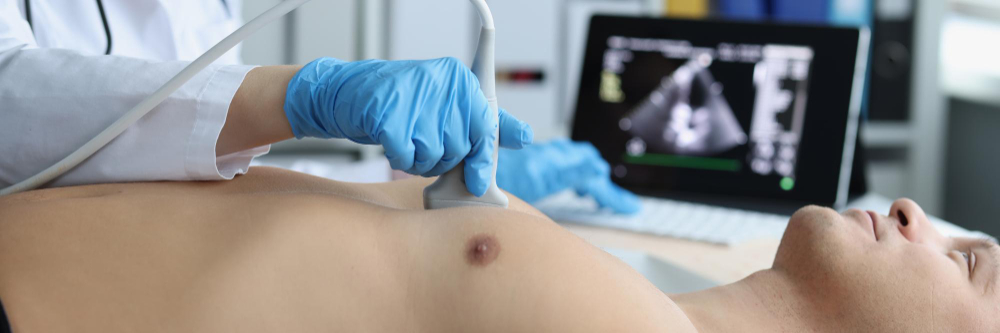
The difference between transthoracic and transesophageal echo comes down to how the ultrasound reaches your heart. A transthoracic echo scans from outside your chest and is non-invasive. A transesophageal echo passes a probe down your throat for a closer, more detailed view. Your cardiologist will recommend one based on what they need to see.
Your cardiologist has ordered an echocardiogram, and now you have questions. What is the difference between transthoracic and transesophageal echo? Which one will you need? What should you expect? These are reasonable things to want to know before your appointment, and this patient guide to both heart tests will walk you through the answers clearly and simply.
What Is a Transthoracic Echocardiogram?
A transthoracic echocardiogram (TTE) is the standard echocardiogram most patients encounter first. A sonographer applies gel to your chest and moves a handheld device called a transducer across your skin. The device sends sound waves through your chest wall to create real-time images of your heart.
The test is painless, takes about 45 minutes, and requires no sedation. You leave the same day without any recovery period.
A TTE can show:
- The size and shape of your heart chambers
- How well your heart muscle contracts
- The condition of your heart valves
- Signs of fluid around the heart
Most patients at a cardiology clinic in Brooklyn start here. TTE gives cardiologists a strong overview of how your heart is functioning, and for many conditions, it provides all the information needed.
What Is a Transesophageal Echocardiogram?
A transesophageal echocardiogram (TEE) takes a different approach. Because the esophagus sits directly behind the heart, a TEE probe placed there captures sharper, more detailed images than a TTE can produce through the chest wall.
You will receive a sedative and a throat-numbing spray before the procedure. A thin, flexible tube with an ultrasound probe at its tip is guided gently down your throat. The test typically takes 30 to 60 minutes, and you will need someone to drive you home afterward.
A TEE is often ordered to:
- Examine heart valves in finer detail before surgery
- Detect small blood clots, especially near the left atrial appendage
- Investigate a stroke or TIA with no obvious cause
- Evaluate artificial heart valves more precisely
- Guide certain cardiac procedures in real time
According to the American Heart Association, TEE is particularly valuable when TTE images are unclear due to obesity, lung disease, or other anatomical factors.
What Is the Key Difference Between Transthoracic and Transesophageal Echo?
The core difference comes down to access and image quality. A TTE is external and non-invasive, making it the first choice for routine cardiac evaluation. A TEE is internal and produces higher-resolution images, which makes it the right tool when your cardiologist needs to see structures that a standard scan cannot capture clearly.
Think of it this way: a TTE is thorough and comfortable. A TEE is precise and powerful.
Transthoracic Echo (TTE) | Transesophageal Echo (TEE) | |
How it works | Probe on chest wall | Probe in esophagus |
Invasive? | No | Mildly |
Sedation needed? | No | Yes |
Image detail | Good | Excellent |
Recovery time | None | Several hours |
Best for | Routine evaluation | Complex or detailed assessment |
How Do You Know Which Test Your Doctor Will Order?
Your cardiologist makes this decision based on your symptoms, medical history, and what previous tests have shown. Many patients receive a TTE first. If the images are inconclusive, or if your doctor suspects a condition that requires closer inspection, a TEE follows.
You do not need to choose between them. Trust that your care team at a cardiology clinic in Brooklyn is selecting the test most likely to give them the information they need to help you.
How Should You Prepare for Each Test?
For a TTE, no special preparation is needed. Wear comfortable clothing and avoid heavy lotions on your chest.
For a TEE, your cardiologist will ask you to fast for at least four to six hours before the procedure. According to the Mayo Clinic, you should also arrange a ride home, as the sedation will affect your coordination and judgment for several hours after the test.
Tell your care team in advance about any swallowing difficulties, current medications, or allergies, particularly to sedatives or numbing agents.
Take the Next Step Toward Clearer Answers
Knowing the difference between transthoracic and transesophageal echo helps you walk into your appointment with confidence. Both tests are safe, well-established tools that give your cardiologist the information needed to protect your heart health.
Our cardiologists offer comprehensive cardiac imaging for patients at every stage of their care. If your cardiologist has recommended an echocardiogram or you have concerns about your heart, reach out today by calling us at +1-718-367-2555 or walking into our clinic at 1797 Pitkin Avenue, Brooklyn, NY 11212 to schedule an evaluation.