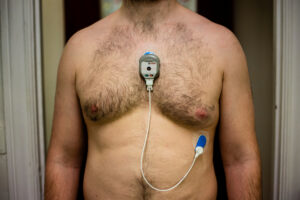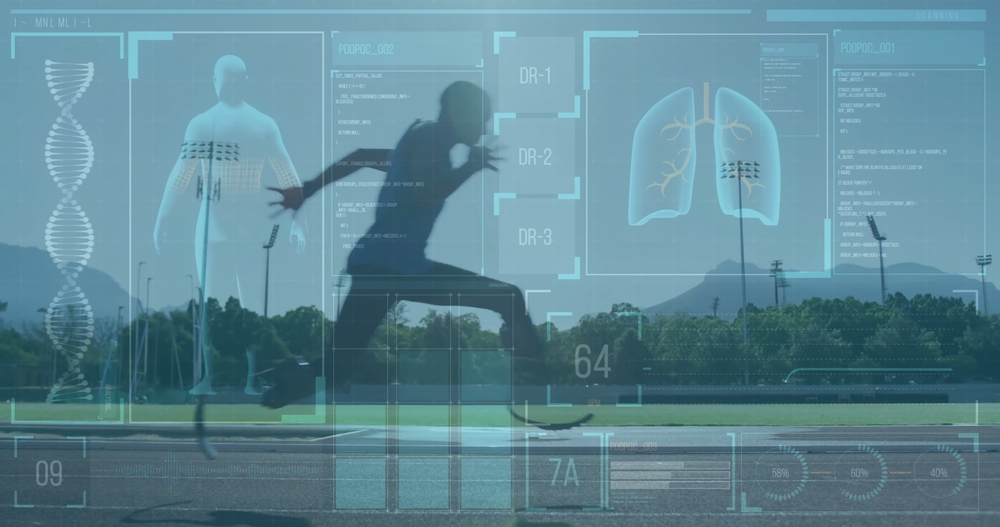
Training for a marathon used to be a game of simple arithmetic: add miles, subtract rest days, and hope your body holds up. But for the modern endurance athlete, running is now a science. The latest breakthrough in this evolution is the ability to use wearable biomechanics to track real-time ground reaction for marathon preparation.
This technology moves beyond simple step counting or GPS tracking. It dives deep into the physics of how your foot interacts with the pavement. Ground reaction force (GRF)—the force exerted by the ground on a body in contact with it—is a critical metric. By monitoring this data live, runners can identify inefficiencies, correct their form mid-stride, and significantly reduce the risk of impact-related injuries. It is like having a biomechanics lab clipped to your shoe. Get a consultation with the best Podiatrists in Brooklyn.
Why Use Wearable Biomechanics to Track Real-Time Ground Reaction for a Marathon?
Marathon running puts immense stress on the musculoskeletal system. Over the course of 26.2 miles, a runner strikes the ground tens of thousands of times, each time absorbing a force up to three times their body weight. Understanding these forces is the key to longevity.
The Science of Ground Reaction Force
When you run, you don’t just push off the ground; the ground pushes back. If that force is absorbed poorly due to bad form, it travels up the kinetic chain, causing shin splints, stress fractures, and knee issues. Wearable sensors placed on the shoe or ankle can now measure:
- Impact Load: How hard you are hitting the ground.
- Asymmetry: Whether one leg is working harder than the other.
- Contact Time: How long your foot stays on the ground with each step.
By utilizing wearable biomechanics to track real-time ground reaction for marathon training, athletes can adjust their cadence or strike pattern instantly to lower these impact loads.
Optimizing Energy Efficiency
It isn’t just about injury prevention; it is about speed. High ground reaction forces often mean wasted energy. If you are bouncing too high (vertical oscillation) or braking with every step (overstriding), you are burning fuel that you will need at mile 20. Real-time data helps runners smooth out their stride, turning wasted vertical energy into forward momentum.
Integrating Tech with Professional Care
While the data is powerful, interpreting it correctly often requires an expert eye. A high-impact load might be due to your shoes, your hip strength, or a structural issue in your foot.
The Role of a Podiatrist
This is where a medical professional becomes essential. A podiatrist can analyze the data from your wearables to diagnose underlying biomechanical issues. For example, if your device shows significant asymmetry, a podiatrist can determine if it is caused by a leg length discrepancy or a past injury that never healed properly. They can then prescribe specific strengthening exercises or custom orthotics to correct the imbalance before race day.
Visiting a Podiatry Clinic in Brooklyn
For runners in the city, access to specialized care is vital. Doral Health & Wellness’s leading podiatry clinic in Brooklyn has experience working with urban runners who face the specific challenge of training on concrete. We are increasingly incorporating wearable data into our treatment plans. By bringing your data to our podiatry clinic in Brooklyn, you can turn raw numbers into a medically sound training strategy. We can help you decipher whether your high ground reaction force requires a change in footwear or a change in running form.
The Future of Endurance Training
We are entering an era where guesswork is eliminated from training. The ability to use wearable biomechanics to track real-time ground reaction for marathon racing gives runners a dashboard for their bodies. It empowers them to make micro-adjustments that have macro effects over long distances.
Instead of waiting for pain to signal a problem, runners can see the red flags on their watch and adjust immediately. This proactive approach is redefining what is possible in endurance sports.
If you are serious about your next 26.2 miles, it is time to look beyond pace and distance. Start looking at the forces you generate with every step. By leveraging smart technology and consulting with a podiatrist to interpret the results, you can train smarter, run safer, and cross the finish line stronger than ever before. At Doral Health & Wellness, we have Podiatrists with extensive education and expertise. Our address is 1797 Pitkin Avenue, New York, NY 11212. To make an appointment, please call + 1 718 367 2555, or register your information and make direct contact with us at https://yuz88hfiyh7.typeform.com/Doralintake or send an email to info@doralhw.org.