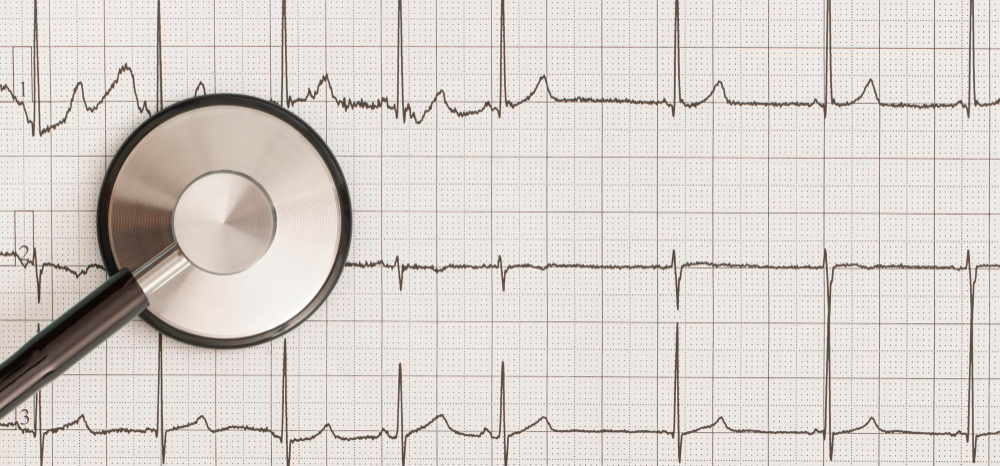
An abnormal EKG means the test detected an irregular pattern in your heart’s electrical activity. This does not always point to a serious problem. Many results need follow-up testing before a cardiologist can explain what is happening and whether treatment is required.
Getting an abnormal EKG result can feel alarming. You may not know what it means or what to do next. That uncertainty is hard to sit with, especially when it involves your heart. This patient-friendly guide to next steps after an abnormal EKG is here to help. By the end, you will understand what the result means, what tests may follow, and when it is time to talk to a cardiologist.
What Is an EKG and What Does It Detect?
An electrocardiogram, or EKG, is a painless test that records the electrical signals your heart produces with each beat. Electrode patches are placed on your chest, arms, and legs. The machine then captures a tracing of your heart’s rhythm and electrical activity.
Doctors use EKGs to check for:
- Irregular heart rhythms, also called arrhythmias
- Signs of a previous heart attack
- Thickening of the heart walls
- Abnormal electrical conduction patterns
What Does an Abnormal EKG Result Actually Mean?
An abnormal EKG means the tracing showed something outside the expected pattern. That alone does not confirm a diagnosis. What matters is what kind of abnormality was found and whether you have symptoms to go along with it.
What Are the Most Common Causes of an Abnormal EKG?
Some findings are minor or incidental. Others may reflect an underlying condition that needs closer attention.
Common causes include:
- Heart rhythm problems: The heart may be beating too fast, too slow, or irregularly.
- Conduction delays: Electrical signals may be taking longer than normal to move through the heart.
- Structural changes: The heart walls may have thickened due to high blood pressure or other factors.
- Prior heart damage: Evidence of a past heart attack can appear on an EKG even without a known history.
According to the American Heart Association, many EKG abnormalities are discovered during routine checkups and may require no treatment at all.
When Should an Abnormal EKG Be Taken More Seriously?
Certain findings carry more weight, especially when paired with symptoms. If your abnormal EKG was accompanied by chest pain, shortness of breath, dizziness, or fainting, tell your doctor right away. These combinations warrant prompt evaluation.
What Are the Recommended Next Steps After an Abnormal EKG?
An abnormal EKG is rarely the final word. It is usually the starting point for a more complete evaluation.
Your cardiologist may recommend one or more of the following:
- A repeat EKG: To confirm the finding and rule out a one-time variation caused by movement or electrode placement.
- Holter monitor: A wearable device that records heart activity over 24 to 48 hours during daily life.
- Echocardiogram: An imaging test that evaluates the heart’s structure and pumping function.
- Blood tests: To check for thyroid problems, electrolyte imbalances, or markers of heart muscle damage.
- Stress test: To observe how the heart responds during physical activity.
Each test adds a layer of information. Together, they give your care team a full picture of your heart health.
Talk to a Cardiologist
An abnormal EKG result deserves a careful, expert response. Our cardiologists will provide thorough evaluations for patients who need answers. Our team takes the time to understand your full history, explain your results clearly, and guide you through every next step. Reach out today by calling us at +1-718-367-2555 or walking into our clinic at 1797 Pitkin Avenue, Brooklyn, NY 11212, to schedule your evaluation.