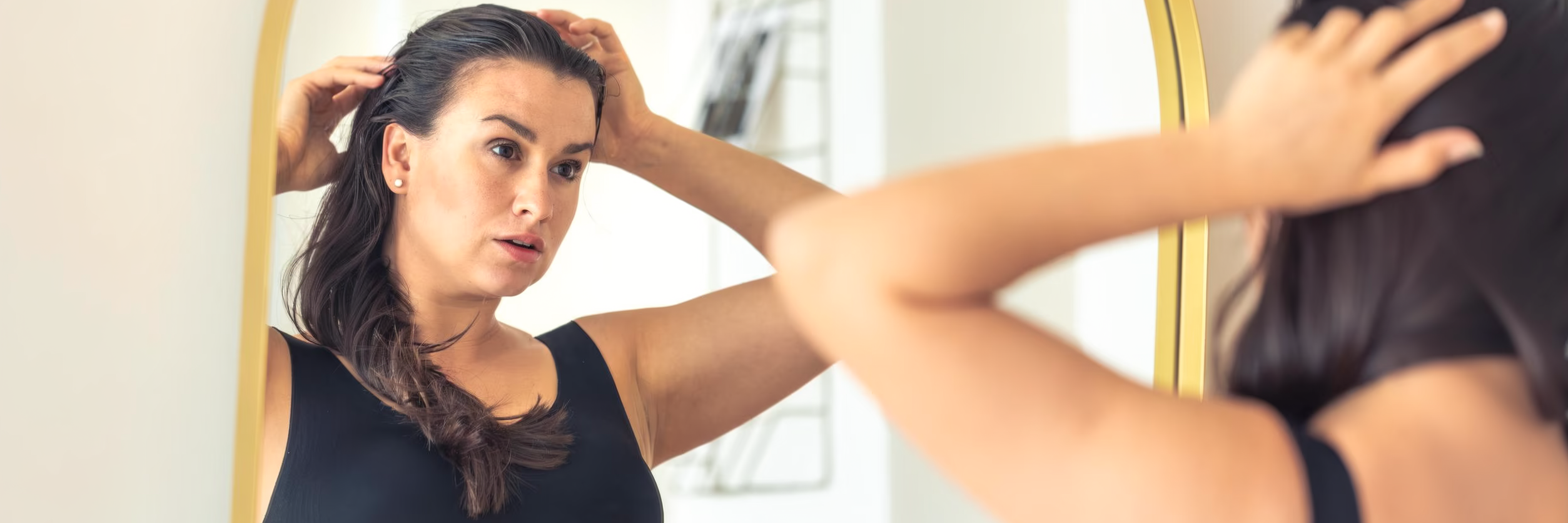
You run your fingers through your hair after a shower, and a handful comes loose. Your pillow collects strands overnight. Your part looks wider than it did during pregnancy. If you recently had a baby, this shedding can feel alarming on top of everything else you are managing. So when does postpartum hair loss start? For most new mothers, the shedding begins around two to four months after delivery, and it can last several more months. This is a normal, temporary process tied to shifting hormones. Knowing when does postpartum hair loss start helps you tell the difference between an expected phase and a problem that needs attention. The reassuring truth is simple: your hair almost always grows back.
If your shedding worries you or feels heavier than expected, you do not have to sort it out alone. At Doral Health & Wellness Dermatology, our dermatology team examines your scalp, reviews your history, and explains exactly what is happening. Whether you want reassurance or a treatment plan, caring support is close to home. Reach out today to schedule your visit.
When Does Postpartum Hair Loss Start and Stop?
The timeline surprises many new parents. During pregnancy, high estrogen keeps more hairs in the growth phase, so your hair often feels thick and full. After birth, hormone levels drop, and those extra hairs shift into the shedding phase all at once.
Here is the general timeline to expect.
- Onset – Shedding usually begins two to four months after delivery.
- Peak – The heaviest loss often happens around the four-month mark.
- Recovery – Most women see regrowth by six to twelve months postpartum.
- Full return – Your hair typically regains its usual fullness by your baby’s first birthday.
Every body is different, so your timeline may vary slightly. What matters is the pattern. This kind of shedding is diffuse, meaning it thins evenly across your scalp rather than creating bald patches. If you notice patchy loss instead, that deserves a professional look.
What Causes Postpartum Hair Loss?
Losing hair after childbirth feels personal, but the cause is biological. Understanding it can ease a lot of the worry.
Telogen Effluvium Explained
Dermatologists call postpartum shedding telogen effluvium. In plain terms, it means a large group of hairs enters the resting phase at the same time and then falls out together. Pregnancy hormones delay normal shedding, so after delivery your body simply catches up.
- Hormone shift – Falling estrogen releases hairs that were held in the growth phase.
- Timing – The release happens weeks after the hormone drop, which is why shedding starts a few months later.
- Not true hair loss – Your follicles stay healthy, so the hair grows back.
Other Factors That Can Add to Shedding
Sometimes more than hormones are at play. A few common issues can make postpartum shedding feel heavier.
- Low iron – Blood loss during delivery can lower your iron stores.
- Thyroid changes – Pregnancy can affect thyroid function and worsen shedding.
- Stress and sleep loss – The demands of newborn care add physical strain.
If shedding lasts beyond a year or comes with fatigue and other symptoms, a checkup helps rule out these causes. Searching “skin clinic near me” is a smart first step when something feels off.
How to Manage Postpartum Hair Loss
You cannot stop the natural shedding cycle, but you can support healthy regrowth and protect the hair you have. Small, gentle habits make a real difference.
- Eat for your hair – Focus on protein, iron, and a balanced diet to fuel new growth.
- Handle hair gently – Skip tight ponytails and harsh brushing that stress fragile strands.
- Choose volumizing products – Lightweight shampoos can make thinning hair look fuller.
- Be patient with styling – Avoid heat and chemical treatments while your hair recovers.
When shedding feels extreme or lingers, professional guidance matters. A dermatologist near me search result you trust can examine your scalp under magnification and confirm whether your loss is normal. A dermatology specialist in NY can also order bloodwork to check iron and thyroid levels. If you want hands-on care from a Brooklyn derma practice, our team offers scalp evaluations and personalized plans that turn worry into a clear path forward.
Trusted Skin Care in Brooklyn
Seeing your hair thin after childbirth is stressful, especially when you are already stretched thin caring for a newborn. You deserve honest answers, gentle guidance, and expert care close to home. Whether you are asking when does postpartum hair loss start or facing a larger health decision, help is nearer than you think. From scalp evaluations to full support at a local derma clinic NYfamilies rely on, our specialists treat you with the attention and respect you deserve. Do not let uncertainty linger — take the next step toward stronger hair and better health. To schedule your visit, contact Doral Health & Wellness today at 1-718-365-2555 or visit us at 1797 Pitkin Avenue, Brooklyn, New York 11212. For general information about Doral Health & Wellness services, you can contact or email info@doralhw.org.