If your foot joint pain doesn’t get better with conservative treatments, surgery is the last resort. Foot bone fusion surgery is the most recommended procedure when it comes to foot joint pain. But is it safe? Is it effective? How does the procedure take place? If you have these questions in mind, read this article to learn the basics of foot bone fusion surgery. Get a consultation with the best Podiatrists in Brooklyn.
Foot Bone Fusion Surgery Basics
These FAQs will tell you everything you should know about foot bone fusion surgery.
- What is foot bone fusion surgery and its types?
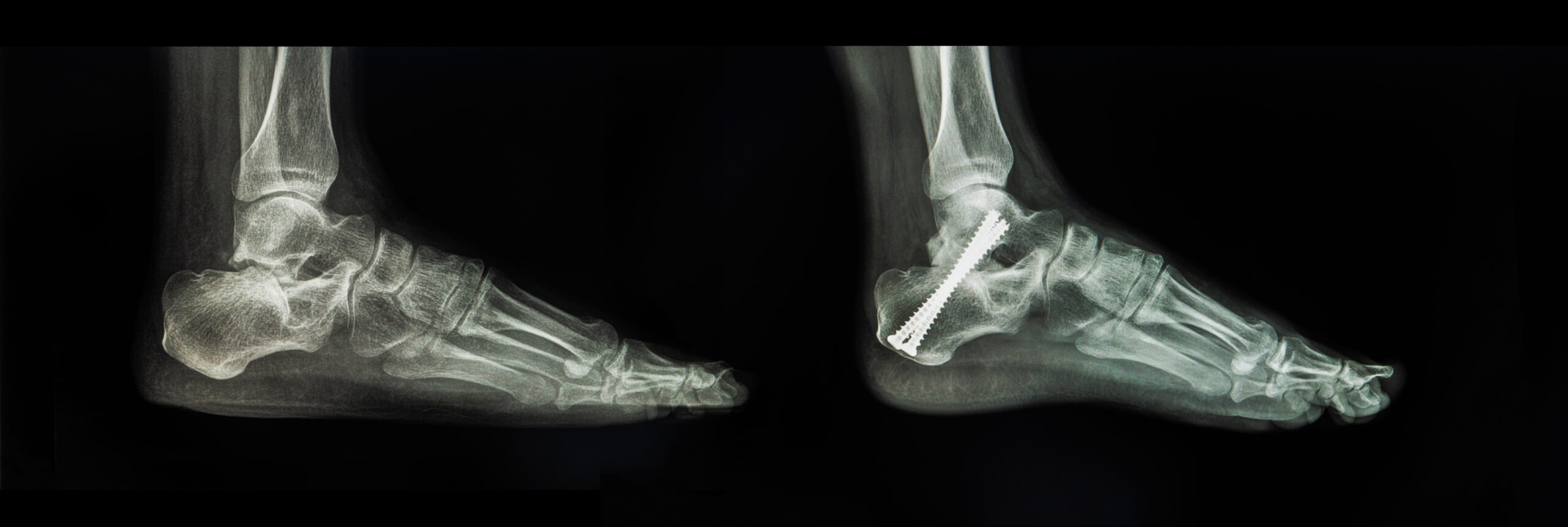
Ans. Foot fusion surgery, also known as arthrodesis, is used to join two or more bones together permanently in the foot to heal into a single solid bone. This eliminates the risk of movement in painful or arthritic joints, offers stability, lessens pain, and restores foot alignment.
The type of surgery you receive depends on the severity of your condition; it may involve any one of the following:
- Ankle fusion (Tibiotalar Arthrodesis): In this type of fusion surgery, the surgeon fuses the shinbone to the ankle bone to address severe arthritis or instability.
- Subtalar fusion: In this type of fusion surgery, the surgeon fuses the joints below the ankle (mostly used for flatfoot or post-traumatic arthritis).
- Midfoot fusion: This type of fusion surgery targets joint fusion in the middle of the foot, usually indicated for arthritis, collapse, or deformities.
- Triple fusion: This is a more extensive type of surgery that involves fusing 3 major foot joints to treat severe deformities or arthritis.
- Toe Joint Fusion: This type of fusion surgery is used to fuse toe joints. Typically, this surgery is used for hammertoes or severe arthritis in the big toe.
- What are the indications of foot bone fusion surgery?
Ans. Foot bone fusion surgery is considered if you have one of the following conditions:
- Severe arthritis that doesn’t improve with non-surgical treatments
- Chronic foot pain that affects mobility
- Foot deformities, for example, flatfoot, midfoot collapse
- Joint instability due to injury or degeneration
- Who is (or who isn’t) an ideal candidate for foot bone fusion surgery?
Ans. You’re the ideal candidate for foot bone fusion surgery if:
- You don’t smoke.
- Have a condition that affects mobility and suffer from chronic pain.
- You’re motivated to complete post-operative recovery and therapy.
Whereas you might not be a suitable candidate for foot bone fusion surgery if:
- Have poor blood flow or nerve damage in the foot.
- Have active infections.
- Need high flexibility for specific activities.
- What to expect during the foot bone fusion surgery?
Ans. During the procedure, you can expect these steps:
- The doctor administers a local or general anesthetic to ensure you don’t feel pain. A local anesthetic can numb the area where surgery is performed while staying awake. Whereas general anesthetics make a person fall asleep during the surgery.
- Now, the surgeon makes one or more incisions in the foot to access the joints.
- After opening up each joint that requires fusion, they first remove the surfaces of the joints. If needed, a surgeon may also reshape the joints to correct structural problems.
- Now they move the joint surfaces into the right position to fuse and hold them together with the help of plates, screws, and staples.
- If needed, they insert extra bone tissue into the joint. Surgeons may use some of the bone they removed for stabilization and fusion if there is not enough bone left. To complete it, they may take a bone graft from the top of the shin or below the knee.
After the surgery, you may need to spend 2 to 3 days in the hospital for monitoring, and after discharge, you need to follow the instructions for a quick recovery.
- What to expect after the foot bone fusion surgery?
Ans. After the surgery, you may need to spend 2 to 3 days in the hospital because your foot will swell up and need rest with elevation. To reduce the swelling, doctors will apply a cast to keep the foot still to make sure the bones fuse over time. This happens either before they allow the person to go home or some days later, during a follow-up appointment.
At home, you need to take as much rest as you can, especially during the first 2 weeks. A person needs to use crutches when getting up to avoid putting weight on the foot. The cast needs to be worn for around 8 to 12 weeks (about 3 months). At around 6 weeks (about 1 and a half months), you may need to go to the hospital for follow-up X-rays and to have the cast removed. If healing is going well, the doctor will replace the cast with a removable boot, which allows you to start putting some weight on the foot. If the joints are not fused enough for this, you may need a new cast to delay putting weight on the foot for longer. Walking starts to impede recovery. Generally, full recovery takes about 6 months.
- Are there any side effects of the foot bone fusion surgery?
Ans. Like all surgical procedures, it also involves some side effects which are rare and mostly preventable, such as:
- Minor risk of infections around the wound or in the bones, which has only 1% chance and is easily treatable.
- Nerve damage near the incision site, however, is rare (around 5 to 10% cases) and only found if your toe stays numb after surgery, which also means the nerve is bruised. But in most cases, there is a complete recovery.
- Bones failing to fuse biologically mean non-union. This is often painless, and intervention may not be needed. If painful, treatment options will be discussed. Its risks are around 5 to 10%.
- Sometimes, screws or pins loosen; they need to be removed with minor surgery.
- Sometimes you develop blood clots in your legs. Whether it needs treatment or not, it needs to be discussed with the surgeon.
- Adverse reactions to anesthesia.
- How effective is foot bone fusion surgery?
Ans. Foot bone fusion surgery works the best for pain relief and improves the joint functionality once fused, which may take 3 months. In 6 months, you can perform well in activities and sports and continue to improve for up to 12 months. Only mild swelling may persist and last for up to a year. It produces excellent outcomes in treating foot conditions in 90% of cases. New surgical techniques allow for smaller incisions and faster recovery times.
Foot bone fusion surgery is the last resort for relieving and improving joint functionality by joining the joints together with the help of screws, pins, or plates. Make sure that before considering this surgery, you discuss its benefits and risks to know whether this surgery is right for you or not.
Need help with foot problems? Visit our podiatry clinic in Brooklyn to get professional medical help. Call us to book your appointment now!!!!! At Doral Health & Wellness, we have Podiatrists with extensive education and expertise. If you’re ready to take the next step in managing your pain, we recommend consulting with our healthcare provider to explore the right treatments or therapies for you. Always listen to your body and adjust your daily routine to prioritize your well-being. Trauma to the tendons, muscles, and bones of the foot is quite common. It’s not a good idea to put off seeing Foot Doctor Brooklyn until you are in a lot of pain. Our address is 1797 Pitkin Avenue, New York, NY 11212. To make an appointment, please call + 1 718 367 2555 or send an email toinfo@doralhw.org.