Many home blood pressure readings are inaccurate because of common BP monitoring errors, especially improper cuff positioning. Placing the cuff on a bare upper arm, at heart level, with the correct size and fit can significantly improve your reading accuracy and help your cardiologist make better care decisions.
Getting your blood pressure checked at home feels straightforward. You strap on the cuff, press a button, and wait for the numbers. But if you are making common BP monitoring errors, those numbers may not reflect what is actually happening in your body. Inaccurate readings can lead to unnecessary medication changes or missed warning signs. Understanding proper cuff position for BP monitoring at home is one of the most important steps you can take to protect your health.
Why BP Monitoring Errors Are So Common at Home
Home blood pressure monitors are widely recommended by healthcare providers, including cardiologists, because they capture readings outside the clinical setting. However, according to the American Heart Association (AHA), a large percentage of home users make technique errors that skew results.
The most frequent BP monitoring errors include:
- Incorrect cuff placement: Positioning the cuff over clothing or too loosely around the arm
- Wrong body position: Sitting with crossed legs, an unsupported back, or feet not flat on the floor
- Incorrect arm position: Holding the arm below or above heart level during the reading
- Wrong cuff size: Using a cuff that is too small or too large for your arm circumference
- Rushing the reading: Not resting quietly for at least five minutes before measuring
Each of these mistakes can cause readings to vary by 10 to 40 mmHg, according to research published in the journal Hypertension. That is a significant margin when your cardiologist is using your numbers to guide treatment decisions.
How to Get Proper Cuff Position for BP Monitoring at Home
Proper cuff position for BP monitoring at home starts before you even put the device on. Follow these steps carefully.
Step 1: Prepare Your Body and Environment
Sit in a chair with back support for at least five minutes before taking a reading. Rest both feet flat on the floor. Do not cross your legs. Avoid caffeine, exercise, and smoking for at least 30 minutes prior. Take readings in a quiet, comfortable room.
Step 2: Bare Your Upper Arm
Always place the cuff directly on bare skin. Clothing, even thin fabric, can compress incorrectly and distort the reading. Roll up your sleeve or remove the garment entirely.
Step 3: Position the Cuff Correctly
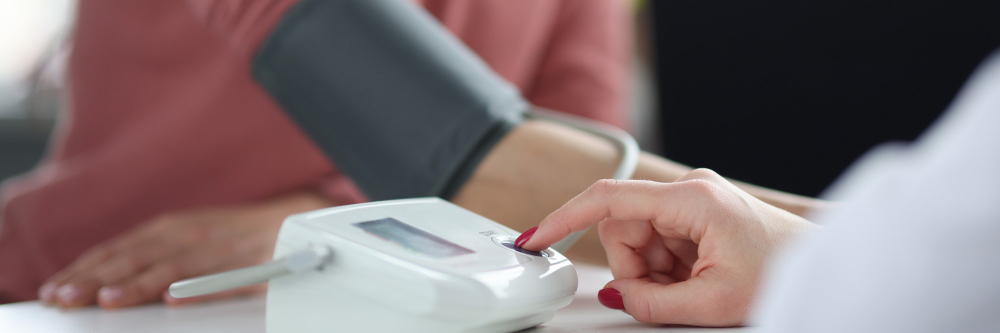
Place the bottom edge of the cuff about one inch above the bend of your elbow. The artery marker on the cuff (usually an arrow) should align with the inside of your arm. The cuff should be snug but not tight enough to pinch. You should be able to slip two fingers underneath it.
Step 4: Align Your Arm at Heart Level
Rest your arm on a flat surface such as a table. Your elbow should be at approximately the same height as your heart. If your arm hangs at your side or is raised above your chest, the reading will be affected.
Step 5: Stay Still and Silent
Do not talk, move, or look at your phone during the reading. Take two or three readings, one to two minutes apart, and record all of them. Share those records with your cardiologist at each visit.
When to Contact a Cardiologist About Your Readings
Correcting your technique is a meaningful first step. Still, there are situations where home monitoring is not enough on its own.
Reach out to a cardiologist or your local cardiology clinic in Brooklyn if you notice:
- Readings consistently above 130/80 mmHg despite correct technique
- Large differences between your two or three consecutive readings
- Symptoms such as headache, dizziness, or chest tightness alongside elevated numbers
- Confusion about whether your monitor is calibrated and validated
A cardiologist can validate your home device, review your log, and determine whether your numbers reflect true blood pressure trends or measurement error.
Take the Next Step Toward Accurate Heart Health Monitoring
Your blood pressure numbers are only as reliable as the method used to capture them. By correcting common BP monitoring errors and practicing proper cuff position for BP monitoring at home, you give your care team the accurate information they need to support you.
If you are unsure whether your readings are trustworthy, or if you need guidance on managing blood pressure at home, our Cardiology team is here to help. Our cardiologists work with patients across Brooklyn and surrounding areas to review home monitoring logs and create personalized care plans. Reach out today by calling us at +1-718-367-2555 or walking into our clinic at 1797 Pitkin Avenue, Brooklyn, NY 11212 to schedule a visit.