Leg pain when you walk. Feet that feel cold or numb. A sore on the toe that just will not heal. These signs are easy to brush off, yet they can point to something serious.
Peripheral Artery Disease (PAD) happens when the arteries in your legs narrow and harden, slowing blood flow to your limbs. Left unchecked, it raises the risk of infection, wounds, and even limb loss. The good news is that PAD is often catchable early with a quick, painless screening called the ankle-brachial index test.
You do not have to guess whether your circulation is healthy. A short exam can give you answers and peace of mind. Here is what the test involves and who should consider getting one.
What the Ankle-Brachial Index Test Measures
The worry about hidden circulation problems is real, especially as we age. That worry is exactly why this test exists.
The ankle-brachial index (ABI) compares the blood pressure in your ankle with the blood pressure in your arm. A healthy result means blood is reaching your legs the way it should. A lower ankle reading suggests your arteries may be narrowed.
If you or your loved one has noticed leg discomfort, our guide to warning signs of poor circulation can help you spot the early clues before your visit.
How the Test Works
The exam is simple and comfortable. Here is what to expect:
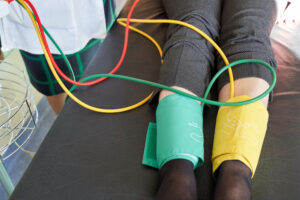
- No needles or downtime: A technician places blood pressure cuffs on your arms and ankles.
- Quick results: The whole process takes about 10 to 15 minutes.
- Clear numbers: Your provider divides the ankle reading by the arm reading to calculate your score.
An ABI below 0.90 usually signals PAD and may lead to further testing. One common next step is a leg angiogram, which uses imaging to show exactly where an artery is blocked.
Who Should Get Screened for PAD
You may wonder if screening applies to you. For many people, it does—and knowing sooner protects your health.
Certain factors raise your risk. Consider talking to a provider about screening if you:
- Are age 65 or older
- Smoke or used to smoke
- Live with diabetes, high blood pressure, or high cholesterol
- Feel cramping or pain in your legs while walking
- Have a family history of vascular disease
Early screening matters because PAD often has no symptoms in its first stages. By catching it early, you can start treatment before complications set in.
When to See a Specialist
Sometimes a screening points to something that needs closer attention. That is not a reason to panic—it is a reason to act.
If your results suggest a blockage, a qualified vascular surgery doctor Brooklyn families trust can review your case and explain your options. In some situations, a leg angiogram helps map the problem so treatment can be precise and effective.
For those who need care at home, our home visit medical services bring skilled clinicians to your door, making follow-up easier for you and your loved one.
Protecting Your Vascular Health
A simple test can change everything. Catching Peripheral Artery Disease (PAD) early gives you more choices and better outcomes.
Whether you need a first screening, a leg angiogram, or ongoing support from a vascular surgery doctor to rely on, help is within reach. You do not have to face circulation concerns alone.
Reach out today by calling 1-347-384-5690 or visiting us at 1797 Pitkin Avenue, Brooklyn, New York 11212 to schedule a screening and take the first step toward stronger Vascular Health.