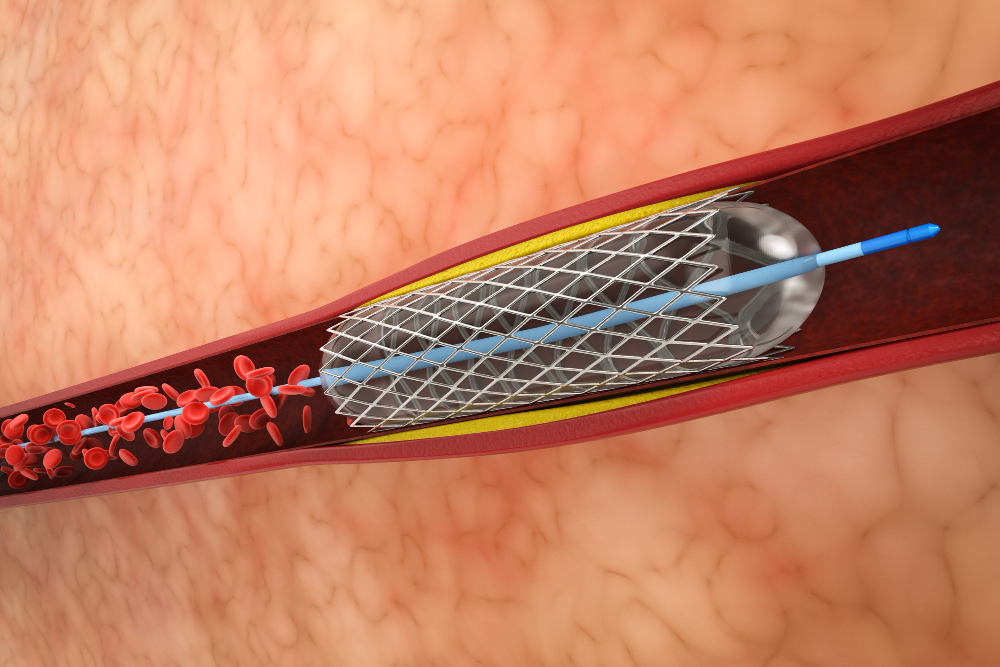
Vena cava filters, sometimes called blood clot traps, are small devices placed in the inferior vena cava to stop dangerous clots from reaching the lungs. They are typically placed when a patient cannot take blood thinners and removed once the clot risk has passed, usually within a few months. A vascular specialist determines the right timing for both placement and removal based on each patient’s condition.
Blood clots that travel to the lungs can cause a life-threatening condition called pulmonary embolism. For patients who are at high risk but cannot safely take blood-thinning medication, vena cava filters offer another layer of protection. Understanding when blood clot traps are placed and removed helps patients and families know what to expect before and after the procedure.
This guide covers what vena cava filters are, the situations that call for placement, the criteria for removal, and how a vascular clinic in Brooklyn evaluates and treats patients who need this type of care.
What Are Vena Cava Filters?
Vena cava filters are small, cage-like devices inserted into the inferior vena cava, the large vein that carries blood from the lower body back to the heart. The filter catches blood clots before they can travel to the lungs, reducing the risk of pulmonary embolism. These devices are often referred to as blood clot traps because of how they function: they physically trap clots while still allowing normal blood flow around them.
Most vena cava filters are placed through a minimally invasive procedure, using a catheter inserted through a vein in the neck or groin. A vascular specialist guides the filter into position using imaging technology, and the entire procedure usually takes less than an hour.
When Are Blood Clot Traps Placed?
Vena cava filters are not a first-line treatment for blood clots. Blood thinners remain the standard approach for most patients. Filters are reserved for specific situations where thinners alone are not a safe or effective option.
Indications for Placement
A vascular specialist may recommend a vena cava filter when:
- A patient has a confirmed deep vein thrombosis (DVT) or pulmonary embolism but cannot take blood thinners due to active bleeding, recent surgery, or a bleeding disorder
- Blood thinners have failed to prevent new clots from forming
- A patient experiences serious side effects from anticoagulant medication
- Someone has a high risk of pulmonary embolism before a major surgery and cannot be on blood thinners beforehand
In each of these cases, the filter acts as a temporary safeguard while the underlying clotting risk is addressed through other means.
When Are Vena Cava Filters Removed?
Many vena cava filters placed today are designed to be temporary. Once the short-term risk of a life-threatening clot has passed, the filter can often be retrieved.
Retrieval Criteria and Timing
Timing for removal depends on several factors, including how the patient responds to treatment and whether any complications arise. In general, a vascular specialist considers removal when:
- The patient has resumed blood thinners and the clotting risk has decreased
- Imaging shows no new or existing clots near the filter
- The original reason for placement, such as recent surgery or bleeding, has resolved
Retrieval is typically recommended within a few months of placement, since filters left in place long-term carry a higher risk of complications, including filter movement or vein damage. Not every filter needs to be removed. Some patients with ongoing, permanent clotting risks may keep a filter in place indefinitely, under continued monitoring.
Diagnosis and Treatment at a Vascular Clinic in Brooklyn
At a vascular clinic in Brooklyn, evaluating a patient for a vena cava filter starts with a review of medical history, current medications, and imaging studies such as ultrasound or CT venography. This helps determine whether a filter is appropriate, and if so, which type best suits the patient’s anatomy and condition.
After placement, a vascular clinic in Brooklyn typically schedules follow-up visits to monitor the filter’s position and assess whether the patient is ready for retrieval. This ongoing care helps catch potential complications early and supports a smoother transition back to standard blood thinner therapy when possible.
Get Expert Care
Knowing when your blood clot traps are placed and removed can bring clarity to a process that often feels uncertain. Vena cava filters offer meaningful protection for patients who cannot safely use blood thinners, and timely removal helps reduce long-term risks. Our Vascular team is available to evaluate your condition, discuss whether a filter is right for you, and guide you through every stage of treatment. Schedule a consultation today by calling +1-718-367-2555 or visiting us at 1797 Pitkin Avenue, Brooklyn, NY 1121 to get personalized, expert care.