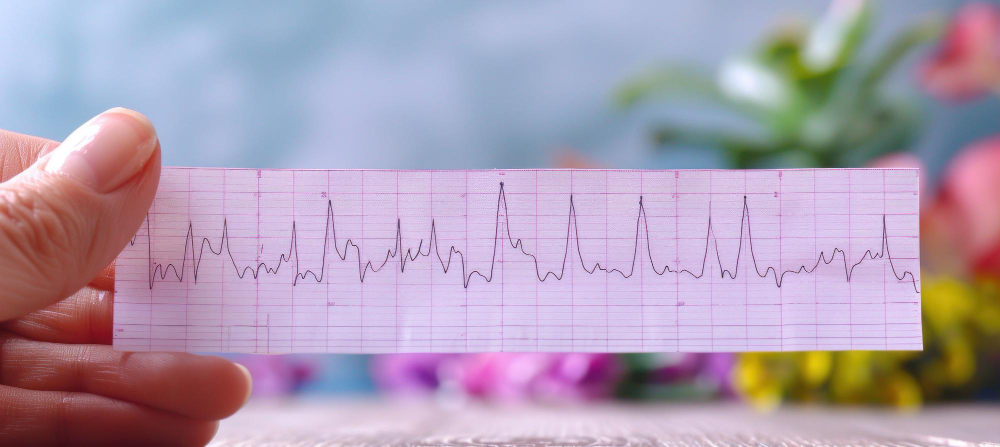
An abnormal ECG without symptoms does not automatically signal a serious heart condition. Many findings are minor and require only routine monitoring. A cardiologist reviews your full clinical picture — including your age, medical history, and any secondary tests — to determine what your result actually means and what, if anything, needs to happen next.
Getting an abnormal ECG result when you feel completely fine is disorienting. You went in for a routine check. You walked out with a question you did not expect. That gap between a normal day and an uncertain diagnosis is genuinely unsettling, and it is okay to feel that way.
The reassuring truth is that an abnormal ECG without symptoms is common, and it is rarely the final word on your heart health. What it is is a starting point. Understanding what may be causing the finding — and what a cardiologist typically does next — can help you move from worry to clarity.
What does an abnormal ECG without symptoms actually mean?
An ECG (electrocardiogram) measures the electrical activity of your heart. When something looks irregular on that recording, it does not always mean your heart is in trouble. Context shapes everything.
Several factors can produce an abnormal reading with no underlying danger:
- Electrolyte imbalances: Low potassium or magnesium levels alter how electrical signals travel through the heart muscle.
- Medication effects: Certain medications can prolong the heart’s electrical cycle, producing an irregular result on paper even when you feel well.
- Minor conduction variations: Small delays in how electrical signals move through the heart, known as bundle branch blocks, are often benign and found incidentally.
- Temporary changes: Anxiety, caffeine, dehydration, or even poor electrode placement during the test can influence results.
Some findings do point to conditions worth monitoring closely, such as atrial fibrillation (AFib), which the American Heart Association estimates affects more than 2.7 million Americans. But even then, a single ECG reading is not enough to make a diagnosis on its own.
What symptoms should prompt you to act quickly?
The absence of symptoms matters, but it is worth knowing which symptoms, if they do appear, should move you toward same-day care. According to the American Heart Association, an abnormal ECG becomes more urgent when it comes alongside:
- Chest pain or pressure
- Shortness of breath at rest or with light activity
- Fainting or near-fainting episodes
- A racing, pounding, or noticeably irregular heartbeat
- Unexplained dizziness or fatigue
If any of these arise after your ECG, contact a cardiologist promptly. Without them, the path forward is typically a calm, structured one.
What follow-up testing does a cardiologist recommend?
Your cardiologist will not rely on a single ECG to conclude. A series of targeted tests helps build a fuller picture of your heart health.
Repeat ECG
A second ECG is often the first step. Movement during the test, poor electrode contact, or a temporary shift in heart rate can all produce misleading results. Repeating the test helps confirm whether the finding is consistent and real.
Holter Monitor
A Holter monitor is a small wearable device that records your heart’s electrical activity continuously over 24 to 48 hours. The National Heart, Lung, and Blood Institute notes that this test is particularly useful for detecting arrhythmias that come and go, since a standard ECG only captures a brief moment in time.
Echocardiogram
An echocardiogram uses sound waves to create images of your heart’s structure and function. It can identify problems with the heart valves, walls, and pumping ability that would not appear on an ECG alone.
Blood Tests
Blood work checks for thyroid dysfunction, electrolyte imbalances, and markers of heart muscle stress. According to the Mayo Clinic, these results often provide critical context that shapes how your cardiologist interprets the original ECG finding.
Take Your Next Step With Confidence
An abnormal ECG without symptoms is the beginning of a conversation about your heart health. The right follow-up gives your care team what they need to make an accurate, complete assessment — and gives you the answers you deserve.
Our cardiologists offer thorough, personalized cardiac evaluations. The team takes time to explain your results clearly, review your full history, and walk you through every recommended next step. You do not have to figure this out alone. Reach out today by calling us at +1-718-367-2555 or walking into our clinic at 1797 Pitkin Avenue, Brooklyn, NY 11212 to schedule your consultation.