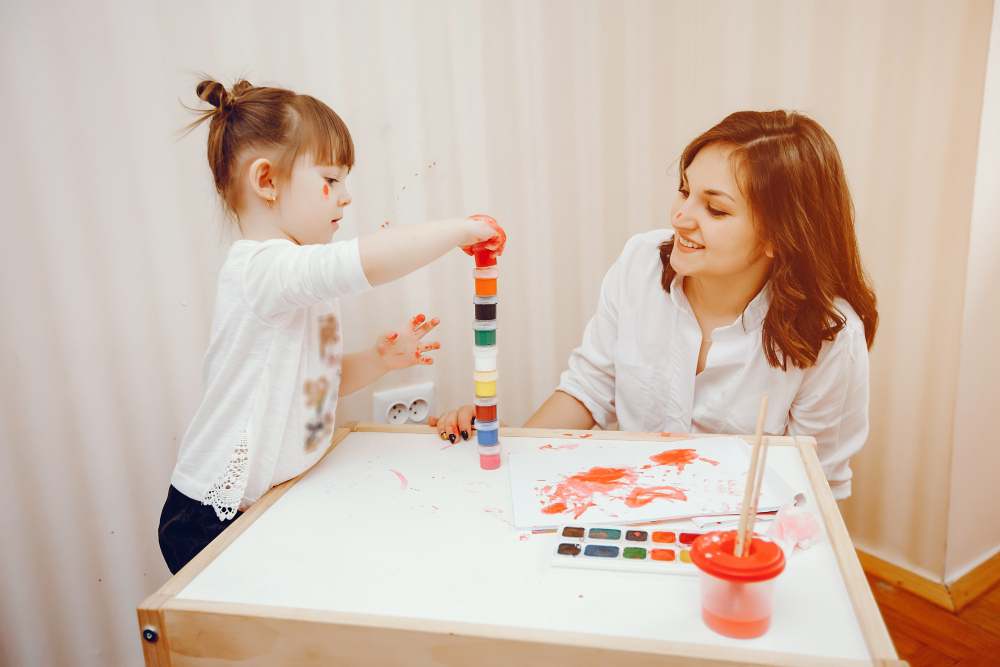
Child-centered play therapy allows young kids to work through stress using toys as their language, since children often cannot put difficult feelings into words. A trained behavioral health specialist creates a safe space where play becomes a way to express fear, grief, or anxiety. Over time, this approach helps children build emotional resilience and feel understood.
Watching your child struggle with stress can feel helpless. They may not have the words to explain what is bothering them, even when you can see it in their behavior. Child-centered play therapy gives young children another way to communicate.
Through toys, dolls, sand trays, and art supplies, kids can act out what they cannot yet say out loud. This form of therapy meets children exactly where they are, using play as the bridge between confusion and understanding. In this article, you will learn how toys allow young kids to work through stress, what a typical session looks like, and where to find support close to home.
What Is Child-Centered Play Therapy?
Child-centered play therapy is a therapeutic approach built around a simple truth: play is how children process their world. Instead of asking a child to sit and talk through their feelings, a therapist follows the child’s lead during play, observing patterns and offering gentle guidance.
Sessions typically happen in a dedicated playroom stocked with toys chosen for their emotional value. A behavioral health specialist trained in this method watches closely, noting themes that repeat across sessions. Over time, these patterns reveal what a child is working through internally.
How Toys Allow Young Kids to Work Through Stress
Toys give children a safe distance from difficult emotions. A child who cannot say “I am scared of my parents fighting” might act out a storm scene with toy animals hiding in a shelter instead.
Toys as Emotional Translators
- Dollhouses and figures: Help children recreate family dynamics or recent events, revealing fears or confusion they cannot verbalize.
- Sand trays: Allow kids to build and rebuild scenes, giving them a sense of control over chaotic feelings.
- Art supplies: Offer a non-verbal outlet for emotions that feel too big for words.
- Puppets: Create a layer of pretend that makes it easier for a shy or anxious child to open up.
Why This Approach Works for Young Children
Young children have limited language skills and an underdeveloped ability to reflect on their own emotions. Play bypasses these limits. A child does not need to understand or name a feeling to express it through a toy. This makes child-centered play therapy especially effective for children who have experienced a recent loss, a hospital stay, a move, or family changes at home.
When Should Parents Consider This Type of Support?
You do not need to wait for a crisis to seek help. Consider reaching out if your child shows:
- Sudden changes in sleep or appetite
- Increased clinginess or separation anxiety
- Regression in behaviors like potty training
- Frequent nightmares or fearfulness
- Withdrawal from friends or favorite activities
A behavioral health specialist can assess whether play therapy fits your child’s needs and build a plan tailored to their stage of development.
Finding Support at a Mental Health Clinic in Brooklyn
Consistency matters for young children in therapy. A mental health clinic in Brooklyn can offer a familiar space close to home, reducing the stress of travel for both you and your child.
Working with a mental health clinic in Brooklyn also means your child benefits from a coordinated care team. Play therapy can be paired with parent coaching or family sessions when needed, giving your whole household the tools to support your child’s progress.
You Do Not Have to Watch Your Child Struggle Alone
Stress in young children often looks different than it does in adults, but it is no less real. Child-centered play therapy gives your child a voice, even before they have the words to speak it.
If your child is showing signs of stress, reach out to our Child and Family Behavioral Health team today by calling +1-718-367-2555 or visiting us at 1797 Pitkin Avenue, Brooklyn, NY 1121 to schedule a visit. Our team is ready to help your child feel safe, understood, and supported, one toy at a time.