A duplex ultrasound is a painless, non-invasive test that measures blood flow in your leg veins and arteries using sound waves. It combines traditional ultrasound imaging with Doppler technology to show both the structure of your blood vessels and how well blood is moving through them. A vascular specialist uses these results to detect blockages, clots, or poor circulation.
Leg pain, swelling, or discoloration can be frightening, especially when you do not know the cause. You may be wondering whether the discomfort points to something serious, like a blood clot, or something more manageable, like poor circulation. Either way, getting clear answers matters, both for your health and for your peace of mind.
This guide explains how duplex ultrasound works, what it can reveal about your leg vascular flow, and why working with an experienced vascular specialist makes the process easier to understand.
What Is a Duplex Ultrasound and How Does It Work?
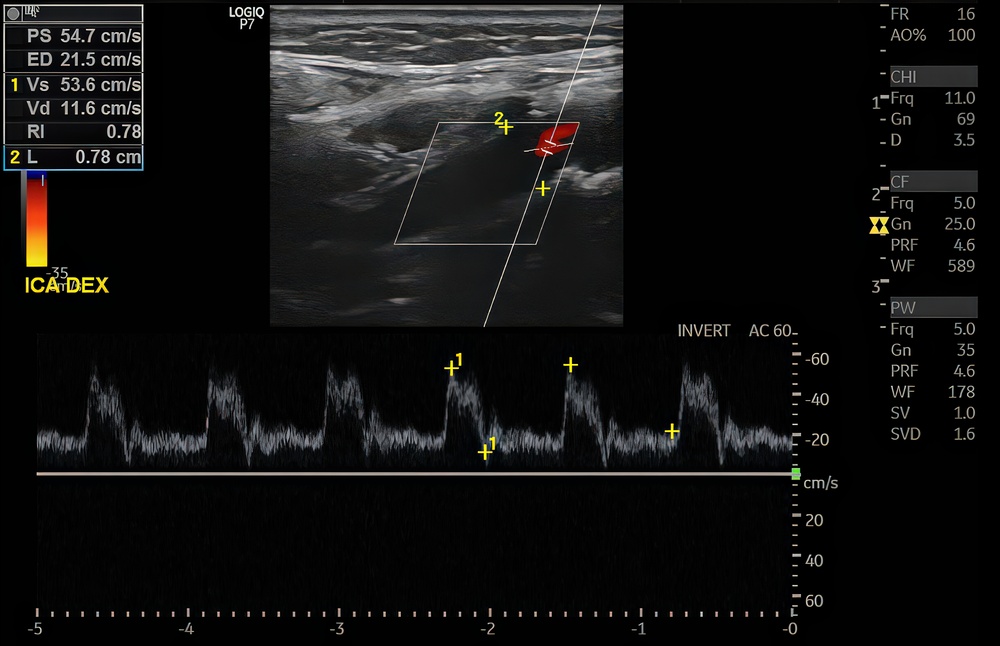
A duplex ultrasound gets its name from the two technologies it combines: standard ultrasound imaging and Doppler ultrasound. Standard imaging creates a picture of your veins and arteries. Doppler ultrasound measures the speed and direction of blood as it flows through those vessels.
Together, these two views give your care team a complete picture of your leg’s vascular health, not just how your blood vessels look, but how well they are functioning.
Why Doctors Use Duplex Ultrasound for Legs
Duplex ultrasound is often the first test recommended when a patient reports leg pain, swelling, or skin changes. It is painless, requires no radiation, and can be completed in under an hour.
How Duplex Ultrasound Measures Leg Vascular Flow
Understanding how duplex ultrasound measures leg vascular flow can help ease some of the uncertainty before your appointment.
The Testing Process
During the test, a technician applies a gel to your leg and moves a small handheld device called a transducer along your skin. The transducer sends sound waves into your body, and those waves bounce back to create real-time images of your blood vessels.
Here is what typically happens during your appointment:
- Positioning: You will lie down while the technician examines different sections of your leg, from your groin to your ankle.
- Compression testing: The technician may gently press the transducer against your leg to check how your veins respond, which helps identify blood clots.
- Doppler measurement: Sound waves capture the speed and direction of blood flow, which appear as color patterns or waveforms on the screen.
What the Results Can Reveal
Duplex ultrasound can detect a range of vascular concerns, including:
- Deep vein thrombosis (DVT): Blood clots in the deep veins of your leg.
- Chronic venous insufficiency: A condition where leg veins struggle to send blood back to your heart.
- Peripheral artery disease (PAD): Narrowed arteries that reduce blood flow to your legs.
Your vascular specialist reviews these results alongside your symptoms and medical history to determine the right next steps for your care.
Why Work With a Vascular Specialist for Your Results?
You do not have to interpret these results on your own. A vascular specialist brings focused training in circulatory health, which means they can spot subtle patterns that general practitioners might miss.
This expertise matters because vascular conditions often share overlapping symptoms. A trained eye helps ensure your treatment plan is based on an accurate diagnosis, not guesswork.
Finding a Vascular Clinic in Brooklyn
If you are searching for a vascular clinic in Brooklyn, look for one that combines updated ultrasound equipment with a vascular specialist on staff. A dependable vascular clinic in Brooklyn should also walk you through your results in plain language, so you leave your appointment with clarity instead of more questions.
Your comfort during the process matters just as much as the accuracy of your results.
Taking the Next Step for Your Vascular Health
Leg pain and swelling do not have to remain a mystery. Duplex ultrasound offers a safe, reliable way to understand what is happening beneath the surface, and a skilled vascular specialist can guide you toward the right treatment from there.
Our vascular team is here to support you and your loved ones through every step of the diagnostic process, from your first appointment to your final results. Reach out to us today by calling us at +1-718-367-2555 or walking into our clinic at 1797 Pitkin Avenue, Brooklyn, NY 11212 to schedule your duplex ultrasound.