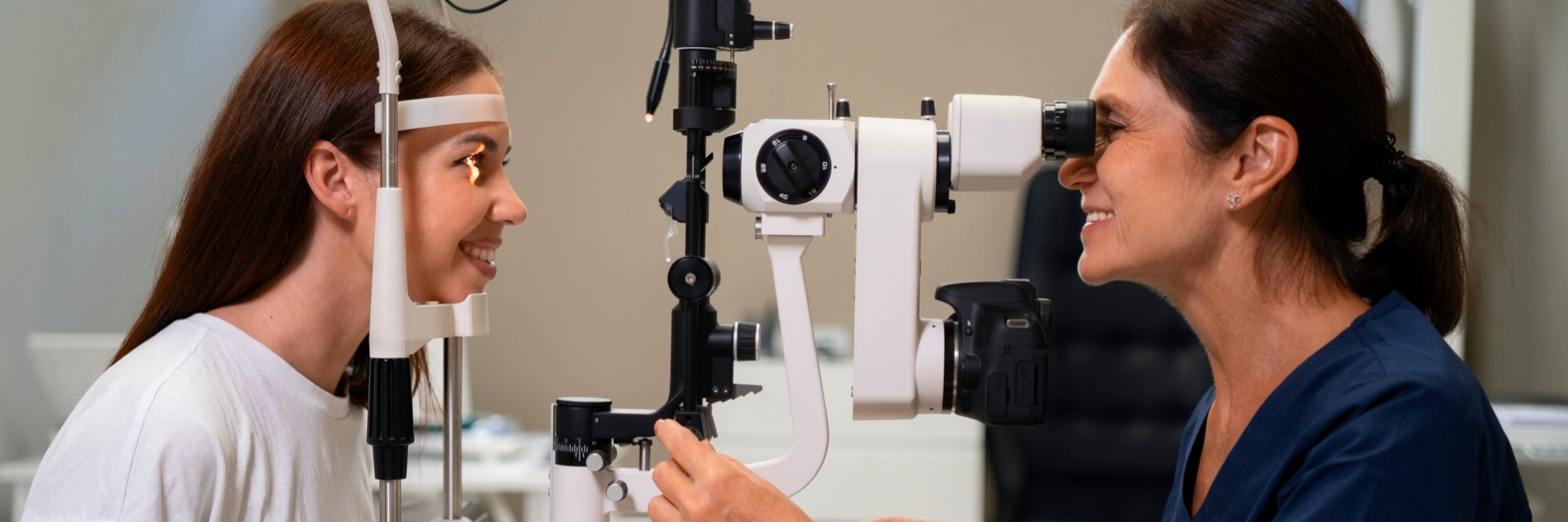
Choosing the right eye care provider can feel confusing. You search for an eye doctor in Brooklyn and suddenly face a wall of unfamiliar titles — optometrist, ophthalmologist, optician. Which one do you actually need? The truth is that each plays a different role in protecting your sight, and picking the right one saves you time, money, and worry. Maybe you need a routine checkup, a new prescription, or care for a serious eye condition. Knowing who does what helps you get the right care from the very first visit. This guide breaks down the differences in plain language, so you can walk into your appointment feeling informed and confident about your vision.
If you are ready to book but unsure where to start, help is close by. At Doral Health & Wellness Ophthalmology, our caring specialists guide you toward the right care for your needs and explain every step in plain language. We take the time to answer your questions so you never feel rushed. Reach out today and let us help you protect the sight you rely on.
Understanding the Types of Eye Doctors
The titles alone can leave you guessing. You may assume every eye doctor does the same job, then feel unsure when one refers you to another. Knowing the differences puts you back in control of your care.
There are three main types of eye care providers. Each has a different level of training and a different scope of care.
- Optometrist – A doctor of optometry who performs eye exams, prescribes glasses and contact lenses, and detects common eye conditions. They handle most routine vision care.
- Ophthalmologist – A medical doctor who diagnoses and treats all eye diseases, performs eye surgery, and also prescribes glasses and contacts. They handle complex and medical eye needs.
- Optician – Not a doctor, but a trained technician who fits and adjusts your eyeglasses and contact lenses based on a prescription.
Here is the simple takeaway. An optometrist keeps your everyday vision sharp, an ophthalmologist treats deeper medical problems, and an optician makes sure your glasses fit just right.
Optometrist vs. Ophthalmologist: The Key Differences
The biggest source of confusion sits between these two roles. Both are called eye doctors, yet their training and abilities are not the same. Understanding the gap helps you choose wisely.
An optometrist completes a doctor of optometry degree and focuses on vision care and routine eye health. An ophthalmologist attends medical school, then completes years of specialized surgical and medical training. That deeper education allows them to treat serious diseases and perform surgery.
What Each One Can Do
Here is how their day-to-day care compares:
- Routine eye exams – Both optometrists and ophthalmologists provide these.
- Prescriptions for glasses and contacts – Both can fit and prescribe corrective lenses.
- Medical treatment of eye disease – This is the specialty of an ophthalmologist.
- Eye surgery – Only an ophthalmologist performs procedures like cataract surgery.
- Managing complex conditions – A skilled ophthalmologist in NY handles glaucoma, macular degeneration, and diabetic eye disease.
The message here is reassuring. You do not have to memorize every detail. When your needs go beyond routine care, a trusted Brooklyn ophthalmology team steps in with the medical expertise to help.
When Should You See Each Type of Eye Doctor?
Timing matters when it comes to your eyes. Many people wait until something feels wrong, then worry they waited too long. Knowing when to see whom removes that guesswork.
Your symptoms and needs point you toward the right provider. Use these simple guidelines to decide.
See an Optometrist When
- You need a routine checkup – Regular vision exams keep your prescription current.
- Your vision has changed – Blurry sight often means you need updated glasses or contacts.
- You want a new prescription – For glasses, contacts, or a simple vision update.
See an Ophthalmologist When
- You have a diagnosed eye disease – Conditions like glaucoma or cataracts need medical care.
- You experience warning signs – Sudden vision loss, eye pain, flashes, or floaters need prompt attention.
- You need surgery – Any surgical procedure requires an ophthalmologist.
- A chronic condition affects your eyes – Diabetes and high blood pressure both call for closer monitoring.
If you are unsure, do not stress over the choice. Searching for an eye clinic near me that offers both routine and medical care means you get the right help under one roof. A dependable ophthalmologist near me can also guide you if your needs change over time.
Why Regular Eye Exams Matter
It is easy to skip an eye exam when nothing feels wrong. But many serious eye diseases develop in silence, showing no early symptoms at all. That quiet is exactly why regular checks are so important.
The American Academy of Ophthalmology notes that each part of a comprehensive eye exam gives important information about your eye health. These visits do more than update your glasses. They catch problems early, when treatment works best.
Regular exams protect you in several ways:
- Early detection – Catching disease before it steals your vision.
- An accurate prescription – Clearer, more comfortable sight every day.
- A window into your health – Eye exams can reveal signs of diabetes and other conditions.
- Peace of mind – Knowing your eyes are healthy and cared for.
The takeaway is simple. A short visit today can protect the sight you depend on for years to come.
The Importance of the Dilated Eye Exam
Some parts of your eye stay hidden during a basic exam. Trouble can quietly build at the back of the eye, far beyond what a quick glance can reveal. A dilated exam solves that problem.
During this part of the visit, your doctor places gentle drops in your eyes to widen your pupils. According to the National Eye Institute, this lets your doctor get a clear view of your optic nerve and retina. It is one of the best ways to catch eye disease early.
A dilated exam helps detect conditions like glaucoma, macular degeneration, and diabetic eye disease before symptoms appear. Your vision may feel blurry and light-sensitive for a few hours afterward, so bring sunglasses and consider arranging a ride home. That small inconvenience is well worth the protection it provides.
Take the Next Step Toward Clear, Healthy Vision
Finding the right eye doctor does not have to be confusing. You now know the difference between an optometrist, an ophthalmologist, and an optician, when to see each, and why regular dilated exams protect your sight. That knowledge turns an overwhelming search into a confident choice. Your vision is far too precious to leave to chance.
You do not have to sort through this alone. At Doral Health & Wellness, our compassionate specialists provide thorough eye exams, honest guidance, and complete medical eye care for you and your loved ones. From your first visit to your ongoing care, we help you feel secure and informed every step of the way. When you search for an eye clinic near me or a trusted ophthalmologist near me, remember that dependable care is right here in your community.
To schedule your appointment, contact Doral Health & Wellness today at 1-718-365-2555 or visit us at 1797 Pitkin Avenue, Brooklyn, New York 11212. For general information about Doral Health & Wellness services, you can contact or email info@doralhw.org.