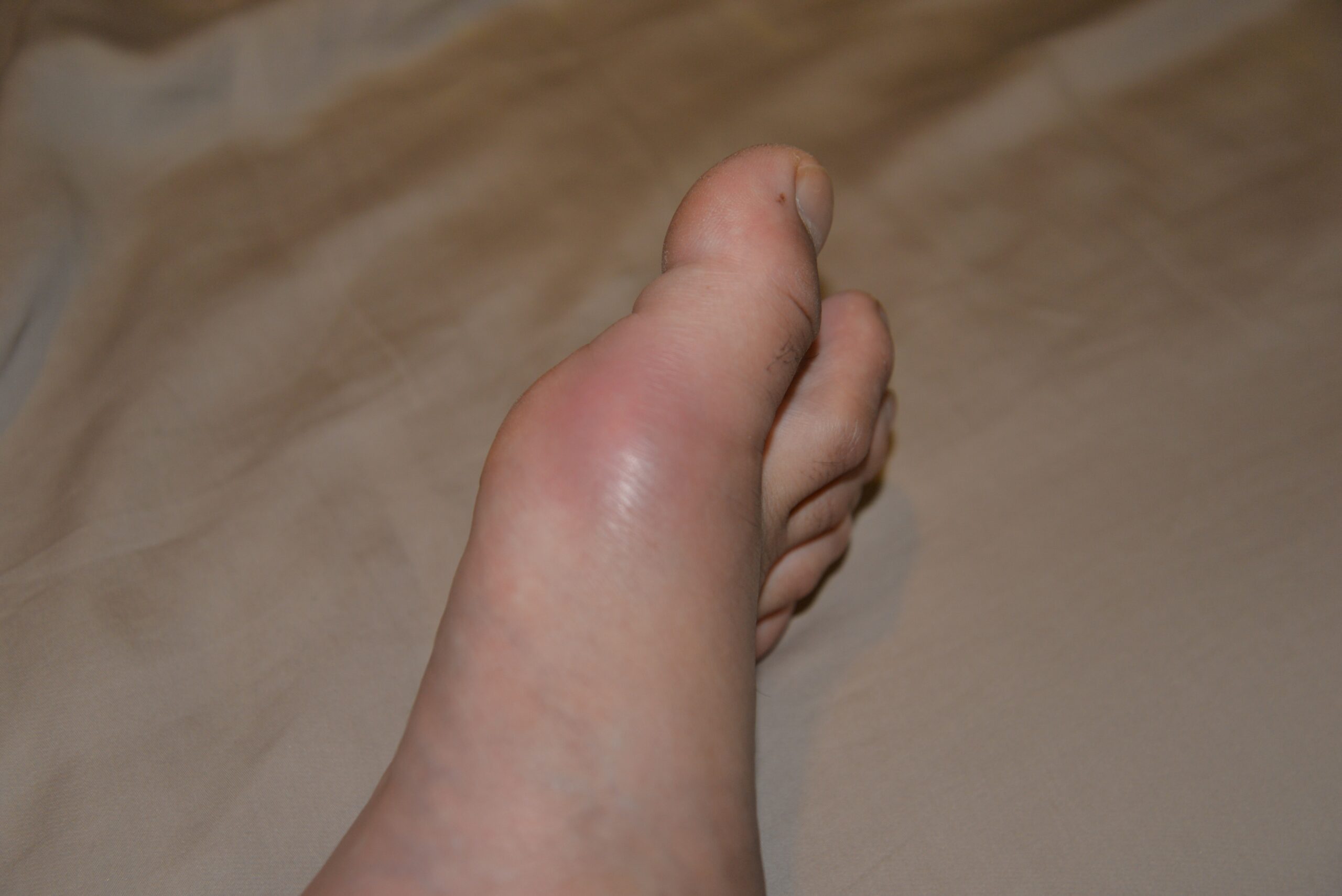
If you experience severe pain in your big toe joint, along with stiffness and swelling, it’s highly likely that you may have gout, a type of arthritis caused by uric acid buildup in the joints. It causes painful inflammation flare-ups in the affected joint. Luckily, with treatment, it can be managed. Learn warning signs of a gout attack and how to manage sudden gout flare-ups in this article. Get a consultation with the best Podiatrists in Brooklyn.
Warning signs of a gout attack
People with a gout attack may experience these warning signs, such as:
- Intense joint pain: This pain starts as a dull ache that suddenly turns into a sharp, burning, throbbing pain, usually in the big toe joint. However, it can also occur in other joints, such as the elbow, knee, wrist, ankle, and instep.
- Swelling and redness: The joint may feel slightly swollen, appear red or even purple, and feel warm.
- Stiffness: Stiffness is a common sign when you have issues moving the joint or even standing straight.
- Lingering pain: Even after it fades, you won’t feel relief right away. The joint may feel sore for days or weeks, making daily life a bit tricky, especially if it affects your foot and ankle.
Gout and Sudden Joint Inflammation: Foot Care Options
Managing gout’s sudden joint flare-ups requires a combination of home remedies and medical intervention, such as:
- Pain medications:
The best way to manage gout’s sudden flare-ups is to take medication to treat pain and inflammation. Usually, over-the-counter anti-inflammatory medications like ibuprofen and naproxen are recommended. But if the pain is severe and OTC medications fail to provide relief, the doctor may prescribe stronger pain relievers or corticosteroid injections, or oral medications recommended to relieve pain.
- Reducing the excess uric acid:
Uric acid buildup in the joints and the formation of crystals is one of the main causes of gout flare-ups. To manage uric acid buildup, the doctor may prescribe medications such as colchicine, which helps to treat existing gout symptoms and prevent future flare-ups. This medication decreases the body’s production of digestive acid and encourages the kidneys to filter the acid.
- Cold therapy:
Until the medications start working, you can lower the pain by applying ice packs wrapped in a cloth on the inflamed joint. This reduces your inflammation and pain. You can apply it for 10 to 15 minutes every hour if the pain is severe.
- Elevation:
To reduce swelling, make sure you elevate your foot higher than heart level because it allows blood and fluid to move toward the heart.
- Avoid putting pressure on your affected toe:
Putting pressure on the affected joint makes the inflammation worse and causes severe pain. That’s why you need to take the pressure off the affected toe. You can use an assistive device, such as a cane, to take off the pressure from the toe. You can also wear soft slippers or roomy socks during the time of a gout attack.
- Certain lifestyle changes:
Certain lifestyle changes can be helpful to prevent gout flare-ups, including:
- Drink plenty of water to flush out uric acid from the system.
- Eat a nutrient-dense diet and avoid processed foods and purine-rich meats, which lower the risk of gout flare-ups.
- Limit your alcohol intake.
- Manage your stress.
- Drink coffee and lemon juice to reduce uric acid production.
- Other treatments of gout:
If other treatment options fail to relieve gout flare-ups and the person experiences extreme pain, a major abnormality, or severe infection at the site, then surgery is recommended. The most common surgery options for gout are:
- Joint fusion: In this surgery, the surgeon may fuse a joint after removing the damaged tissue to stabilize it.
- Joint replacement: In this surgery, surgeons remove the affected joint and replace it with artificial joints.
- Tophi removal: In this surgery, a surgeon will remove tophi (lumps that produce uric acid around a joint, leading to severe discomfort, abnormality, or infection).
When to go to a doctor?
You should see a doctor if you are having a flare-up. Your doctor creates a treatment plan for you to manage your symptoms. You should call your doctor if:
- It’s your first flare-up.
- You think you may develop conditions like joint infection, which have some of the same symptoms as gout flares.
- You have a high fever and chills.
- If symptoms don’t get better after 48 hours or don’t end after a week.
Gout is a form of arthritis that happens when uric acid accumulates in the joints in the form of crystals, which causes inflammation and sudden flare-ups. However, the above-mentioned foot care options help to manage gout flare-ups and improve your foot health. Make sure you consult a doctor if flare-up symptoms don’t improve or you have other symptoms like fever or chills.
Need help with gout? Visit our podiatry clinic in Brooklyn to get professional medical help. Call us to book your appointment now!!!!!
At Doral Health & Wellness, we have Podiatrists with extensive education and expertise. If you’re ready to take the next step in managing your pain, we recommend consulting with our healthcare provider to explore the right treatments or therapies for you. Always listen to your body and adjust your daily routine to prioritize your well-being. Trauma to the tendons, muscles, and bones of the foot is quite common. It’s not a good idea to put off seeing Foot Doctor Brooklyn until you are in a lot of pain. Our address is 1797 Pitkin Avenue, New York, NY 11212. To make an appointment, please call + 1 718 367 2555 or send an email toinfo@doralhw.org.