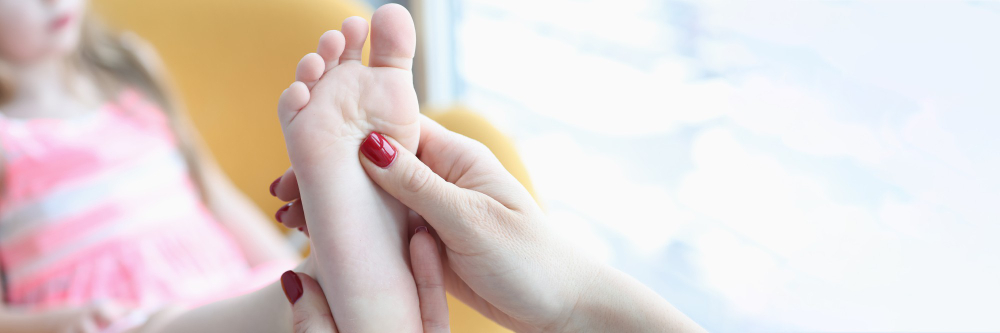
You notice your child’s toe bending at an odd angle. Maybe it looks curled, or your little one complains that a shoe feels tight. It is easy to worry.
The good news is that paying attention to pediatric foot care early can make all the difference. Hammertoes and other toe deformities do occur in children, but many cases are preventable with the right habits.
Hammertoes happen when a toe bends downward at the middle joint instead of lying flat. Left unchecked, these foot deformities can become rigid and painful over time. As a parent, you want to catch problems before they grow.
This guide walks you through what causes these issues, the warning signs to watch for, and the everyday steps that protect your child’s feet.
Understanding Hammertoes and Toe Deformities in Children
A hammertoe is a bend in one of the smaller toes, usually the second, third, or fourth. The toe takes on a claw-like or bent shape that does not straighten on its own.
In children, these foot deformities are often flexible at first. That means the toe can still be moved by hand. Flexibility is your window of opportunity.
When caught early, flexible hammertoes respond well to simple, at-home care. Once a toe becomes rigid, treatment grows more complex.
What Causes Hammertoes in Kids
Several factors can contribute to hammertoes and toe deformities in growing feet:
- Tight or ill-fitting shoes. Footwear that crowds the toes is one of the most common culprits. Kids outgrow shoes fast, and a snug fit forces toes to curl.
- Genetics. Some children inherit foot shapes that make them more prone to deformities.
- Muscle imbalance. When the muscles around a toe pull unevenly, the joint can bend over time.
- Underlying conditions. Certain neurological or structural issues may play a role.
By identifying the cause early, you can take focused action. If you are unsure what is behind your child’s symptoms, our pediatric foot care services can help you find answers.
Pediatric Foot Care: Prevention Tips Every Parent Can Use
Prevention does not require anything complicated. Small, consistent habits protect your child’s feet for years.
Here is where you can start:
- Measure feet often. Children’s feet grow quickly. Check the fit every few months and replace shoes that feel tight.
- Choose roomy toe boxes. Pick shoes that let toes wiggle freely. Avoid pointed or narrow styles.
- Encourage barefoot play. Safe barefoot time at home strengthens foot muscles naturally.
- Watch for complaints. Pain, redness, or a child avoiding certain shoes are signals worth checking.
These steps cost little and give back a lot. For more everyday habits that support growing feet, our guide to healthy feet for children offers practical advice.
When to See a Foot Doctor
Some signs mean it is time to bring in a professional. Reach out to a podiatrist if you notice:
- A toe that stays bent and will not straighten
- Pain that interferes with walking or play
- Calluses or sores forming on the toes
- A deformity that seems to be getting worse
A foot doctor can assess whether the toe is flexible or rigid and recommend the right plan. Early evaluation often means simpler treatment, such as stretching, padding, or supportive footwear.
You do not have to figure this out alone. A trusted podiatrist can guide you toward the care your child needs.
Protecting Your Child’s Feet Starts Today
Your child’s feet carry them through every stage of growing up. By staying alert to hammertoes and toe deformities and building healthy habits early, you give those little feet the best start.
If you have noticed a bent toe or your child’s discomfort lingers, do not wait. Reach out to schedule an evaluation with our Podiatry team by calling +1 718 367 2555 or visit us at 1797 Pitkin Avenue, New York, NY 11212 to explore children’s toe deformity treatment options.