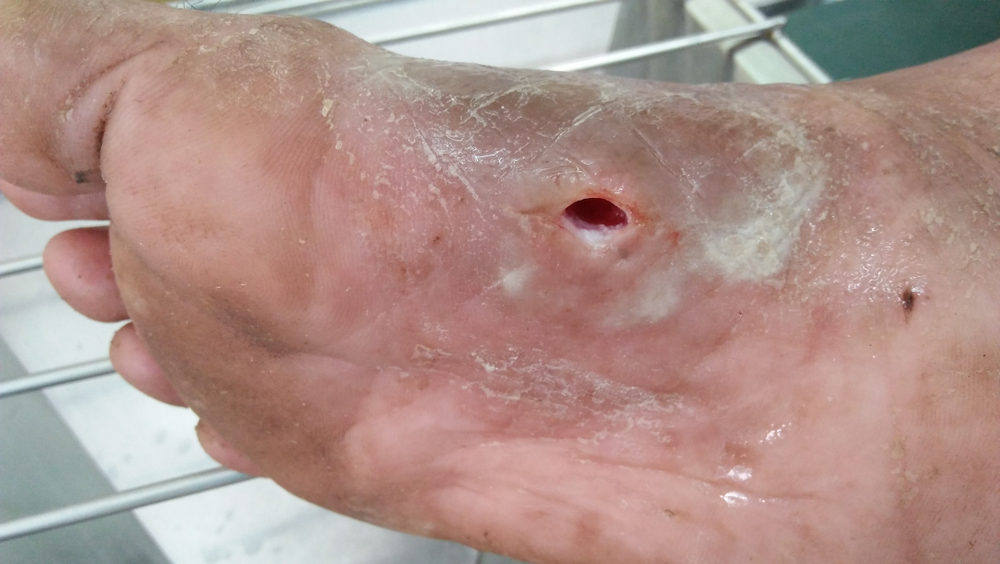
Slow-healing sores on diabetic feet often signal poor circulation or nerve damage caused by high blood sugar. Watch for sores that do not shrink after two weeks, redness that spreads, drainage with an odor, or numbness around the wound. These are red flags for slow-healing sores on diabetic feet that call for prompt attention from a podiatrist.
A small cut or blister on the foot rarely feels like an emergency. But for someone living with diabetes, that same sore can turn serious fast. High blood sugar levels affect circulation and nerve function, which means wounds on the feet often heal much more slowly than they should.
Knowing the red flags for slow-healing sores on diabetic feet can make the difference between a quick recovery and a hospital stay. If you are caring for a loved one with diabetes, this guide will help you recognize the warning signs early and understand when it is time to reach out to a podiatrist.
Why Do Diabetic Foot Sores Heal So Slowly?
Diabetes can damage the small blood vessels that carry oxygen and nutrients to the skin. Without enough blood flow, even minor injuries struggle to repair themselves. Nerve damage, known as neuropathy, adds another layer of risk because it can numb the feet, so a sore may go unnoticed until it has already worsened.
The Role of Peripheral Neuropathy
Peripheral neuropathy is one of the most common complications of diabetes. It reduces feeling in the feet, which means your loved one might not notice a blister, cut, or pressure sore forming. By the time it is discovered, the wound may already be infected or deeper than expected.
Red Flags for Slow-Healing Sores on Diabetic Feet
Some warning signs are easy to miss if you are not looking closely. Checking your loved one’s feet daily can help you catch these red flags for slow-healing sores on diabetic feet before they become dangerous.
- No improvement after two weeks: A healthy sore should show visible healing within this window. If it looks the same or worse, that is a signal that something is wrong.
- Spreading redness or warmth: This can point to infection moving into surrounding tissue.
- Drainage or an unpleasant odor: Pus or a foul smell often means bacteria have taken hold.
- Swelling around the wound: Persistent swelling suggests inflammation that is not resolving on its own.
- Numbness or tingling: Reduced sensation near the sore may indicate nerve damage is masking pain that would normally prompt quicker treatment.
- Dark or discolored skin: Blackened tissue around a wound can be a sign of dying skin cells and requires urgent care.
None of these signs should be brushed aside. Diabetic foot sores can progress to serious infections, and in severe cases, they can threaten the limb itself.
When Should You See a Podiatrist?
If you notice any of the red flags above, do not wait to see if the sore improves on its own. A podiatrist can evaluate the wound, check circulation and nerve function, and start treatment before complications set in.
What Happens During a Podiatry Visit
At a podiatry clinic in Brooklyn, your visit typically starts with a thorough exam of the foot, including a look at circulation, sensation, and the wound itself. From there, your podiatrist may recommend specialized dressings, offloading pressure from the area, or, in some cases, further testing to rule out deeper infection.
Regular checkups at a podiatry clinic in Brooklyn are especially important if your loved one has a history of foot ulcers, since early monitoring often prevents small issues from becoming major ones.
Take Action Before a Sore Becomes Serious
You do not have to wait for a wound to worsen before seeking help. Recognizing the red flags for slow-healing sores on diabetic feet early gives your loved one the best chance at a fast, complete recovery. Our podiatry team is ready to help you schedule an evaluation and create a care plan built around your family’s needs. Reach out to us today by calling +1-718-367-2555 or visiting us at 1797 Pitkin Avenue, Brooklyn, NY 1121 to protect the health of the feet that carry your loved one through every day.