Structural family systems therapy helps families identify unhealthy roles, boundaries, and communication patterns passed down through generations. By working with a behavioral health specialist, families can reshape how they relate to one another and begin breaking generational cycles in home dynamics for good.
You may have noticed patterns in your family that feel impossible to change. Maybe conflict shows up the same way it did in your parents’ household. Maybe roles feel rigid, or certain feelings never get spoken out loud. These patterns are rarely random. They are often inherited, passed down through generations without anyone choosing them on purpose.
Structural family systems therapy offers a way to understand these patterns and change them. This approach looks at the family as a whole unit, paying close attention to roles, boundaries, and communication. When families begin breaking generational cycles in home dynamics, they open the door to healthier relationships and a calmer home life.
What Is Structural Family Systems Therapy?
Structural family systems therapy is a form of treatment that examines how a family is organized. It looks at who holds power, how decisions get made, and where boundaries are too loose or too rigid. A behavioral health specialist trained in this approach helps families see these patterns clearly, often for the first time.
Rather than focusing on one person as “the problem,” this therapy treats the family as a connected system. A change in one part of the system affects everyone else.
Common Signs of Unhealthy Family Structures
- Blurred boundaries: Parents and children take on roles that do not match their position in the family, such as a child managing a parent’s emotions.
- Rigid rules: Communication follows strict, unspoken scripts that leave little room for honesty.
- Repeated conflict: The same arguments resurface across generations without resolution.
- Emotional distance: Family members avoid closeness to protect themselves from past hurt.
How Do Generational Cycles Form in Family Dynamics?
Generational cycles often form because children learn relationship patterns by watching their parents. If a parent grew up in a home with poor communication or unclear boundaries, they may unintentionally recreate that same environment. Breaking generational cycles in home dynamics requires recognizing these inherited patterns before they can be addressed.
Why Awareness Matters
Naming a pattern takes away some of its power. Once a family understands where a behavior comes from, they can begin choosing a different response. This is where professional support makes a real difference.
How Can a Behavioral Health Specialist Support Your Family?
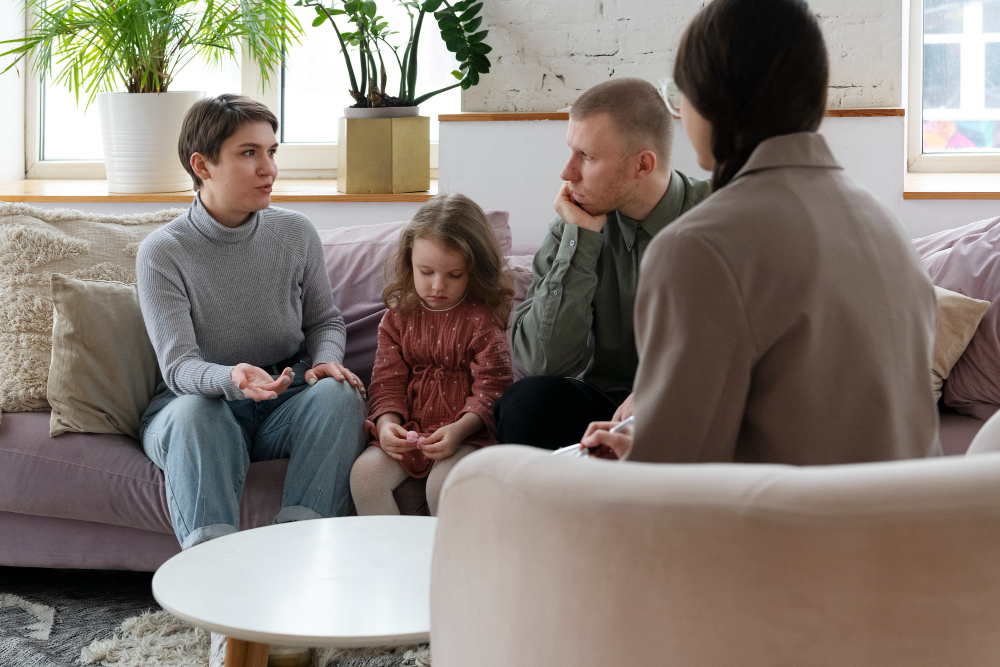
A behavioral health specialist works alongside your family to map out these patterns and guide healthier change. Sessions often include the whole family, since structural therapy depends on seeing how everyone interacts together, not just one person in isolation.
At a mental health clinic in Brooklyn, families can access this kind of structured, compassionate support close to home. A mental health clinic in Brooklyn offering structured family therapy gives families a steady place to practice new ways of relating, with guidance every step of the way.
What to Expect From Treatment
- Assessment: The specialist observes family interactions to identify roles and boundaries.
- Goal setting: The family and specialist agree on specific changes to work toward together.
- Practice sessions: New communication patterns are practiced in real time, often during family sessions.
- Ongoing support: Regular check-ins help reinforce progress and address setbacks.
You Do Not Have to Carry These Patterns Forward
Breaking generational cycles in home dynamics is possible, and you do not have to figure it out alone. Structural family systems therapy gives families a clear path forward, built on understanding, honest communication, and steady support from a qualified behavioral health specialist.
If old patterns feel too heavy to carry into the next generation, reach out to our Behavioral Health team today by calling +1-718-367-2555 or visiting us at 1797 Pitkin Avenue, Brooklyn, NY 1121 to schedule a visit. Support is close by, and healthier days for your family are within reach.