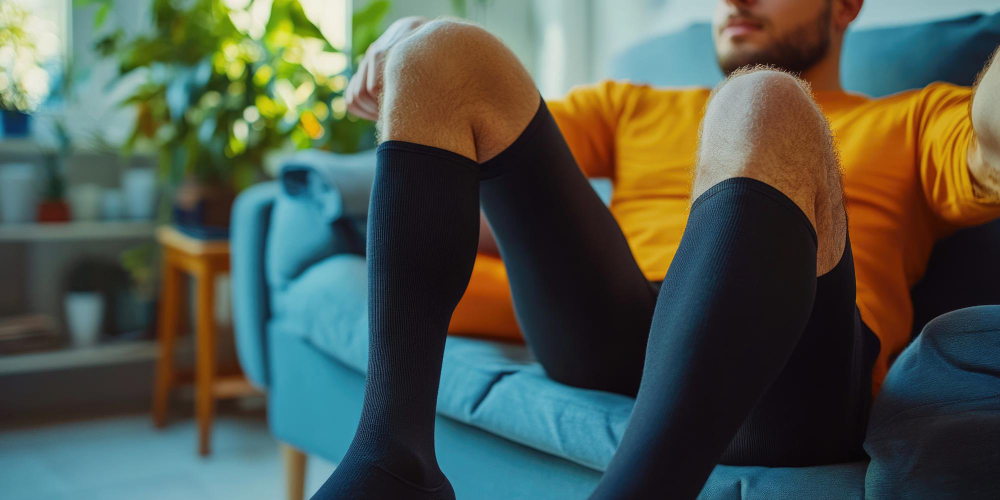
Compression stockings are graded by pressure in millimeters of mercury (mmHg), ranging from mild (8–15 mmHg) for everyday fatigue to high (30–40 mmHg) for conditions like deep vein thrombosis or chronic venous insufficiency. Choosing the wrong level can restrict blood flow rather than support it. A vascular surgeon can help you find the right fit.
Leg swelling, aching, and heaviness are easy to dismiss as the price of a long day on your feet. But they are often signs that your circulation needs support — and the right compression stocking can make a meaningful difference. The challenge is that not every stocking is suited to every situation. Using too little compression may leave symptoms unaddressed. Using too much, without proper guidance, can restrict the very blood flow you are trying to protect.
This compression stocking guide walks you through the grades available, who needs which level, and how to ensure leg compression without losing blood circulation in the process.
How to Choose the Right Compression Level for Your Legs
Understanding Compression Stocking Grades
Compression stockings are measured in mmHg — the same unit used for blood pressure. Graduated stockings apply the most pressure at the ankle and ease off as they move up the leg, gently encouraging blood to flow back toward the heart.
The main grades you will encounter are:
- 8–15 mmHg: The lightest level. Suited to mild leg fatigue, general comfort during long periods of sitting or standing.
- 15–20 mmHg: Available over the counter without a prescription. Provides day-to-day relief from achy, swollen legs, and is commonly recommended during pregnancy to help prevent varicose and spider veins.
- 20–30 mmHg: The most frequently prescribed level by doctors. Used for varicose veins, mild edema, and chronically painful or heavily fatigued legs.
- 30–40 mmHg: A firmer, medical-grade level used for moderate to severe edema, lymphedema, deep vein thrombosis (DVT), and venous stasis ulcers.
- 40–50 mmHg: Reserved for the most severe vascular conditions, including chronic venous insufficiency with active ulceration. Always requires clinician direction.
Who Needs Which Level?
The right grade depends on your symptoms and medical history, not just how your legs feel at the end of the day.
Stockings at 15–20 mmHg are appropriate if your legs ache after long shifts, long flights, or pregnancy without a diagnosed condition. Once you cross into persistent swelling, varicose veins, or known venous disease, 20–30 mmHg is typically where a doctor will start. If you have been diagnosed with DVT, lymphedema, or post-surgical swelling, a vascular surgeon will likely recommend 30–40 mmHg, fitted by a professional.
Compression is not appropriate for everyone. People with peripheral arterial disease, uncontrolled heart failure, or active skin infections in the legs should avoid compression stockings unless specifically cleared by a physician.
Key Factors in Picking the Perfect Leg Compression Without Losing Blood Circulation
Measuring and Fitting Your Stockings
A stocking that fits poorly can work against you. Too tight in the wrong place, and it can act like a tourniquet rather than a support.
Measure your legs in the morning, before swelling builds. At that point:
- Measure your ankle circumference at its narrowest point, directly above the ankle bone.
- Measure your calf at its widest point.
- Measure calf length from the floor to the bend of the knee while seated.
Well-fitted stockings should feel snug — like a firm, even hug — with less pressure higher up the leg. Numbness, tingling, redness, or a rolling top band all signal a poor fit. If something feels wrong, it probably is. Adjust the size or style before assuming the compression level needs to change.
When to See a Vascular Surgeon
Compression stockings manage symptoms. They do not diagnose what is causing them.
Before purchasing high-grade stockings, speak with a vascular surgeon if you notice any of the following:
- Leg pain or swelling that appeared suddenly over days or weeks
- Swelling that is noticeably worse in one leg than the other
- Redness, warmth, or tenderness in the leg — possible signs of a blood clot
- Significant swelling after surgery, long car rides, or flights
These are not situations to manage with an over-the-counter stocking. A vascular surgeon can identify the underlying cause and recommend a compression level that supports circulation safely.
Finding Help at a Vascular Clinic in Brooklyn
If you are dealing with leg pain, visible veins, or persistent swelling, a vascular clinic in Brooklyn can connect you with the right level of care close to home. A local specialist can evaluate your circulation, assess your vascular health, and fit you with the appropriate compression grade — preventing the guesswork that leads to the wrong stocking and unintended harm.
Working with a vascular clinic in Brooklyn also means coordinated care. Your provider can monitor how your legs respond over time and adjust your prescription as your condition changes.
Start with the Right Support
Compression stockings work best when they are matched to your specific needs. Choosing a grade based on a general recommendation — or simply grabbing the firmest pair on the shelf — can do more harm than good.
Reach out today by calling 1-347-384-5690 or visiting us at 1797 Pitkin Avenue, Brooklyn, New York 11212 to schedule an evaluation with our vascular team. Bring a list of your current symptoms, any relevant diagnoses, and your questions. The sooner you get a proper assessment, the sooner your legs get the support they actually need.