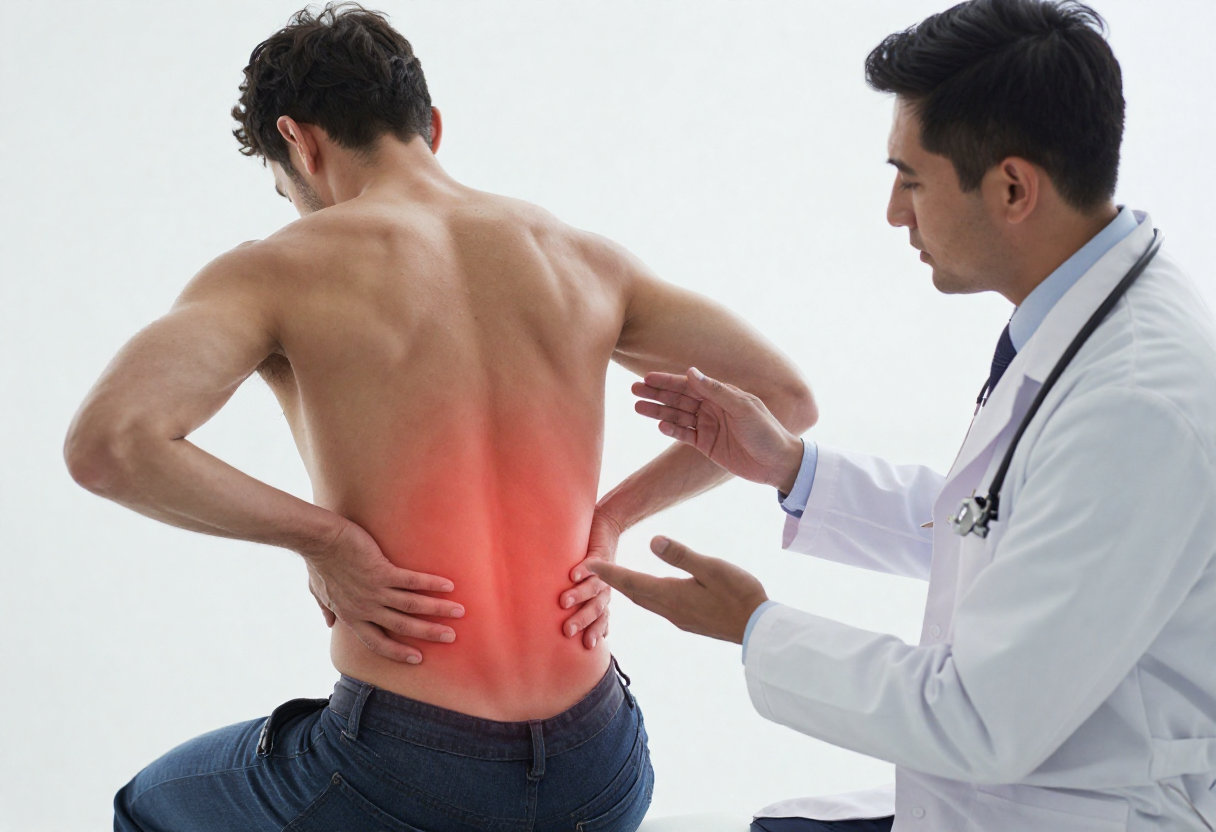
When a single vertebra slips forward over the one directly below it, the condition is known as Spondylolisthesis. This most commonly occurs in the lower back (lumbar spine) and the sacrum. This misalignment can lead to vertebral constriction, lumbar malformation, and significant nerve pressure.
While a forward slip is common, a backward slip is known as Retrolisthesis. Both conditions can result in debilitating lower back and leg pain. If you are experiencing these symptoms, consulting a Pain Management Doctor at Doral Health & Wellness is the first step toward reclaiming your mobility. Visit the best Pain Management Clinic in Brooklyn at Doral Health & Wellness, or log on to https://doralhw.org/contact-us/ to schedule an appointment with us.
How Spondylolisthesis Feels
Symptoms of lumbar spondylolisthesis vary based on the “grade” or severity of the slip. Some individuals remain asymptomatic, while others experience:
Muscle Spasms: Particularly in the hamstrings, which can lead to a stiff, “waddling” gait.
Sciatic-Like Pain: Radiating discomfort, numbness, or “pins and needles” traveling down the buttocks, thighs, and into the feet.
Localized Soreness: Tenderness directly over the misaligned vertebrae.
Muscle Weakness: A feeling of “heaviness” or fatigue in the legs, making it difficult to stand for long periods.
The Biomechanics of the Slip
The 5th lumbar vertebra (L5) sits atop the sacrum (S1) at a natural forward slant. Gravity and the inward curve of the lower back naturally want to push L5 forward.
Usually, sturdy facet joints act as a buttress to keep your spine aligned. However, if the discs or these joints weaken, that buttress fails. A common cause is Spondylolysis, a defect or stress fracture in the pars interarticularis (the bony ring of the vertebra).
These stress fractures are frequently seen in athletes who perform repetitive hyperextension, such as gymnasts and football players. When the bone ring breaks on both sides, the vertebra loses its skeletal “anchor,” allowing it to slide forward.
Prevention and Protective Measures
While some spinal issues are congenital or the result of sudden injury, you can significantly lessen your risk through proactive lifestyle choices:
Core Stabilization: Maintain a regular exercise routine focused on the “inner corset” (abs and lower back) to provide muscular support for the vertebrae.
Weight Management: Carrying excess weight increases the mechanical load and shear force on the lumbar spine.
Bone Nutrition: Prioritize a diet rich in Calcium and Vitamin D to maintain the structural integrity of the vertebral rings.
Personalized Pain Management in Brooklyn
At Doral Health & Wellness, we move beyond simple diagnosis. Because spondylolisthesis involves both bone alignment and nerve compression, we utilize an integrated approach:
Imaging & Grading: We use advanced imaging to determine the exact degree of your slip.
Interventional Care: Epidural injections or nerve blocks can provide immediate relief from radiating leg pain.
Physical Therapy: Specialized “flexion-based” protocols to strengthen the core without further straining the slip.
Don’t wait for the pain to become permanent. If you suspect a spinal slip is behind your lower back struggles, schedule a consultation with our Brooklyn specialists today. We offer the latest 2026 diagnostic and treatment options to get you back on your feet. Contact Doral Health & Wellness Pain Relief Department in Brooklyn to get professional help and guidance on how to manage chronic pain. Call us at +1-718-367-2555 to get a consultation. If you need help learning coping methods, register your information and make direct contact with our doctors at https://yuz88hfiyh7.typeform.com/Doralintake. Log on to www.doralhw.org. Or visit us at 1797 Pitkin Avenue, Brooklyn, NY 11212.