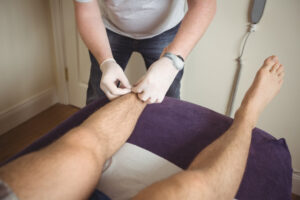
A small cut on your foot can turn into a source of real worry when it refuses to heal. You clean it, cover it, and wait, but the sore stays open week after week. That waiting can feel frightening, especially if you are managing diabetes, poor circulation, or another condition that slows recovery.
You are not alone in this. Slow-healing sores on the feet are one of the most common reasons people seek out professional wound care, and with the right approach, most wounds respond well to treatment. This guide covers practical wound care on feet, explains why some sores heal slower than others, and outlines when it is time to bring in a podiatrist.
Why Some Foot Wounds Heal Slower Than Others
Feet carry your full body weight, sit farthest from your heart, and often go unnoticed until a problem develops. That combination makes them especially vulnerable to slow healing.
- Reduced blood flow: Poor circulation limits the oxygen and nutrients your tissue needs to repair itself.
- Diabetes: High blood sugar can damage nerves and blood vessels, making it harder for your body to fight infection and rebuild skin.
- Pressure and friction: Ill-fitting shoes or repeated pressure on one spot can reopen a wound before it fully closes.
- Infection: Bacteria in an open wound can stall the healing process and, left untreated, lead to more serious complications.
Understanding the cause behind your slow-healing sore is the first step toward treating it effectively.
Everyday Wound Care Tips for Faster Healing
Good wound care on feet starts with consistent daily habits. Small, careful steps at home can make a meaningful difference in how quickly a sore closes.
Keep the Wound Clean and Moist
Rinse the area gently with saline or clean water, then pat it dry. Avoid harsh soaps or hydrogen peroxide, which can damage healthy tissue. A moist (not wet) environment, maintained with an appropriate dressing, supports faster cell regeneration than letting a wound dry out completely.
Change Dressings Regularly
Follow your provider’s instructions on how often to change your bandage. Leaving a dressing on too long can trap bacteria, while changing it too often can disrupt healing tissue.
Reduce Pressure on the Area
Offloading, or keeping weight off the wound, is one of the most effective ways to speed recovery. This might mean wearing a specialized boot, using crutches, or simply choosing supportive footwear that does not rub against the sore.
Monitor for Warning Signs
Watch for increased redness, swelling, warmth, drainage, or a foul odor. These can signal infection and mean it is time to seek professional care right away.
When to See a Podiatrist for a Slow-Healing Sore
Home care handles many minor wounds well, but some sores need a trained eye. If a wound has not shown signs of improvement after two weeks, or if you notice signs of infection, it is time to talk to a podiatrist.
A podiatrist can assess the underlying cause of a slow-healing wound, whether that is circulation, nerve damage, or an unresolved infection, and create a treatment plan suited to your specific needs. This may include debridement to remove dead tissue, specialized dressings, or referral for advanced therapies when needed. For anyone managing diabetes, regular checkups with a podiatrist are one of the most reliable ways to catch problems early and avoid serious complications down the road.
Get Expert Wound Care
Living with a sore that will not heal is exhausting, and it deserves more than a wait-and-see approach. Our podiatry team is here to help you understand what is happening with your foot and get you on a clear path toward healing. If you have been managing a slow-healing sore on your own, our team can offer the hands-on care and guidance you need. Reach out today by calling us at +1-718-367-2555 or walking into our clinic at 1797 Pitkin Avenue, Brooklyn, NY 11212 to schedule an evaluation and take the next step toward healthier feet.