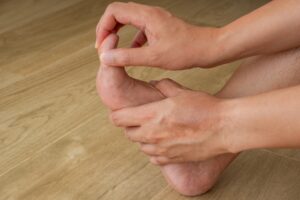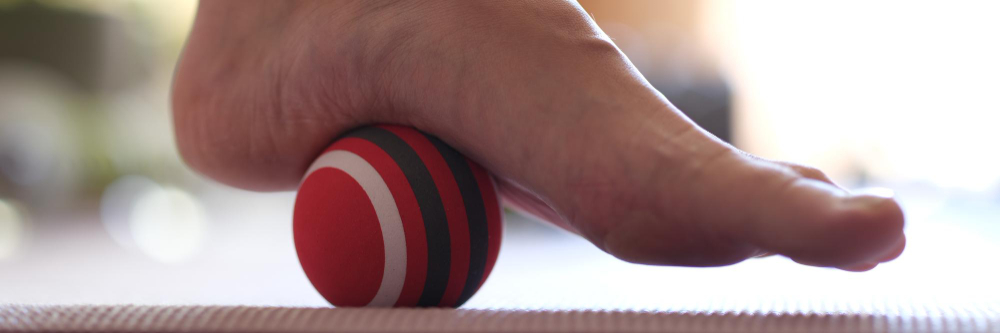
That folded sock sensation under the ball of your foot is often caused by fat pad atrophy, Morton’s neuroma, or metatarsalgia. These conditions change how pressure spreads across your foot when you walk. A podiatrist can identify the exact cause and recommend treatment so you can walk comfortably again.
You take a step and feel it. A thick, bunched-up sensation right under the ball of your foot, almost like a sock has slipped and folded beneath your toes. You check your shoe. Nothing is there. Yet the feeling persists with every step.
If you have been asking yourself why the ball of your foot feels like a folded sock, you are not imagining it, and you are not alone. This sensation is a common complaint among patients, and it usually points to a specific, treatable cause.
What Does That “Folded Sock” Feeling Really Mean?
Your foot has a natural layer of fat under the ball of the foot. This padding absorbs shock every time your foot strikes the ground. When that padding thins, shifts, or becomes inflamed, nerves and tissue nearby can feel that pressure differently. The brain interprets it as something bunched under your foot, even though nothing physical is out of place.
What Causes the Ball of Your Foot to Feel Like a Folded Sock?
A few conditions tend to be behind this sensation.
Fat Pad Atrophy
As you age, the fat pad under the ball of your foot can thin out. Less cushioning means more direct pressure on bone and tissue, which can feel like a fold or bump beneath your foot.
Morton’s Neuroma
This is a thickening of tissue around a nerve, usually between the third and fourth toes. It often creates a sensation of standing on a pebble or a folded object.
Metatarsalgia
Metatarsalgia refers to inflammation and pain in the ball of the foot. It is frequently caused by high-impact activity, tight footwear, or foot structure that places extra pressure on one area.
Ill-Fitting Shoes
Shoes that are too narrow, too flat, or worn out can shift how weight moves across your foot, mimicking or worsening this bunched sensation.
When Should You See a Podiatrist?
Some foot discomfort resolves on its own. Other symptoms need professional attention. Consider reaching out to a podiatrist if you notice:
- Persistent discomfort. The sensation lasts more than a week or two despite rest.
- Numbness or tingling. These signs can point to nerve involvement, such as Morton’s neuroma.
- Swelling or visible changes. Redness, swelling, or a change in foot shape should not be ignored.
- Pain that affects walking. If it changes how you move or stand, it is time for an evaluation.
A podiatrist can examine your gait, check pressure points, and recommend imaging if needed to confirm what is happening beneath the surface.
How a Podiatry Clinic in Brooklyn Can Help
If you live in the borough, a podiatry clinic in Brooklyn can offer same-day or near-term appointments for foot pain like this. A local podiatry clinic in Brooklyn will typically assess your footwear, walking pattern, and medical history before recommending a treatment plan. This might include custom orthotics, padding, physical therapy, or in some cases a referral for further imaging.
You Do Not Have to Live With This Feeling
Foot discomfort has a way of quietly limiting your day. You skip the walk you used to enjoy. You avoid standing too long. That does not have to be your normal.
Our podiatry team works with patients to pinpoint the cause of foot pain and build a plan that fits your life, not the other way around. Reach out to us today by calling +1-718-367-2555 or visiting us at 1797 Pitkin Avenue, Brooklyn, NY 1121 to schedule an evaluation and take the first step toward walking without that folded sock feeling holding you back.