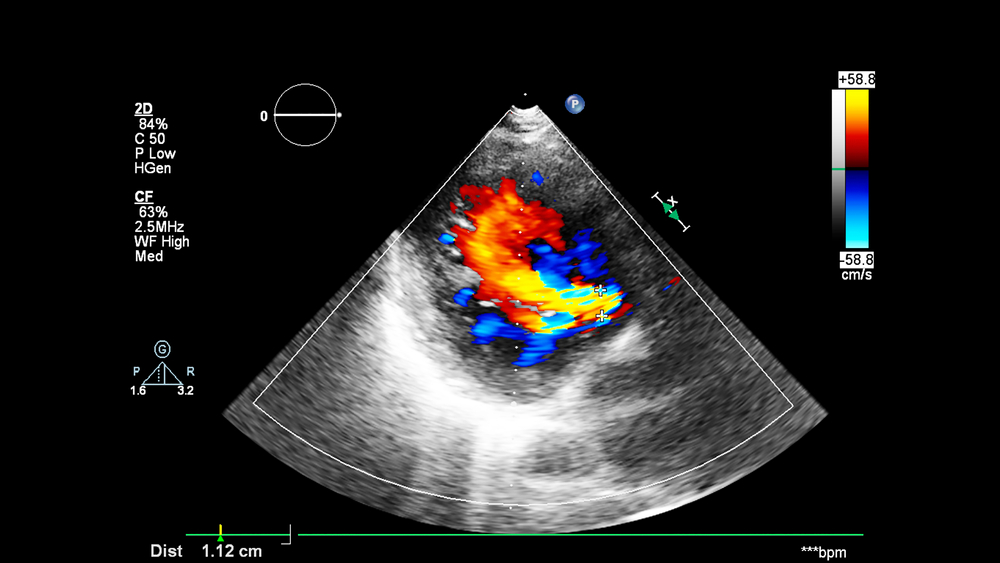
A transthoracic echocardiogram (TTE) is a painless ultrasound test that creates moving images of your heart. Doppler technology, built into the same machine, measures the speed and direction of blood as it moves through your heart valves. Together, these tools help your cardiologist spot narrowed or leaking valves early, often before symptoms become serious.
Waiting on test results, or hearing your loved one needs a heart scan, can bring a wave of worry. You may not know what the procedure involves, or what the doctor is actually looking for. That uncertainty is often harder to sit with than the test itself.
A transthoracic echocardiogram is one of the most common and least invasive ways your cardiologist checks how well your heart is working. It uses sound waves, not needles or radiation, to create a live picture of your heart in motion. Built into this same scan is Doppler technology, which tracks how blood moves through your heart’s four valves. Understanding how Doppler tracks valve blood jets can help you feel more prepared and less anxious walking into your appointment.
What Happens During a Transthoracic Echocardiogram?
A transthoracic echocardiogram, often shortened to TTE, is performed with a small probe called a transducer. The technician moves it gently across your chest, and the device sends sound waves that bounce off your heart’s structures.
Those echoes get converted into real-time images on a screen. Your cardiologist uses these images to examine:
- Heart chamber size and shape: Enlarged chambers can signal strain on the heart.
- Pumping strength: How efficiently your heart muscle contracts and relaxes.
- Valve movement: Whether valves open and close fully with each heartbeat.
The test typically takes 30 to 45 minutes, and you can usually return to your normal routine right afterward.
How Does Doppler Track Valve Blood Jets Through the Heart?
This is where Doppler comes in. While standard ultrasound shows structure, Doppler adds color and motion data, letting your cardiologist see how blood flows, not just where it is.
Measuring Speed and Direction
Doppler calculates how fast blood moves by measuring the change in sound wave frequency as it reflects off moving blood cells. When blood passes through a narrowed valve, it speeds up and creates a visible “jet.” Your cardiologist studies the pattern, speed, and direction of this jet to understand how well the valve is functioning.
Spotting Leaks and Narrowing
A healthy valve allows smooth, one-directional blood flow. Doppler imaging reveals two common problems:
- Stenosis: A narrowed valve forces blood through a smaller opening, producing a faster, more turbulent jet.
- Regurgitation: A leaking valve allows blood to flow backward, which Doppler displays as a colorful backward jet on screen.
Catching these patterns early gives your cardiologist a clear path toward treatment, whether that means monitoring, medication, or a referral for further care.
Why Your Cardiologist in Brooklyn May Recommend This Test
If you or your loved one has been referred to a cardiology clinic in Brooklyn, a transthoracic echocardiogram is often the first step toward answers. It is frequently recommended after symptoms like shortness of breath, fatigue, chest discomfort, or an irregular heartbeat.
A cardiology clinic in Brooklyn may also use TTE results to track existing heart conditions over time, comparing scans year to year to see whether a valve issue is stable or progressing. This ongoing picture helps your cardiologist make informed decisions about your care, rather than relying on a single snapshot.
You Do Not Have to Navigate This Alone
Hearing medical terms like “regurgitation” or “stenosis” can feel overwhelming, especially when they apply to someone you love. But a transthoracic echocardiogram is designed to give your care team clarity, not add to your stress.
Our Cardiology team coordinates closely with home healthcare visits, so your family receives test results, explanations, and next steps without unnecessary delays or confusion. Reach out to us today by calling +1-718-367-2555 or visiting us at 1797 Pitkin Avenue, Brooklyn, NY 1121 to schedule a transthoracic echocardiogram or speak with a member of our team about what to expect.