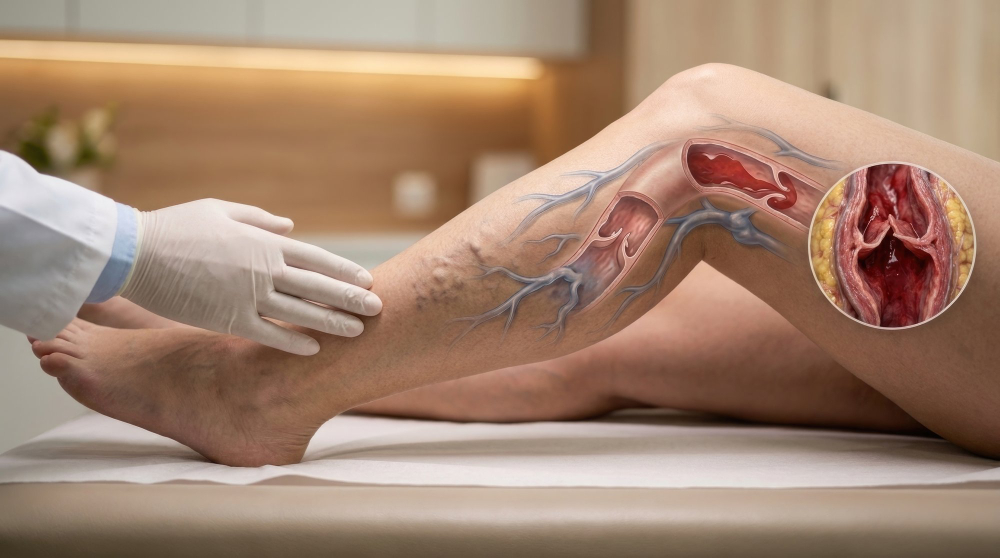
Chronic venous insufficiency develops when the valves in your leg veins weaken, allowing blood to pool instead of flowing back to the heart. This pooling causes swelling and, over time, a brownish discoloration of the skin around the ankles. A vascular specialist can diagnose the condition early and recommend treatment before symptoms worsen.
Noticing that your legs feel heavy by the end of the day, or that the skin near your ankles has taken on a brownish tint, can be worrying. You might wonder if this is simply a sign of aging or something more serious. Chronic venous insufficiency is a common condition, and understanding why lower legs swell and turn brown can help you know when it is time to seek care.
Below, we explain what causes this condition, the symptoms to watch for, and how a vascular specialist can help you manage it.
What Is Chronic Venous Insufficiency?
Chronic venous insufficiency, often shortened to CVI, occurs when the valves inside your leg veins no longer close properly. These valves are responsible for keeping blood moving upward toward your heart. When they weaken or become damaged, blood flows backward and collects in the lower legs instead.
Over time, this pooled blood raises pressure inside the veins, which can lead to visible changes in the skin and ongoing discomfort. Left unaddressed, chronic venous insufficiency tends to progress, so catching it early makes a real difference in how it is treated.
Why Lower Legs Swell and Turn Brown
The swelling and discoloration associated with this condition are not random. They happen for specific, explainable reasons.
Swelling
When blood pools in the lower legs, fluid pressure builds inside the veins and pushes into the surrounding tissue. This causes the ankles and lower legs to swell, especially after standing or sitting for long periods.
Brown Discoloration
As blood pressure in the veins increases, red blood cells can leak into the surrounding skin tissue. Over time, the breakdown of these cells leaves behind a pigment called hemosiderin, which causes the skin to take on a brownish or rust colored appearance. This is one of the clearest signs that explains why lower legs swell and turn brown in people with long-term venous disease.
Other Common Symptoms of Chronic Venous Insufficiency
Beyond swelling and discoloration, you may also notice:
- Aching or heaviness: A tired, heavy feeling in the legs, especially by evening.
- Visible varicose veins: Bulging, twisted veins close to the skin surface.
- Skin changes: Dry, itchy, or thickened skin around the lower leg.
- Leg ulcers: In more advanced cases, open sores may develop near the ankle.
- Cramping: Muscle cramps, particularly at night.
Who Is at Risk?
Certain factors raise your chances of developing chronic venous insufficiency, including:
- A job that requires long periods of standing or sitting
- A family history of varicose veins or venous disease
- Pregnancy
- Obesity
- Older age
- A history of blood clots in the legs
If one or more of these apply to you, it is worth paying closer attention to any swelling or skin changes you notice.
When to See a Vascular Specialist
You do not need to wait until symptoms become severe to get help. A vascular specialist can evaluate your veins using noninvasive imaging, confirm a diagnosis, and recommend treatment options ranging from compression therapy to minimally invasive procedures. Early evaluation often means simpler, more effective treatment.
If you live in the area and are looking for a vascular clinic in Brooklyn, choose a practice with experience diagnosing venous disease and a team willing to walk you through your results and options in plain language. A knowledgeable vascular clinic in Brooklyn can also help you build a long-term plan to prevent the condition from progressing.
Taking Care of Your Legs Starts Today
Understanding why lower legs swell and turn brown is the first step toward getting the right care. You do not have to manage these symptoms on your own, and you do not have to guess what is causing them. Our Vascular team is ready to evaluate your symptoms, answer your questions, and build a treatment plan suited to your needs. Reach out today by calling +1-718-367-2555 or visiting us at 1797 Pitkin Avenue, Brooklyn, NY 1121 to schedule a consultation with our team.