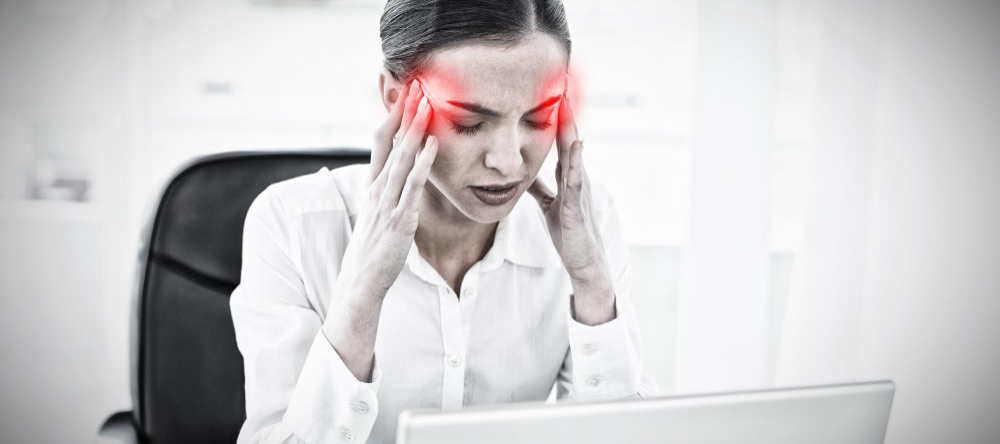
Cervicogenic headaches begin in the neck, not the head. When the joints, muscles, or nerves in your cervical spine become stiff or irritated, pain can radiate forward into your forehead and temples. Understanding this connection helps you and your pain management specialist target the true source of discomfort instead of just chasing the symptoms.
That dull ache behind your forehead may feel like a typical headache. But if it keeps returning alongside neck stiffness, the real problem may be sitting in your cervical spine. This condition is called a cervicogenic headache, and it is more common than many people realize.
You deserve to understand what is happening in your body before you decide on a treatment path. This guide walks through how neck stiffness triggers radiating forehead pain, who is most at risk, and when it makes sense to reach out for professional support.
What Are Cervicogenic Headaches?
A cervicogenic headache is pain that starts in the neck and is felt in the head. Your cervical spine, specifically the top three vertebrae, shares nerve pathways with the trigeminal nerve, which supplies sensation to your face and forehead. When irritation occurs in the neck, your brain can misread the signal as coming from the front of your head.
This is called referred pain. The source and the symptom show up in two different places, which often makes the condition confusing to diagnose without a trained eye.
How Neck Stiffness Triggers Radiating Forehead Pain
The Role of the Cervical Nerves
The upper cervical nerves, known as C1, C2, and C3, connect directly to structures that influence facial and forehead sensation. When neck joints become stiff from poor posture, injury, or prolonged strain, these nerves can become compressed or inflamed. The result is a steady, often one-sided ache that spreads from the base of the skull toward the forehead.
Muscle Tension and Nerve Compression
Stiff neck muscles, particularly the suboccipital muscles at the base of your skull, can tighten around nearby nerves. This tension restricts healthy movement and blood flow, which intensifies the radiating pain. Many people describe it as a tight band wrapping from the back of the head to the front.
Who Is at Risk? Common Causes of Cervicogenic Headaches
You may be more likely to experience this type of pain if you recognize any of the following in your daily life:
- Desk-bound work: Long hours hunched over a screen place steady strain on your neck.
- Previous neck injury: Whiplash or trauma can leave lasting joint irritation.
- Poor sleep posture: An unsupportive pillow can stiffen your neck overnight.
- Age-related changes: Arthritis in the cervical spine becomes more common over time.
- Chronic stress: Tension often settles directly into the shoulders and neck.
When Should You See a Pain Management Specialist?
It is easy to brush off a headache as something that will pass. But when neck stiffness and forehead pain keep returning together, it is worth having it looked at properly. A pain management specialist can rule out other causes and build a treatment plan suited to your specific pattern of pain, rather than a generic fix.
Reach out to a pain management specialist if you notice:
- Pain that lasts for days or returns weekly
- Stiffness that limits how far you can turn your head
- Discomfort that worsens with certain neck positions
- Headaches that do not respond to over-the-counter relief
Finding a Pain Management Clinic in Brooklyn
If you live in the area, you do not have to search far for qualified support. A pain management clinic in Brooklyn can offer hands-on evaluation, imaging when needed, and treatment options ranging from physical therapy to targeted nerve blocks. Choosing a local clinic in Brooklyn also means easier follow-up visits, which matters for a condition that often improves gradually rather than overnight.
You Do Not Have to Live With This Pain
Living with constant forehead pain can wear you down, especially when it keeps circling back to tension in your neck. You are not imagining the connection, and you are not without options. Our Pain Management team is here to help you get a clear diagnosis and a plan that actually addresses the source of your pain. Reach out today by calling +1-718-367-2555 or visiting us at 1797 Pitkin Avenue, Brooklyn, NY 1121 to take the first step.