The difference between turf toe and gout comes down to cause and onset. Turf toe results from a sports injury that strains the big toe joint, while gout is a metabolic condition triggered by uric acid crystal buildup. Diagnosing sudden inflammation in the great toe usually requires a podiatrist’s exam, imaging, or bloodwork to confirm which condition is behind your pain.
Sudden pain and swelling in your big toe can be alarming, especially when you are not sure what caused it. Two of the most common culprits are turf toe and gout, and while they can look similar at first glance, they come from very different sources. Turf toe stems from physical strain on the joint, often during sports. Gout, on the other hand, develops when uric acid crystals build up inside the joint, triggering a painful inflammatory response.
Understanding the difference between turf toe and gout matters because the right treatment depends on an accurate diagnosis. This guide walks you through the causes, symptoms, and diagnostic process behind both conditions, so you know what steps to take next.
What Is Turf Toe?
Turf toe is a sprain of the ligaments surrounding the big toe joint. It typically develops when the toe is forced upward beyond its normal range of motion, straining or tearing the supporting tissue.
Causes and Risk Factors
This injury is common among athletes who play on artificial turf or in sports requiring quick push-offs, like football, soccer, or basketball. Risk increases with:
- Repeated hyperextension: Pushing off forcefully during sprints or jumps
- Flexible footwear: Shoes that do not adequately support the forefoot
- Playing surface: Artificial turf tends to grip cleats more than natural grass, increasing strain
Key Symptoms
Pain usually appears right after the injury and worsens with movement. You may also notice swelling, stiffness, and tenderness at the base of the big toe. In more severe cases, bruising can develop.
What Is Gout?
Gout is a form of arthritis caused by excess uric acid in the bloodstream. When uric acid crystallizes inside a joint, it triggers sudden, intense inflammation, often in the big toe.
Causes and Risk Factors
Several factors can raise your risk of a gout flare, including:
- Diet: High intake of red meat, shellfish, or alcohol
- Weight: Excess body weight increases uric acid production
- Family history: Genetics can influence how your body processes uric acid
- Certain medications: Diuretics and other drugs can elevate uric acid levels
Key Symptoms
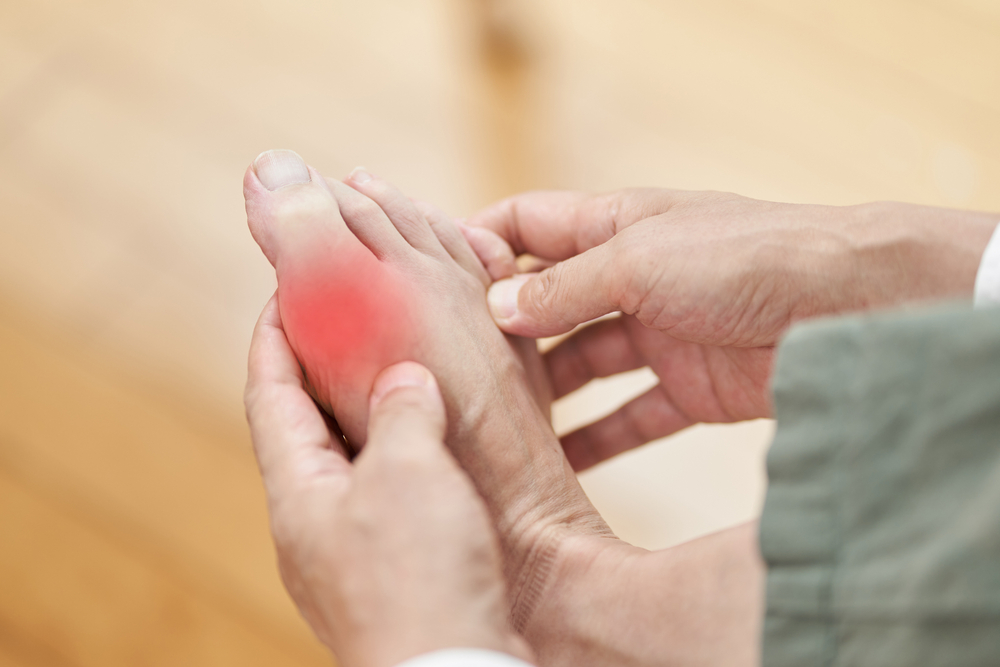
Gout attacks tend to strike quickly, often overnight. The big toe becomes red, swollen, and intensely tender, sometimes so painful that even a bedsheet touching it feels unbearable.
Diagnosing Sudden Inflammation in the Great Toe: Turf Toe vs. Gout
Diagnosing sudden inflammation in the great toe starts with understanding your recent activity and medical history. A clear picture of when the pain began and what you were doing beforehand helps narrow down the cause.
How a Podiatrist Tells Them Apart
A podiatrist will ask about recent physical activity, review your symptoms, and examine the joint for swelling, warmth, and range of motion. Turf toe pain usually follows a specific incident, while gout often appears without any clear trigger.
Diagnostic Tools and Tests
To confirm a diagnosis, your podiatrist may recommend:
- X-rays: To rule out fractures and assess joint damage from turf toe
- Blood tests: To measure uric acid levels associated with gout
- Joint fluid analysis: To check for uric acid crystals directly within the joint
Treatment Options for Each Condition
Treatment looks different for each condition, which is why an accurate diagnosis matters so much.
Treating Turf Toe
Mild cases often respond well to rest, ice, compression, and elevation. Your podiatrist may also recommend taping, a stiff-soled shoe, or a walking boot to limit joint movement while it heals. Severe tears may require physical therapy or, in rare cases, surgery.
Treating Gout
Gout flares are typically managed with anti-inflammatory medication to ease pain and swelling. Long-term management often includes dietary changes and, for frequent flare-ups, medication to lower uric acid levels over time.
Get the Right Diagnosis
Toe pain that strikes suddenly deserves a closer look, not guesswork. The difference between turf toe and gout can be hard to pinpoint on your own, and treating the wrong condition can delay real relief. Our podiatry team specializes in diagnosing sudden inflammation in the great toe and building a treatment plan suited to your specific condition. Reach out to us today by calling +1-718-367-2555 or visiting us at 1797 Pitkin Avenue, Brooklyn, NY 1121 to schedule an evaluation and take the first step toward lasting comfort.