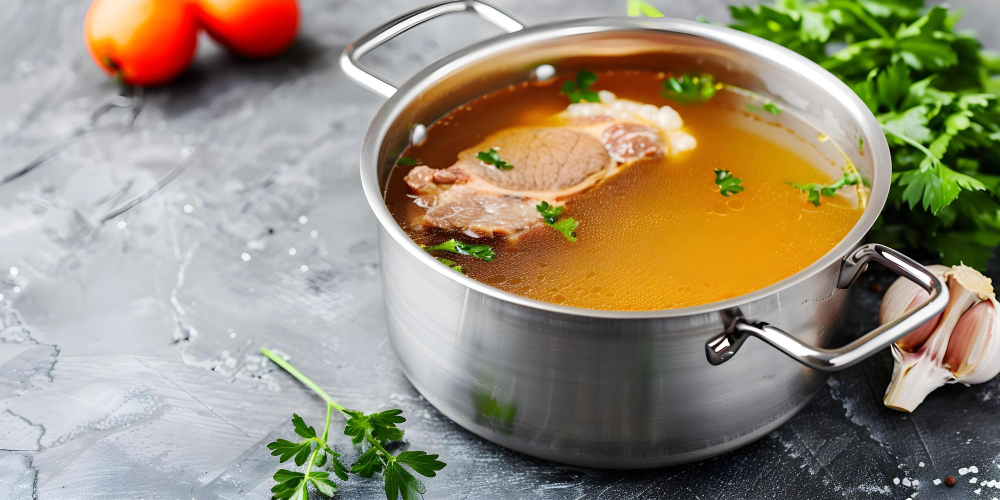
Bone broth is a mild, low-calorie liquid that provides modest protein and small amounts of minerals, not a cure-all. It can be a comforting, hydrating addition to your diet, but many viral claims about gut healing, detoxing, or skin repair go beyond what the evidence actually supports.
If you have scrolled through social media lately, you have likely seen bone broth praised as a near-miracle food, promising everything from smoother skin to a “healed” gut. For you or your loved one trying to eat well and feel better, it can be hard to know what is true and what is exaggerated for views. You deserve clear, honest information before making bone broth part of your routine.
What Are the Actual Nutrient Facts in Bone Broth?
Bone broth starts as mostly water, simmered for hours with bones, connective tissue, and often vegetables. During that long simmer, collagen in the bones and tissue slowly breaks down into gelatin, which gives broth its familiar silky texture.
Key Nutrients: Protein, Collagen, Gelatin, and Minerals
- Protein and gelatin: Bone broth provides protein largely in the form of gelatin, a byproduct of collagen breakdown.
- Minerals: Small amounts of calcium, magnesium, potassium, and phosphorus can leach into the broth, though levels are generally modest.
- Sodium: This varies widely and tends to run higher in store-bought versions, so checking the label matters.
Approximate Nutrition Per Cup
A typical cup of bone broth contains roughly 30 to 50 calories, about 5 to 10 grams of protein, under 3 grams of fat, and little to no carbohydrate. These numbers shift depending on the bones used, the brand, and how long it simmered, so think of them as a general range rather than a fixed rule.
What Social Media Claims About Bone Broth Get Right (and Wrong)
Some things you see online hold up. Bone broth really is hydrating, warming, and easy on the stomach, which makes it a gentle option when appetite is low, such as during illness recovery. It can also be a comforting, low-calorie way to add some protein to your day.
Where the claims stretch the truth is in the bigger promises: that bone broth heals a leaky gut, repairs joints, smooths wrinkles, or “detoxes” the body. Human research on bone broth specifically is limited, and the idea that its collagen travels directly to your skin or joints is not well supported. It is a nourishing addition to your diet, not a substitute for medical treatment or balanced eating.
Who Can Benefit From Bone Broth and Who Should Be Cautious?
Many people can enjoy bone broth as part of a varied diet, especially when recovering from illness or looking for a warm, soothing drink. But it is not the right fit for everyone.
- Sodium-sensitive conditions: If you or your loved one manages high blood pressure, heart failure, or kidney disease, commercial broths with high sodium content may work against your health goals.
- Kidney diets: Those following potassium- or phosphorus-restricted diets should check with their care team before adding broth regularly.
- Allergies and sensitivities: Ingredient additives or specific proteins can trigger reactions in some people.
Let Our Nutrition Team Help You Separate Fact From Trend
If you or a loved one needs support building a plan that fits your home and your life, reach out to our Nutrition team today by calling +1-718-367-2555 or visiting us at 1797 Pitkin Avenue, Brooklyn, NY 1121 to schedule a consultation. We are here to help you take the next step, one meal at a time.