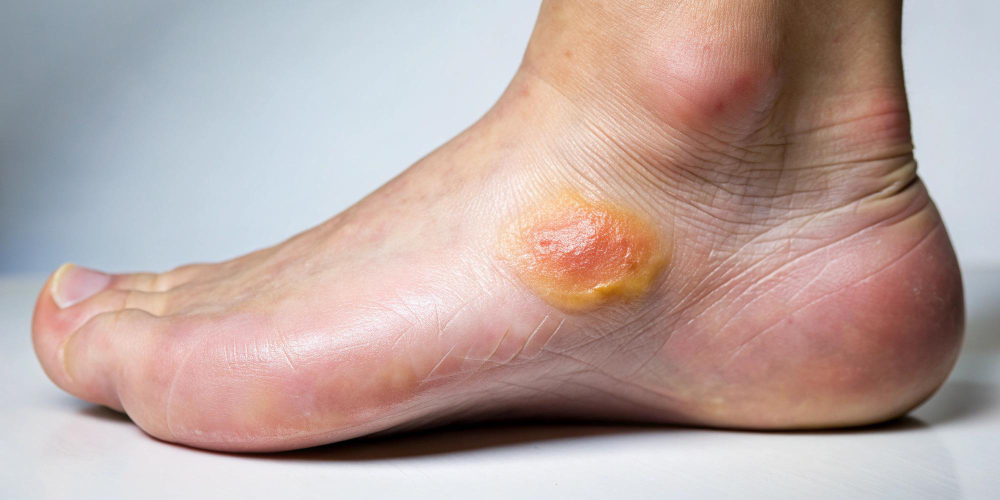
A blister may seem small, but it can turn every step into a challenge. One long walk, a new pair of shoes, or a day on your feet, and suddenly there it is: a raised, tender bubble that makes you wince.
Foot blisters are among the most common foot injuries, and the good news is that most heal well with simple home care. Still, knowing what to do and what to avoid protects you from pain and infection. Good foot and ankle care means treating a blister gently and watching for signs of trouble.
You do not have to guess your way through it. Below, we walk you through safe steps you can take at home and the moment it makes sense to call a podiatrist.
Why Blisters Form
A blister is your body’s way of protecting the skin. Friction, heat, or pressure causes fluid to gather beneath the top layer, creating a soft cushion over the tender skin below.
Most blisters come from ill-fitting shoes or repeated rubbing. If you often deal with sore, irritated feet, our guide to common foot conditions explains the everyday habits behind them.
How to Treat a Foot Blister at Home
The safest approach is often the simplest. In most cases, a blister will heal on its own if you leave it alone and keep it clean.
Follow these steps for gentle, effective care:
- Leave it intact. The skin over a blister protects against infection. Try not to pop or drain it.
- Clean the area. Wash gently with mild soap and water to keep bacteria away.
- Cover it loosely. Use a soft bandage or blister cushion to reduce pressure while you move.
- Ease the friction. Switch to well-fitting shoes and moisture-wicking socks until it heals.
- Watch as it heals. Once the fluid drains naturally, keep the skin clean and covered.
If a blister is large and painful, it may need to be drained safely. This is best done by a foot doctor rather than at home, where the risk of infection is higher.
What to Avoid
Small mistakes can turn a minor blister into a bigger problem. Steer clear of these habits:
- Peeling away the loose skin, which exposes the raw layer underneath.
- Using sharp or unclean tools to drain it yourself.
- Ignoring pain that keeps returning day after day.
When to See a Podiatrist
Most blisters clear up within a week. But some signs mean it is time for professional foot and ankle care.
Reach out to a podiatrist if you notice any of these:
- Redness, warmth, swelling, or pus, which can signal infection.
- A blister that keeps coming back in the same spot.
- Diabetes or poor circulation, which make foot injuries far more serious.
- Pain that makes it hard to walk or wear shoes.
For older adults or anyone with limited mobility, our in-home podiatry care brings a skilled foot doctor right to your door. You get expert treatment without the stress of travel.
You are not meant to manage worrying foot injuries alone. Help is closer than you think.
Take the Next Step Toward Healthier Feet
Foot pain has a way of shrinking your world, one careful step at a time. You deserve to move through your day with comfort and confidence.
Our Podiatry care team finds the cause, treats it safely, and builds a care plan around your life, right in the comfort of home.
Reach out today by calling +1 718 367 2555 or visit us at 1797 Pitkin Avenue, New York, NY 11212 to schedule your Podiatry appointment.