Allergist

Blood Test (IgE Testing)

Laboratory testing that helps identify allergic sensitization to specific triggers.

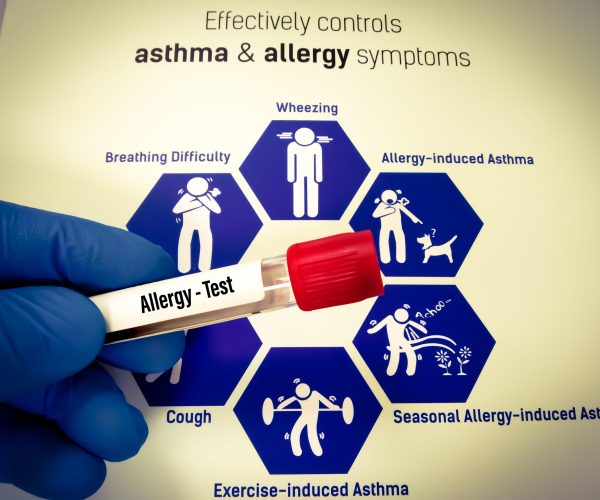
Test,Tube,With,Blood,Sample,For,Food,Allergy,Test,With

What is a Blood Test (IgE Testing)?

IgE blood testing measures allergy-related antibodies in the blood. It can help identify sensitization to certain foods, environmental allergens, insect venoms, or other triggers when allergy evaluation is needed.

This procedure helps to:

  • Identify sensitization to possible allergens
  • Support evaluation of food and environmental allergies
  • Assist when skin testing is not possible
  • Provide additional information for allergy diagnosis
  • Help guide discussion of triggers and treatment planning

What to expect after a Blood Test (IgE Testing)?

This test involves a standard blood draw. Most patients return to normal activities immediately afterward, and results are reviewed together with symptoms and history because blood testing is only one part of the allergy evaluation.

  • A routine blood sample is collected
  • Usual activities can resume right away
  • Mild soreness or bruising at the draw site may occur
  • Results are interpreted together with your symptoms
  • Additional testing may sometimes be recommended

Why is it performed?

• To evaluate suspected allergies
• To assess food, environmental, or venom sensitization
• When skin testing is not ideal or must be delayed
• To support clinical decision-making in allergy care
• To help identify possible triggers

Risks and Considerations

• Mild discomfort from the blood draw
• Minor bruising or soreness
• Results must be interpreted in clinical context
• False-positive or unclear findings may occur
• Additional evaluation may still be needed

Early detection is important for managing the condition and preventing further complications.

Schedule a consultation today.

FAQs

Is the blood test painful?
Most patients only feel a quick needle stick, and any discomfort is usually brief.
The blood draw is usually short, though total visit time depends on check-in and lab processing.
No. IgE testing helps support diagnosis, but results need to be reviewed with your symptoms and medical history.
Blood testing usually does not require stopping antihistamines, but follow your provider’s instructions.
Call your provider if you have unusual bleeding, worsening pain at the draw site, or questions about the results.

Doral Health & Wellness Allergist Department

Are allergies disrupting your life? Whether you’re dealing with seasonal discomfort, food sensitivities, or unexplained reactions, our expert allergists in Brooklyn, NY, are here to help. We specialize in identifying your triggers and crafting personalized treatment plans to bring you relief.

Contact Dermatitis

Allergist

More Allergist Procedures

Health Corner

Recent Articles

Perform Your Search Within the Site

Just write what you want and you will find it.

Generic selectors
Exact matches only
Search in title
Search in content
Post Type Selectors